Roses – Part 2

The efforts to remove diseased debris from the ground will help reduce pests as well as contain disease. Good housekeeping is an effective way of controlling pests and diseases using ethical methods. The biodiversity of an open space – it’s important to sustain as many eco-systems as possible.

Caterpillars will eat both the flowers and foliage but cause minimal damage to a particular specimen. Since they are beneficial to the food chain and are pollinators themselves a little thought should be taken to sustaining them.

There are a number of stem borers that eat into the cane rendering it weaker and progessively destroying the plant. Cut this stem off until new healthy growth is visible and block the void.

Thrips can often attack and result in buds unopened, leaves damaged often opaque with black dots. The zeal of the leaf will be lost too. There are forms of biological control but it is good practice to find the most ethical method. A lot of beneficial insects eat thrips. Lacewings, predatory worms and mites. Nematodes can be incorporated in the garden for the particular culprit.

Aphids/Greenfly are a common pest to attack in the summer months. They too suck the goodness out of the plant. They leave a residual film which harbours future disease thus crippling the plant more. An organic control is soapy water which simply means they slip off. There are more serious biological means but of course it won’t differentiate from beneficial life. There are lacewings, hoverflies and some beetles equipped to do this job. Blackfly follows the same path of destruction but can be controlled by natural means too – ladybirds, hoverflies coupled with plants that the species are attracted to. Marigolds, Sea Holly and small flowered varieties will suffice.

Greenhouse Spider mite can affect many fruits and vegetables but can have a life threatening effect on Roses. Good housekeeping will minimise the risk and gravity of the infestation. A good indication is the unexpected loss of leaves and those still intact will be mottled or discoloured. This too is a sap sucking nemesis.

The risk of infection either by pest or disease cannot be eliminated but curbed. They are avoidable rather like Root Rot. The cause of death is a fungal disease but it’s strongly linked to the conditions and care of a Rose. It is avoidable but genes can’t be guaranteed. Often it is the result of over watering. (“Killing with kindness”). Like most plants Roses prefer well drained, moist but not saturated soil. Planting is equally important. The crown or collar of the Rose should protrude from the surface and should be exposed. If the soil is not suitable, containerise and in the colder months other protection can be sought.

Pruning as with most shrubs is primarily about taking out dead or diseased growth out. This can only benefit the Rose. With all types of Rose, the purpose is to prolong flowering and improve the performance next year. Whether it be Shrub, Tea, Climbing, Rambling or Patio. The main healthy stems should be kept and spent offshoots discarded. Climbing roses will give you more than one show, Rambling Roses can be pruned much harder in comparison. Patio Roses largely need a light prune but they all follow the same principle save Tea which give successive blooms. These can be dead headed universally several times.

Roses – Part 1

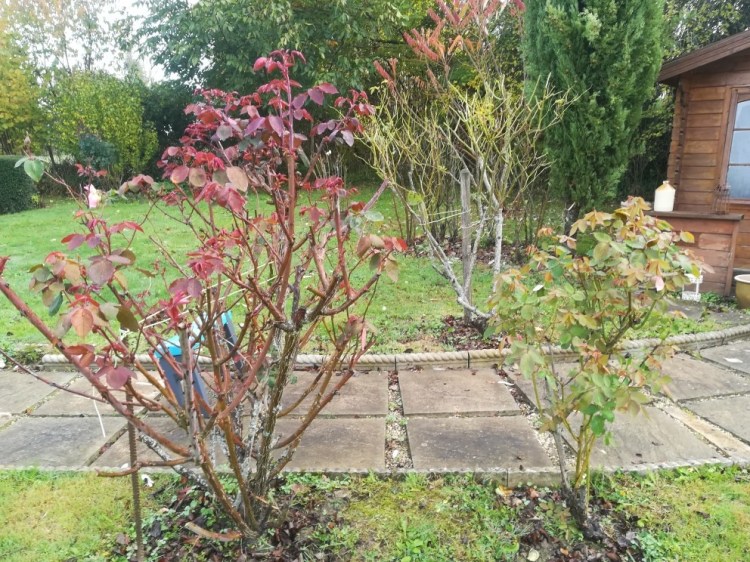
A time to start cutting these down. It will be to remove dead, damaged and diseased wood. In high winds, it ensures minimal damage to branches if it can move through the Rose. It will improve next years flowering – if there are no pointless branches the energy can move through to where it is needed most. Some leave until spring to do only once. You can return to them in spring if uneven growth starts to bolt. This job should really be done from september in preparation for winter, if not then do leave till spring. It will acclimistise for winter but hard pruning in “baltic” conditions will weaken it.

There is some disparity in the the care of Roses. Some say time-intensive, some argue too much method. Roses are relatively straightforward if you follow a few steps, if anything disease is more likely to thwart it than you.

Prune to a leaf node/bud to avoid dieback. This is an improper cut to the stem which simply goes brown and remains inert. It stores no energy so remove. Dieback however, can be a result of infected soil from previous planting harbouring grey mould and canker. Cutting back in a correct manner highly reduces this risk.

Remove any crossing branches to ensure full circulation and stems do not touch. This is general practice to avoid diseases spreading, cross contaminations. It is also reshaping the Rose so it retains its desired habit.

Cut back spent growth, straggly or unwanted. Look for central stem and 3/4 outward stems (dependent on how big), cut back shoots to 3/4 leaf nodes from the bottom. This should be maybe a third of its height. You can use your discretion for aesthetics. It depends how brave but it will be absolutely fine.

Roses seem susceptible to a number of diseases and pests although some varieties more than others. Varieties are crossed for resistance but as the cross species adapts to fight off the disease, the disease also adapts to survive.

Rust is a fungal disease, it affects the leaves – they will fall before they should. The plants overall performance is affected, in extreme cases can kill a Rose.

Powdery Mildew is a debilitating condition for a Rose. It is easily avoidable. It is usually to high conditions of humidity and lack of air circulation. Spores will infect the plant and impede its performance. Grey mould is pretty much the same thing.

Black spot, a fungal infection that blackens the leaves. Varieties are created to overcome infection but as discoveries are made, Black spot adapts to survive. Older varieties seem to be safer for some reason. Cut out the infected area and remove diseased leaves in autumn.

Winter shrubs

It is a fallacy that the garden goes to sleep at winter time. There are so many shrubs that are specifically chosen for this seasonal interest, in fact non descript for most of the year until they come into their own.

Camellia sasanqua is one of a few that have autumn flowering properties. They do prefer to be in full sun, acidic soil and with that well watered. These are not drought tolerant. They offer a strong fragrance throughout late summer to winter. Various colours and various flowerheads. Do prune after they have flowered since they can become leggy otherwise.

Mahonia x media ‘winter sun’ is an evergreen and another example of a shrub that can become leggy. Cut out branches that are unruly and seem to have no place. Mahonia do prefer a spot in full sun although like some shelter too so against a wall or fence would be fine. This will flower from November onwards. In good soil, Mahonia’s do thrive. Even apply some organic matter to keep it nourished.

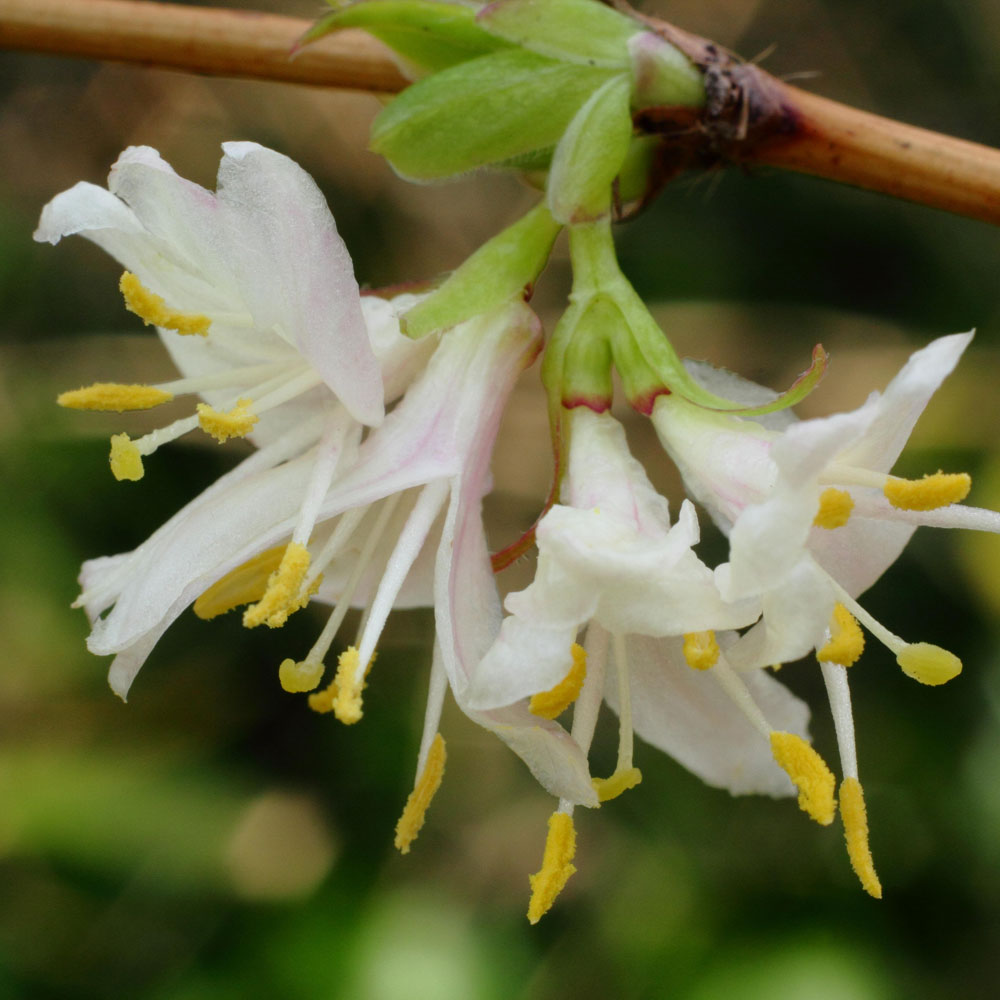
Lonicera x purpusii is a honeysuckle climber with strongly scented flowers in winter. It may be bare stemmed but the aroma it gives makes it’s presence known. Beneficial insects are attracted its flowerheads so provides them with food. It is a sun loving plant, it will provide you with a strong scented and delicate flowers through to February.

Hamamelis x intermedia is a shrub that will also loose its leaves when it flowers in late winter and on. The flowers are very fragrant in the main although one namely ‘Diane’ has a show of flowers but little scent. They do spread quite widely so give them room to develop. The plant is a hardy suggestion and often will not be phased by a cold spell.

Daphne Bholua is a medium sized evergreen that will flower during the coldest of spells. It will provide fragrant flowers in late winter followed by berries. It does need to be in a sunny spot but will provide frgrance, foliage and flowers though the year. It is relatively robust as long as not very exposed and has some shelter.

Callicarpa bodinieri ‘profusion’ whilst it offers flowers in mid summer, the vibrancy of its berries demands that it is mentioned as an excerpt. It is decidious but before the leaves are lost they turn a red. It is very hardy and will withstand severe conditions. It is good in most soils and generally easy to look after. The habit is not dense so a cluster of them is needed to make any impact. It is generally not tolerant in alkaline soils and discolouration of the leaves will indicate this.

Sweet Smelling Shrubs

To have fragrance in a garden is a certainty. Your Lavender, Roses and Nepeta are all worthy candidates for bringing that aroma to your patio in the warmer months. In addition there are shrubs that provide a sweet smelling scent coupled with annuals like sweet peas to relax your senses.

Philadelphus (Mock Orange) A decidious shrub offering a scent of citrus. It attracts beneficial insects and flowers in spring. A favourite amongst growers is P. ‘Belle Etoile’. The more common variety P. ‘coronarious’ is relatively low maintenance and can cope with neglect. Fully hardy too. Periodically, it would benefit from being cut back when the new buds appear to minimise legginess and improve blooms. Cut back top growth to 4 or 5 leaf nodes.

Choisya (Mexican Orange Blossom) An evergreen with attractive leaves. It does tolerate most conditions, although it is fine in shade it would prefer a full sun aspect. These are very easy to look after. The plant is hardy and will withstand being left. C. dewitteana ‘ Aztec Pearl’ is a variety that will flower in early summer but by dead heading a second show is possible. A more sheltered position is better than exposed as they can be prone to damage in high winds.

Choisya ternata sundance A half hardy alternative. It is usually preferred in a neutral soil or slightly acidic/alkaline but certainly not too much. It will not do well in extreme conditions. It is generally low maintenance other than removing unwanted growth.

Daphne Odora A semi evergreen shrub. It provides interest all year round. It flowers in succession between spring and summer. It is highly scented and hosts attractive foliage. D. transatlantica ‘eternal fragrance’ a compact habit suitable for smaller areas.

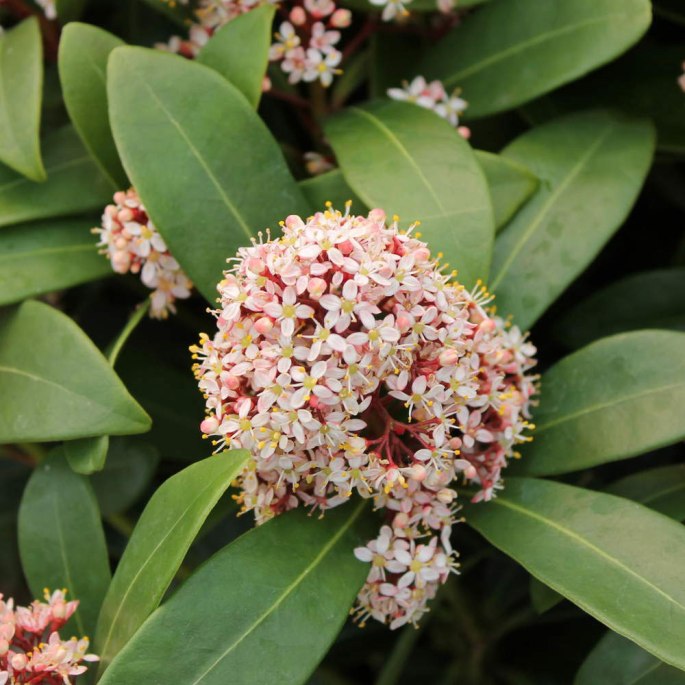
Skimmia japonica ‘Rubella’ An evergreen which prefers to be in full sun although it can tolerate shade. It is low maintenance and provides berries for wildlife until spring and the flowers open. It is worth bearing in mind this is male and only when coupled with the opposite sex will S. japonica ‘nymans’ produce berries. A common problem that is known to these species is the yellowing of the leaf. It is an indication that the soil is too alkaline.

In the winter months Chimonathus praecox ‘wintersweet’ provides a highly scented decidious shrub. This needs to be in full sun in a sheltered position but relatively versatile in the conditions it grows in.

Sarcococca (Christmas Box) A winter flowering shrub. A hardy specimen but in an immature state provide a little more protection. Ideally in a shaded position or a little sheltered in the ground.

Winter Hardiness

As the evenings are drawing in and the colder nights closer, some shrubs will need more thought than others. The hardy plants may suffer foliage damage or none at all. In areas of exposure the plant might suffer some wind damage and stems need cutting cleanly. Evergreens in extreme cold might lose leaves but they will survive and go generally unscathed. – 5 and under.

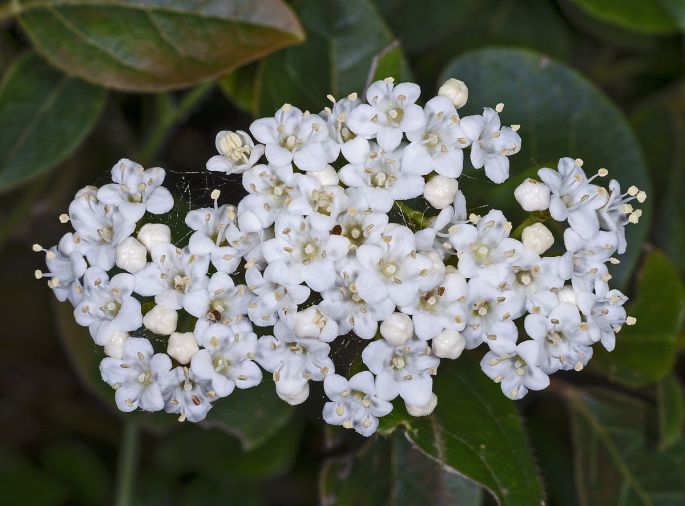
Photinias will provide autumn colour, Cotoneasters and Berberis (Barberry bushes) offering berries for wildlife. Virburnums are good as evergreens. In particularly cold areas they will lose their leaves but survive. These shrubs are good with pollution too. Camellias can be resilient to winter conditions although in severe situations they would prefer some protection.

The half hardy shrubs or near to perennials like Heuchera can be cut to the base once spent. The new growth when dormant might get frost bitten but in spring it will reappear as new. Lavender, although not a true perennial can classed as such and a shrub. It’s growth is above ground but often appears to look asleep at winter time. One specimen that is truly hardy and can withstand conditions others can’t are Cyclamens, providing autumn colour before spring. At times some specimens may need shelter by moving to a wall or coveted space along with added protection such a fleece.

Salvia’s are often perfectly ok in mild conditions although may need some insulation. Hydrangeas often suffer from leaf scorching and damage may occur, but in spring the shrub is cut to the first three 3 or 4 leaf nodes so that any dead material is cut off. This will help the plant not get too woody too. Geraniums will withstand some freezing conditions but not for a prolonged period. There may be some casualties but a good practice is to covet them with a fleece overnight in cold spells and then remove in the morning so the sun can get them in the day.

If there is dense foliage that is not decomposing, if it matters not aesthetically like with Hydrangea, Bergenia’s and Buddleja’s – leave it on until spring.

The tender plants are those that will withstand cold periods but not freezing. This includes cold snaps but not for a prolonged period. These may require indoor protection and after the frost has finished be kept outside. This usually is -1 to 5.

Most Roses are very robust while others need a little protection. Often applying mulch around the crown can insulate it and it retains its warmth. This can be said for all plants though and they will benefit from the nutrients of the manure or straw. Any good organic matter. Never put weeds in your compost. These will rot down but of course you will end up re-distributing your weeds!

Often in these conditions it’s not only the cold that will thwart the plant but the sun and wind which in turn dehydrates the leaves. This does the most damage. There are products called “anti-desiccants” that will help the plants retain its water. After a fall of snow, plants are said to benefit – it cocoons them.

Cordylines, often in containers, are a must to put in a sheltered position. They take very little to get damaged and can often be reduced to mulch.

A lot of plants of the tender variety will be perennials which will have been cut back and in their hibernation state. So containerised plants moved to a coveted spot is the key. By the house with that residual warmth seeping through!