Alpines/Succulents

If you are looking for a hardy, low maintenance and drought tolerant scheme, it’s worth mentioning these plants. Succulents have fleshy leaves since they’re cabable of storing their own water. Alpines can often survive in poor, sandy, free draining soil with no humus matter. A downfall of both these plants is to overwater them. They will not tolerate being doused and root rot can follow.

These plants can often be incorporated in rockeries and require almost no support or very little attention.

Aubretia a good ground cover plant. Grows often in cracks of walls with little soil. It has a trailing habit and needs to be in full sun. It can cope in very dry conditions. It flowers in spring, attracting beneficial insects and encouraging bio diversity.

Aurinia saxatilis a clump forming perennial which provides golden flowers from spring to early summer. It is very hardy and can cope well in an exposed position. It does require full sun, not a fan of shade. The soil, however, needs to have a little substance and not be totally barren.

Saxifraga flowers in early to mid summer and requires a sunny aspect. The plant can tolerate most types of soil, although well drained and moist. This ideally on the chalky side too. It welcomes some shade in the height of summer. The consistency needs some substance.

Antirrhinum sempervirens (snapdragon) an evergreen suited to a rocky, poor environment. It flowers in mid to late summer. It needs sun but a little shelter too.

Arabis, a succulent that provides foliage all year round. It flowers in spring to summer. A versatile evergreen, it needs well drained soil with sun. However, the aspect can be sheltered or exposed.

Sempervivum (Houseleeks) offer flowers in summer and attractive leaves all year round. A fleshy, hardy succulent needing light but very tolerant of sandy, free draining soil.

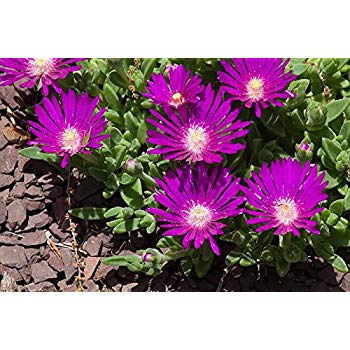
Aizoaceae, a general term for the whole family, but carpet weed / ice plants are its common names. Aptenia cordifolia (Heart leaf ice plant – there is a variegated one too) or Lampranthus coccineus (hardy) / spectabilis (trailing), Delosperma is another. The trailing variety can be quite invasive. It can offer effective ground cover with its mat forming, spreading habit.

Sedums (Stonecrop) are particularly suited to poor soil and can withstand prolonged periods with little moisture. They do need sun however, so not a plant for a shady corner. The species can flower pink, white and yellow flora. The commonest is pink but there are many. The plant acts as an effective pollinator and attracts beneficial insects.

Variegated Plants

To achieve consistent interest in your space throughout the year, an easy method would be to incorporate variegated foliage. All year round, you will be provided with beautiful leaves, flowers as a bonus and offering a hardy canvas for bulbs, perennials and bedding.

Hebe – Hebes flower between summer and autumn – purple / blues mostly. The aspect is not particularly important although Hebes don’t like prevailing winds or exposed areas. The wind damages the foliage. The plant needs some shade but sheltered is the key. It is not a terribly hardy plant, may need a degree of protection in severe conditions. It’s suited to a container, so be moved to an insulated / coveted wall if need be. Cut back dead, diseased and damaged after frosts.

A particularly interesting Miscanthus ‘zebrinus’ (Zebra Grass) – it provides colour (green / yellow to pink and silver) throughout the year; textural qualities in winter too. The pruning is only necessary in spring, highly ornamental in all seasons. As a Miscanthus, it “whistles in the wind”, which adds a quirkiness to the garden. The new growth will start to emerge from the crown, this will indicate the grass is ready for pruning.

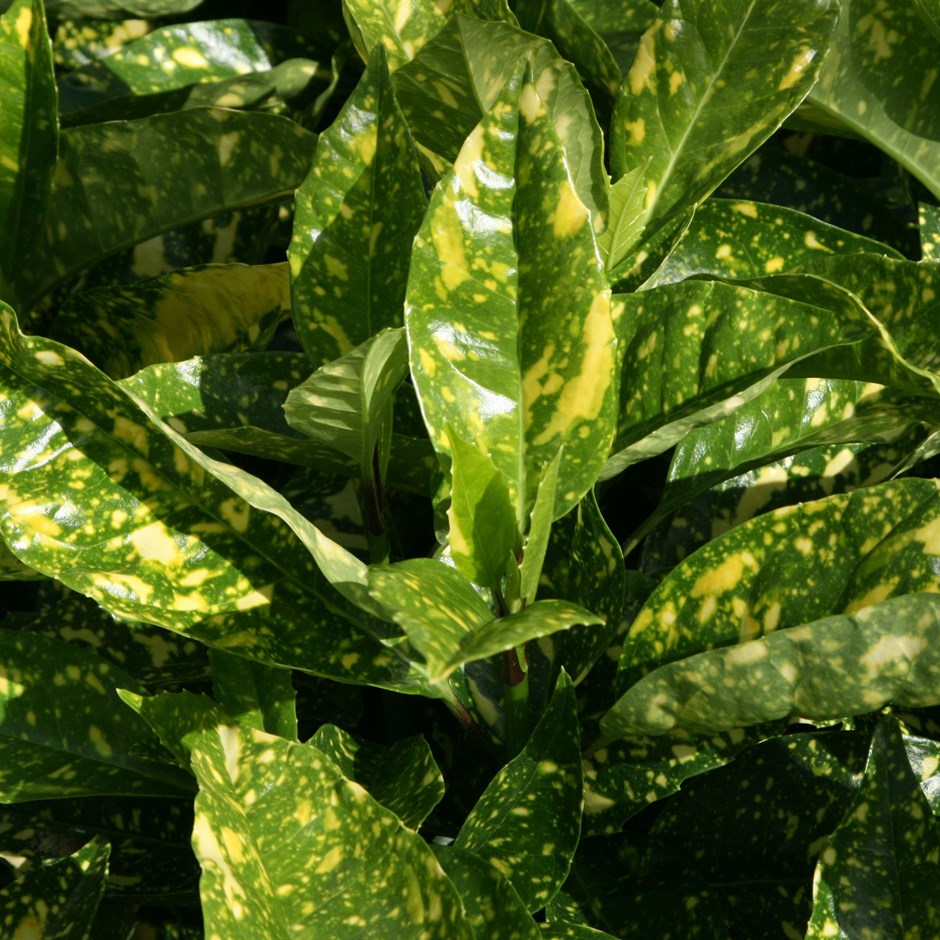
Aucuba japonica ‘crotonfolia’ – (Spotted Laurel). The spots, a result of a “friendly virus – “the mosaic” – it doesn’t harm the plant in any way and simply mutates its leaves. In the event of the plant reverting, cut the green out. It produces berries after the height of summer through to the next season. It is a very robust specimen. Good in all soils, aspects and conditions especially polluted air which makes it popular in urbanised areas or those with a high traffic content. No pruning, just unecessary / unwanted growth.

Other Bamboo / Sedges – Hakonechla macra / Carex variegata / Pleioblastus fortunei (Bamboo, sedges and grasses) – related but very different in habit. Most the pruning is in spring but some die back in winter. Hakonechla is mound forming, stays relatively compact but decidious. Carex everillo, Acorus is evergreen and Pleioblastus fortunei is too. There are different species, growth habits, sizes for varying purposes. These too in a variety of colours. Pennistemon (not typically recognised as a sedge/grass) are tolerant to moderate frosts and although do like full sun, can tolerate partial shade. These plants do prefer well drained soil and not in a waterlogged environment.

Euonymous fortunei – ” Emerald ‘n Gold”. A hardy staple evergreen, there is a cream variety too. ‘Silver Queen’. Good with adverse conditions. (Poor soil, light and water). These plants can be used as groundcover – an embankment or difficult location (very good as a weed suppressant). The plant does revert to its green state, you need to cut this unwanted foliage out to retain its variegation.”Colouratus” is the ground cover variety as a few others. The leaves turn a pinkish tinge if provided with full sun in autumn. The plant is very low maintenance, can cope with almost any soil without water or nutrients. It requires almost no pruning save unwanted growth.

Eleagnus ebbengeii offers the most eyecatching combination with their silver – green foliage mixed with Photinia as an evergreen hedge.  The plant is tolerant of little water, a drying atmosphere – so coastal areas, salt laden winds are fine. What Eleagnus don’t tolerate is the cold, so an exposed position is ok but with a good degree of sun.

Weeds

With gardening tasks, you need to take the “rough with smooth”. Weeds will always be there and someone needs to remove them. A back breaking, soul destroying job which leaves you feeling crippled. However, it’s necessary. It’s worth bearing in mind, you’ll never eliminate them although to leave them, you are inviting thousands more.

The treatment of weeds is an undecided one. You can manually remove or spray with selective weedkiller. It needs to be selective, not contact, it will differentiate from certain plants – chances of killing something significantly reduced. Contact will kill whatever it hits. Each year products get discontinued since most chemics, because of their purpose, have rather nasty things in them.

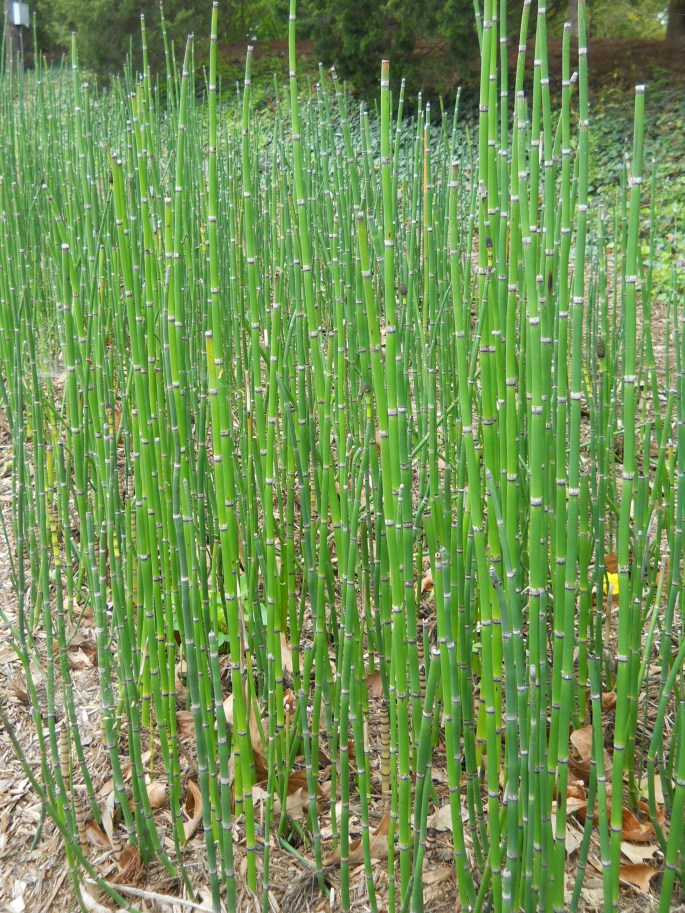
Horsetail is particularly difficult due to its structure. A prehistoric plant, it has adapted well to survive. It has non-penetrable membrane – a waxy coating – before treating it needs to be cracked or crushed to absorb whatever is applied. The stems are split in segments so if a small piece is left, the weed just re-establishes itself. It usually afflicts narrow cracks, broken paving and undisturbed land.

Self heal is a perennial although it seeds in lawns. It is a herb offering healing properties, it attracts beneficial insects too. It thrives in damp, humus rich soil that’s undisturbed. It’s not a weed until it pops up in the wrong place!

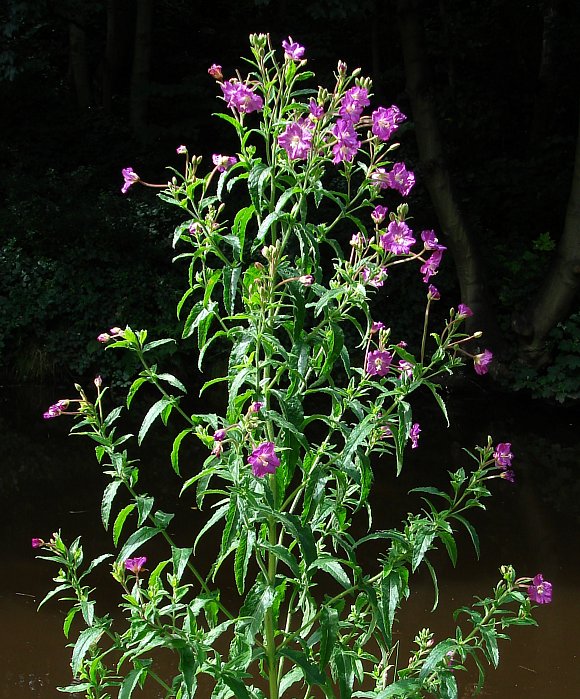
Willowherb has an attractive purple flower. Its growth is so prolific and its ability to survive anywhere, any condition makes it problematic. It seeds before it’s flowered so difficult to gauge when / where its dispersed. The weed pulls out very easily, it’s just the sheer volume that’s produced.

Chickweed prefers damp conditions with shade. It’s often found hidden under other foliage. It produces 1,000 seeds and spot weeding is just not practical. A light hoe will disturb the cycle. Chickweed is hardy, so in mild winters, the seed will not die off and lie dormant until spring.

Thistles, however difficult to manage are beneficial to butterfies / bees due to high nectar count, and also have medicinal qualities. The thistles have evolved as a defence mechanism from being eaten, improving its survival rate. It has to be regarded as a weed since it’s so invasive. It should be pulled out before it flowers. The plant is resilient in adverse conditions, by no means delicate as the flower suggests.

Broadleaf weeds generally have a tap root which makes them more difficult to eradicate. They can have fiborous roots but usually these are easy to control. These would include Dandlions, Clover, Daisies, Violets, Brambles too. By definition, a weed is a plant that shouldn’t be there. It is interesting to learn that Clover is growing in popularity as a lawn. It does benefit the soil, adding nutrients. Its flowers provide a food source for beneficial insects. It’s tougher and more drought tolerant than grass. Chamomile too, although other invading weeds will suppress its development. It does provide a scented carpet when crushed though. It does need a full sun aspect and the soil must be free draining.

Hibiscus

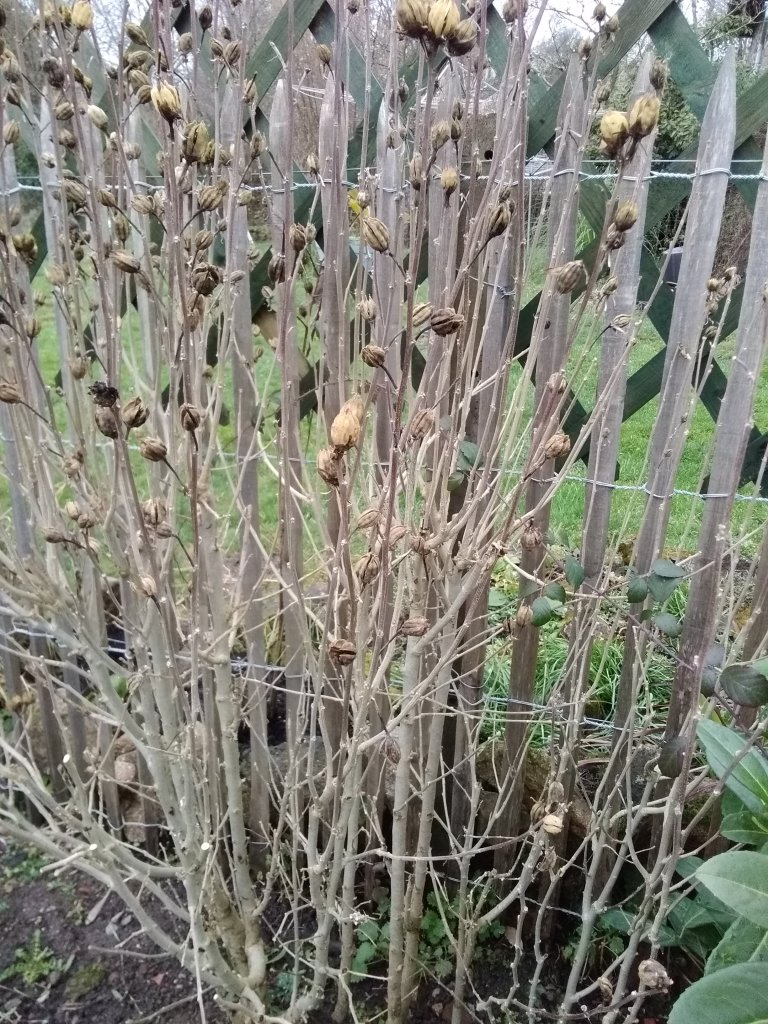
Hibiscus, a woody shrub that can pruned earlier in mild conditions. Obviously, be sensible with how far down you prune. In removing dead, diseased and damaged branches – the plants energy can focus on fewer stems where emerging buds form. Don’t worry about it looking dead, it always looks like that. The buds are the same colour as the stems.

Roses

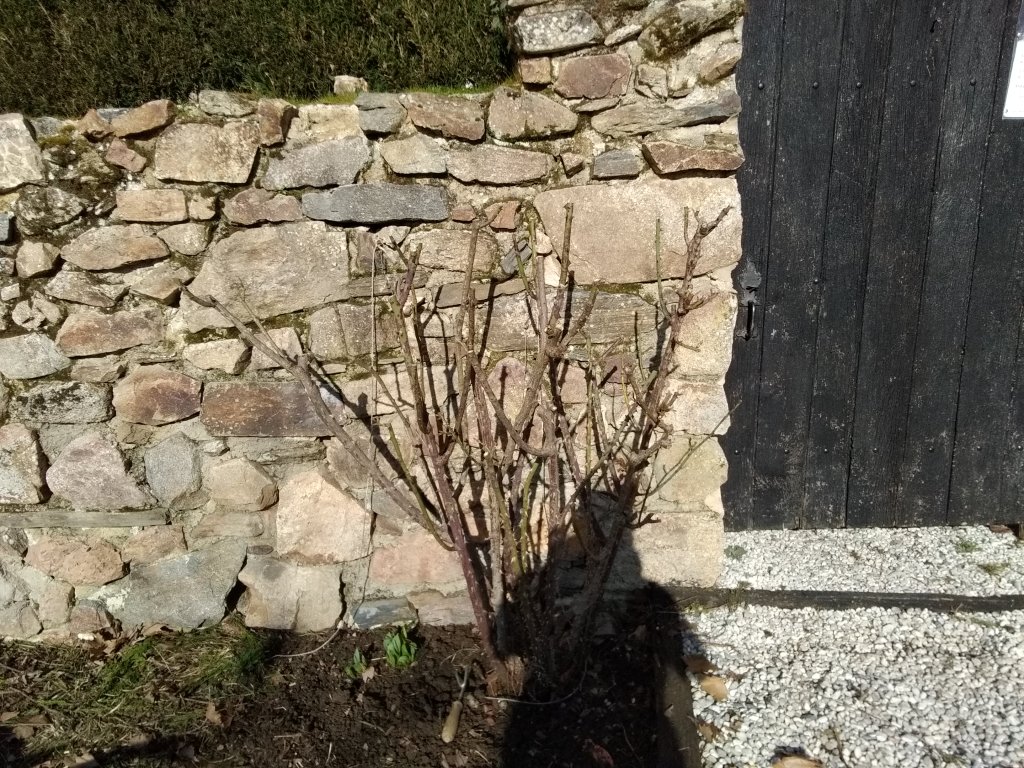
This task should only be done early if you know your roses. Only do this if the rose is established. Old roses are very robust and resilient even when infected. They can become knotty and if you think the weather is fine and mild, new growth will be encouraged by the light. If you feel comfortable with this, should you start it. Spring is absolutely fine but you’ll sacrifice lots of buds. Cut very finely to a leaf node (a bulging bud) and in a situation of incredibly cold weather, cover with a semi permeable membrane.

The Rose is perfectly fine but a sharp shock might thwart flowers.