Weeds

With gardening tasks, you need to take the “rough with smooth”. Weeds will always be there and someone needs to remove them. A back breaking, soul destroying job which leaves you feeling crippled. However, it’s necessary. It’s worth bearing in mind, you’ll never eliminate them although to leave them, you are inviting thousands more.

The treatment of weeds is an undecided one. You can manually remove or spray with selective weedkiller. It needs to be selective, not contact, it will differentiate from certain plants – chances of killing something significantly reduced. Contact will kill whatever it hits. Each year products get discontinued since most chemics, because of their purpose, have rather nasty things in them.

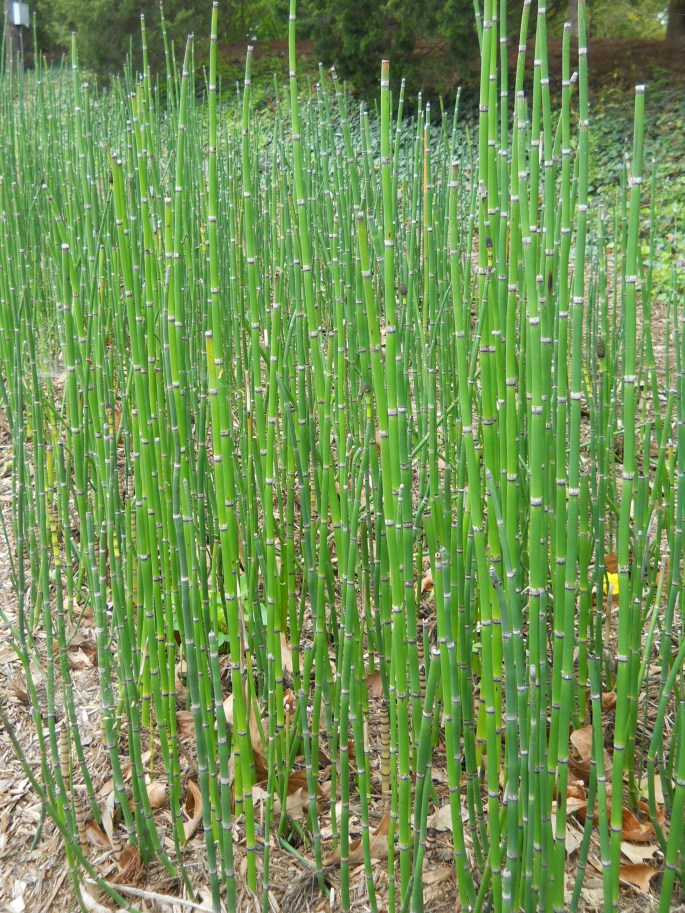
Horsetail is particularly difficult due to its structure. A prehistoric plant, it has adapted well to survive. It has non-penetrable membrane – a waxy coating – before treating it needs to be cracked or crushed to absorb whatever is applied. The stems are split in segments so if a small piece is left, the weed just re-establishes itself. It usually afflicts narrow cracks, broken paving and undisturbed land.

Self heal is a perennial although it seeds in lawns. It is a herb offering healing properties, it attracts beneficial insects too. It thrives in damp, humus rich soil that’s undisturbed. It’s not a weed until it pops up in the wrong place!

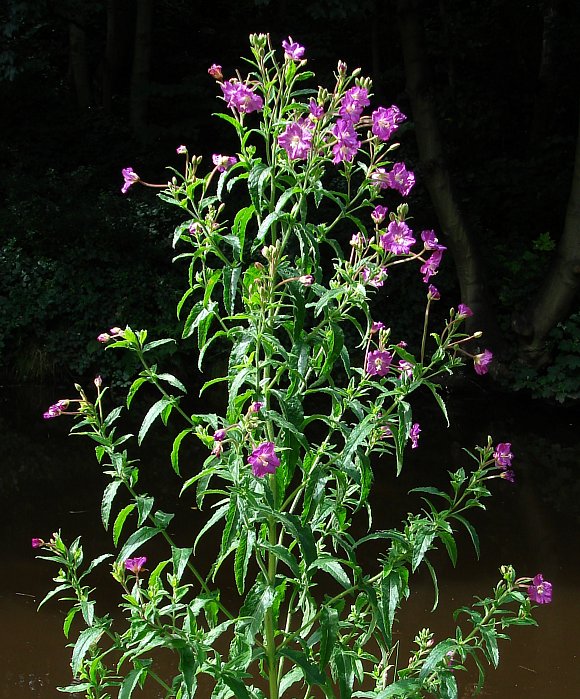
Willowherb has an attractive purple flower. Its growth is so prolific and its ability to survive anywhere, any condition makes it problematic. It seeds before it’s flowered so difficult to gauge when / where its dispersed. The weed pulls out very easily, it’s just the sheer volume that’s produced.

Chickweed prefers damp conditions with shade. It’s often found hidden under other foliage. It produces 1,000 seeds and spot weeding is just not practical. A light hoe will disturb the cycle. Chickweed is hardy, so in mild winters, the seed will not die off and lie dormant until spring.

Thistles, however difficult to manage are beneficial to butterfies / bees due to high nectar count, and also have medicinal qualities. The thistles have evolved as a defence mechanism from being eaten, improving its survival rate. It has to be regarded as a weed since it’s so invasive. It should be pulled out before it flowers. The plant is resilient in adverse conditions, by no means delicate as the flower suggests.

Broadleaf weeds generally have a tap root which makes them more difficult to eradicate. They can have fiborous roots but usually these are easy to control. These would include Dandlions, Clover, Daisies, Violets, Brambles too. By definition, a weed is a plant that shouldn’t be there. It is interesting to learn that Clover is growing in popularity as a lawn. It does benefit the soil, adding nutrients. Its flowers provide a food source for beneficial insects. It’s tougher and more drought tolerant than grass. Chamomile too, although other invading weeds will suppress its development. It does provide a scented carpet when crushed though. It does need a full sun aspect and the soil must be free draining.

Hibiscus

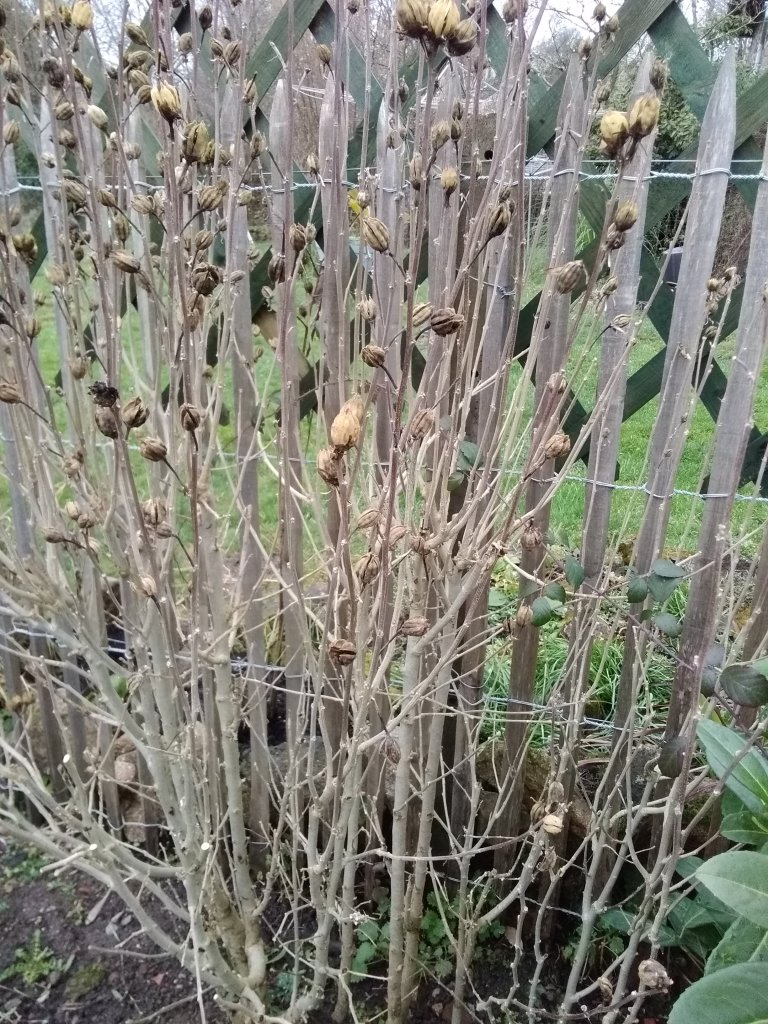
Hibiscus, a woody shrub that can pruned earlier in mild conditions. Obviously, be sensible with how far down you prune. In removing dead, diseased and damaged branches – the plants energy can focus on fewer stems where emerging buds form. Don’t worry about it looking dead, it always looks like that. The buds are the same colour as the stems.

Roses

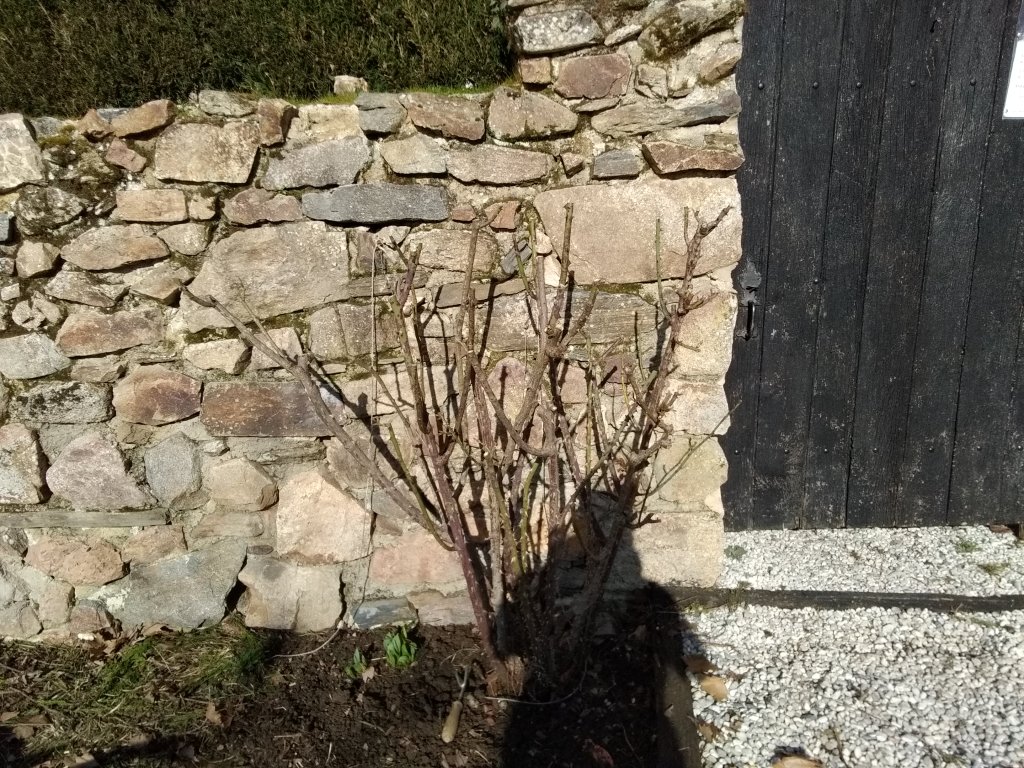
This task should only be done early if you know your roses. Only do this if the rose is established. Old roses are very robust and resilient even when infected. They can become knotty and if you think the weather is fine and mild, new growth will be encouraged by the light. If you feel comfortable with this, should you start it. Spring is absolutely fine but you’ll sacrifice lots of buds. Cut very finely to a leaf node (a bulging bud) and in a situation of incredibly cold weather, cover with a semi permeable membrane.

The Rose is perfectly fine but a sharp shock might thwart flowers.

Floral interest

An attractive bouquet of flowers are pleasing to receive, having a shrub giving continual flora for a period is a breathtaking sight. Plants provide you with colour all season long, flowers in such profusion. The plants blooms are their saving grace.

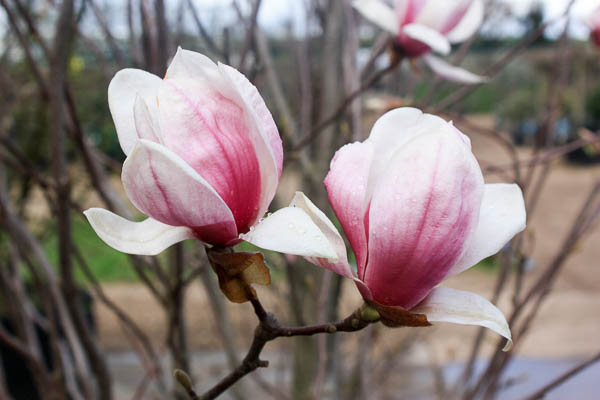
Magnolia soulangeana is a shrub that offers tulip shaped flowers fusing a number of colours together (pink, white and purple). It is scented, not hugely though. It flowers in spring, and can sometimes cusp over to summer. The plant is reasonably quick to establish but will keep its shape relatively well without much maintenance. The plant can cope with drought conditions although excessive light can damage flowers and leaves. The base needs a degree of protection, so a layer of bark, mulch or any organic matter will help retain its moisture and provide shade.

Magnolia stellata – the flowers couldn’t be more different but equally as eyecatching as soulangeana. The plant bears white, star-like, highly scented flowers. It is a hardy large shrub/small tree and its flowers appear before leaves like soulangeana. It prefers a sheltered spot due to the damage cold winds can cause. Therefore, a warmer aspect is advisable.

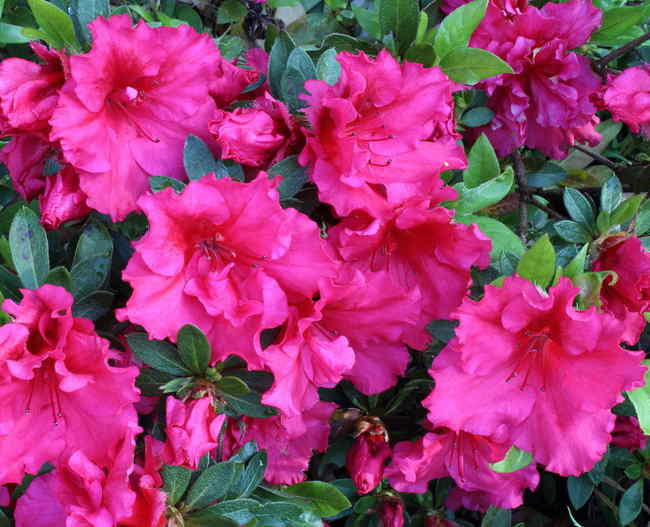
Azaleas are an acid loving shrub that flower in such profusion late spring into early summer. If in warmer climes – in extreme conditions all through summer. A number are scented but it’s the colour that makes them memorable. The plant is related to the Rhododendron.”You could say an Azalea is a Rhododendron but a Rhododendron is not an Azalea”. If you work that? It refers to an unresolved debate.

For Camellia, a dappled, partially shaded area is ideal. The plant is easily burnt by direct sun. C. sasanqua is the group that flower in autumn and usually more susceptible to winter damage. This kind tends not to be as hardy and requires some protection. The japonica’s and x williamsii are spring flowering, although the plant prefers some shade, if the base of the shrub is in shade the plant can tolerate being in direct sunlight.

A mountain shrub, they are resilient but do encounter problems. The browning of leaves, a discolouration and curling can be indicative of a fungal infection/scaley bug (evidence of this on underside of leaf) caused by too much moisture. Good drainage can alleviate these problems and other disorders linked with saturation. No direct sunlight and free draining soil is a must.

Daphne Odora Aureomarginata is a heavily scented specimen which will provide fragrance and attractive foliage through spring (some species or year round). The soil is better on the chalky side, this being alkaline but provides you with a plethora of colour. It needs some shade but a sunny spot is desired to really thrive. The only maintenance really is to retain shape.

Hydgrangeas make marvellous cut flowers. Pink, blue and some are white. The oak leafed (Hydgrangea quercifolia) is more resilient and perhaps more attractive in its foliage, good in drier conditions and more robust than the typical variety. If you leave them later than after they have flowered, you might think of spring to give them a crop. It takes some of the buds away but the plant will thank you. It won’t get woody and regenerate new growth. Cut all non – generative growth out or stems that appear to have no life before and after blooms.

Office Plants

Plants in offices are difficult. Someone has to feed, nurture and maintain their vigour. However, with careful calculations to light, attention and growth habit – it can be achieved easily (in house).

The factors to consider are space, shade, artificial lighting and problems caused by air conditioning. Plants make it clear when they need water. With these plants, a high humidity level is needed, so a spray of water into the atmsophere is enough.

Dracaena burley (Dragon plant) – it tolerates light shade and requires little watering. It can cope in drought conditions, though not for prolonged periods. It can equally adapt to cooler temperatures for short periods but not below 12c. No pruning except to control growth.

Pachira aquatica (Money tree) it can cope with artificial light, in fact it needs some shelter from direct sun. It prefers high humidity and temperatures not going below 10c.

Nephrolepsis exaltata (Boston fern) a plant that enjoys humidity and regulates it too. Neither a cold aspect nor a hot one, so away from machines / equipment that dry it out. It’s shade tolerant and has purifying benefits. This plant likes moist soil but not excessive.

Maranta leuconeura (Prayer plant) – It likes full to partial light. It will not tolerate shade / wet soil. A mist of water occasionally will appease its dryness or when it becomes discoloured. This plant survives on being rootbound. By its habit, it does not require repotting as long as the size of the pot is substantial enough not to overbalance. It purifies the air too.

Adiantum rubbelum (Maidenhair fern) versatile because of its ability in adapting to different environments. A sheltered aspect outside with partial shade – it likes its moisture, so inside, partial sun in a direct spot.

Chamaedorea elegans (Parlour palm) – A shade tolerant plant, it can cope with fluctuating temperatures caused by equipment and heating. However, it will need a degree of humidity and a feed every week or so. It needs more water than most drought tolerant, but must be free draining. It will not tolerate saturated soil.

Zamioculus zamiifolia (ZZ plant) It needs little attention other than a shaded area. Shaded and cool, but not cold. It will not cope going below 8c. A plant that will cope with most conditions but avoid direct light. It is a drought tolerant plant and generally low maintenance. It’s effective in filtering air.

Sansevieria trifasciata (Mothers tongue) this plant as the others has filtering attributes. It will keep fresh air circulating and improve the quality of the atmosphere. In a confined area, it is capable of coping with shade, little care and almost no water. It is not good in a chilly spot or one with a strong draught. Its downfall is probably fuss and to overwater will kill it.