Perennials for Beneficial Insects

Using just perennials can achieve a bio diverse border for wildlife at their peak of activity. These cottage style combinations of varying heights can offer a much needed source for pollinating insects. You may, however, want to interspace some staple shrubs otherwise in the dormant period it will appear a redundant bed. Evergreens like Euonymous, Hebe (most are hardy) Mahonia, Spotted Laurel and Cornus are all hardy and will provide interest all year round. 

These perennials aren’t necessarily meant to go together, it may create a collision of colour. Some are red, some yellow, purple and blue but they assist in providing a sample of what’s available.

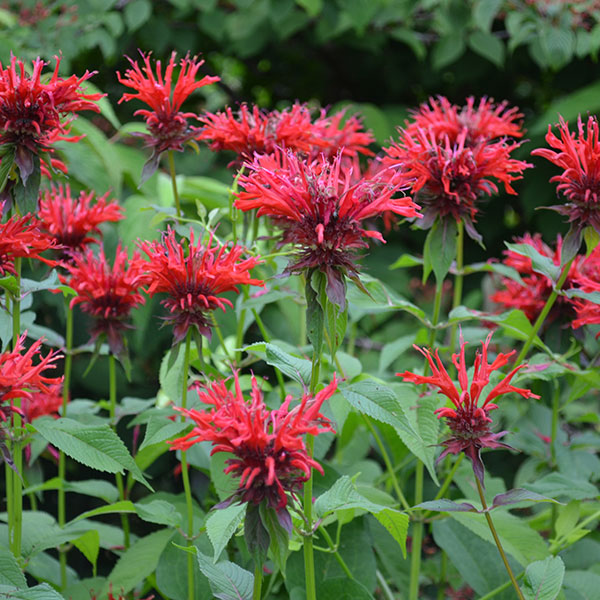
Monarda (Red / Purple / White – Bee balm or Bergamot) M. diddyma, the red one is most common although there are pink varieties like ‘Pink lace’. It is in fact the leaves that are scented but they provide attractive flowers in late summer. A plant not great in dry conditions so the soil needs to be moisture retentive. It’s a hardy perennial, in the dormant period its underground in any case but no further cover needed..

Agastache hyssop (Anise) offers aromatic leaves and useful flora as a food source. It flowers in mid summer and available in whites and purples. Anise does need full sun and well drained soil. A. ‘Blue fortune’ – purple, A. ‘Alabaster’ – white. The plant is not fond of an exposed site so a sheltered spot is preferred. Also, as it lays dormant it may need additional protection so mulch added to its crown. Having said this, once in situ almost no maintenance.

Rudbeckia aka “Black-eyed Susan” is a late summer / early autumn perennial that offers a plethora of colour right up until mid November at times. The height of these differ between cultivars so be mindful not to overshadow a neighbouring plant. R. fulgida var. Sullivantii ‘Goldstrum’ is knee high say wheras R. hirta dwarf ‘Toto’ is much smaller with large flower heads. They are not drought tolerant either so ensure soil is not sandy. It likes a humus rich medium,  it does needs sun but benefits from some shade after its had its light.

Penstemons flower in early summer and offer much needed nectar. It can be incorporated near or in rockeries. The perennial can tolerate poor conditions and dry spells. There are pinks, whites, purples and reds. Their lifespan is not indefinite, they will come back from the crown each year but periodically need replacing, They do have a tendency to become woody so do prune quite harshly back. It’s good practice to propagate the seeds from the parent plant to keep the vigorous growth.

Echinacea pupurea (a coneflower), the most common prefers a fertile environment so not a survivor of poor conditions. It prefers a more sunny aspect so although it needs moisture, it will not tolerate sitting in water. It prefers a drier medium but not extreme either. It will flower early to late summer, usually pink but can be orange. E. ‘Kismet intense orange’ or ‘Orange passion’.

Echinops are often overlooked where size is an issue since they become rather imposing. These too attract hoverflies and butterflies. The soil is not too important, since they are fairly resilient. The plant will cope in most conditions and flowers in late summer.

Hollyhocks offer a food source for a number of beneficial insects and are relatively easy to grow. Simply by their height they need to be staked but otherwise generally straightforward. Hollyhocks do need sun and will not tolerate shade. A sunny border is ideal but sometimes grow where you would least expect them. Cut to the base after flowering. When they are young they need some protection from slugs and alike.

Delphiniums (Larkspur) are one of the 1st perennials to emerge and seemingly frost tolerant. It flowers in summer but for a perennial a little short lived. Like Hollyhocks, the length of the stem may warrant staking as if exposed will be damaged with strong winds. A good medium is needed and a sunny aspect.
Shrubs for Beneficial Insects

Whilst we enjoy the scent and colour of our spring, summer and autumn shows, it is worth considering the benefits certain shrubs have in encouraging bio diversity and providing insects with essential food.

Buddleja (Butterfly Bush) A woody shrub that needs quite hard pruning to keep its growth vigorous. In spring, it needs to be taken down to 2 or 3 leaf nodes and it will benefit hugely.

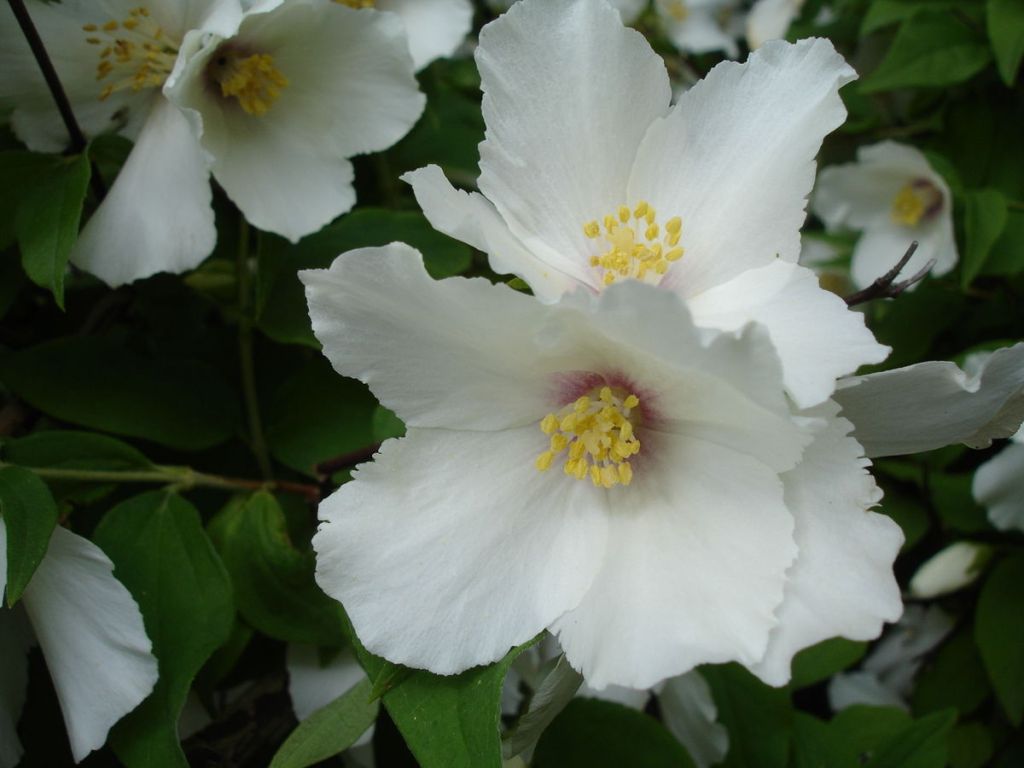
Philadelphus (Mock Orange) A scented shrub providing white flowers and attractive foliage in summer through to autumn. It is drought tolerant and very resilient in quite harsh conditions. However, it loses its leaves and is non descript at other times of the year.

Choisya (Mexican Orange Blossom) is popular in urban areas since it absorbs pollution. It doesn’t require any pruning per se and provides fragrant flowers. It does need some shelter and not suited to exposed sites. Early summer is the time it flowers, however, the leaves are attractive in themselves and its an evergreen.

Skimmia japonica offers fragrant leaves and white flowers in mid spring and berries in winter so a very beneficial shrub. Skimmias do not sit well in full sun. The more shade the better. The shrubs are drought tolerant and require almost no maintenance. The soil need not be humus rich. Their nutritional needs are low.

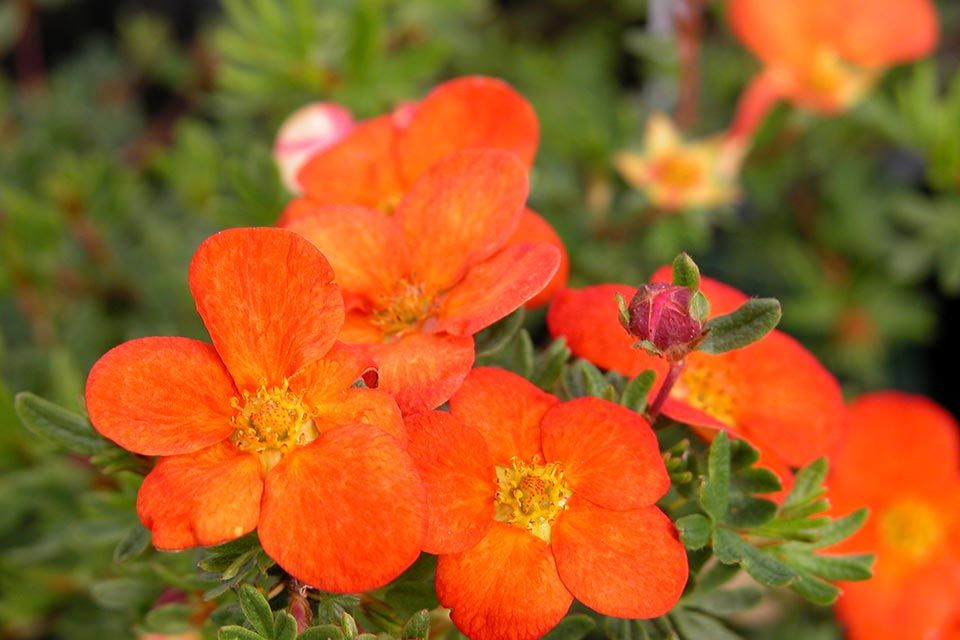
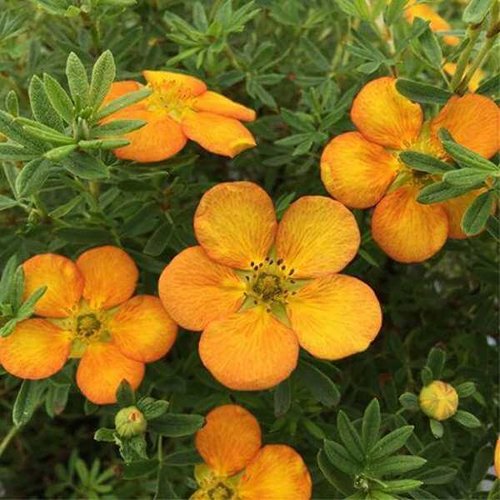
Potentillas are certain to attract wildlife and you have the added benefit of the lasting blooms. The shrub prefers full sun but a little shade helps the plant not over exert itself – it flowers for longer. it like most plants prefers a good soil but will tolerate poorer quality as long as it’s well drained.

Virburnums are a reliable choice too due to the fact that some can flower in winter through till spring and some even throughout summer. A hardy shrub of an informal habit will provide berries in the dormant months and highly scented pink and white flowers. A straightforward shrub that requires little maintenance save a clip here or there. It generally adapts to most soils as long as its free draining. It does well in sun but will tolerate some shade.

Spring Flora

Admittedly I haven’t planted any plugs or sown any seeds. Having said that, there are a number of spring flowering shrubs that offer an abundance of colour at this time of year.

Forsythia can tolerate partial shade and offer a startling spring show. It can become quite invasive though if left, so as soon as its flowered, cut it back to maintain its shape. Forsythias are fine in partial shade, not particularly drought tolerant – so prefer a moist medium but free draining too.

Camellias can perform in full sun although tolerant of shade. The aspect, however, must be sheltered and coveted from strong winds. The plant is an acid lover so the Ph is important. They’re are not drought tolerant either so in very extreme heat – the camellia will need additional water.

Daphne odora ‘Aureomarginata’ is probably the most commonly used since it’s an evergreen. It does need a little shelter, however, but provides heavily scented flowers from late winter through to spring.

Roses should be have been cut to a third or however much you thought necessary. All dead, diseased and damaged branches need to be removed. The old growth cut back to a bud / leaf node. This avoids branches suffering any dieback.

Deutzia is related to the Hydrangea as another spring flowering shrub. Deutzia is scented, Hydrangea is not. Hydrangeas have an insatiable thirst, Deutzias do not and if anything prefer well drained soil in full sun.

Virburnums too prefer a well drained location and are heavily scented. The shrub can flower from late winter to spring so may have already done so. Virburnums are relatively robust and withstand an exposed area. Virburnums prefer full sun but will tolerate partial shade. It’s an informal shrub and not meant to look trim.

Azaeleas are acidic loving and flower in the spring. The shrub is not drought tolerant though and will require sufficient moisture. The soil needs to be as water retentive as possible so organic matter needs adding to give it substance.

Hardy Annuals

With any mild weather,  it would be tempting to go and buy some annual plugs. This can be achieved by sowing seeds though. Some are more hardy than others as the descriptions illustrate, some annuals can be classed as perennials since they come back a following year. If the parent plant doesn’t, it can throw its seed and the cycle repeats itself. The half hardy / hardy is an indication of what conditions it can withstand and whether this is for a prolonged period or a cold snap.

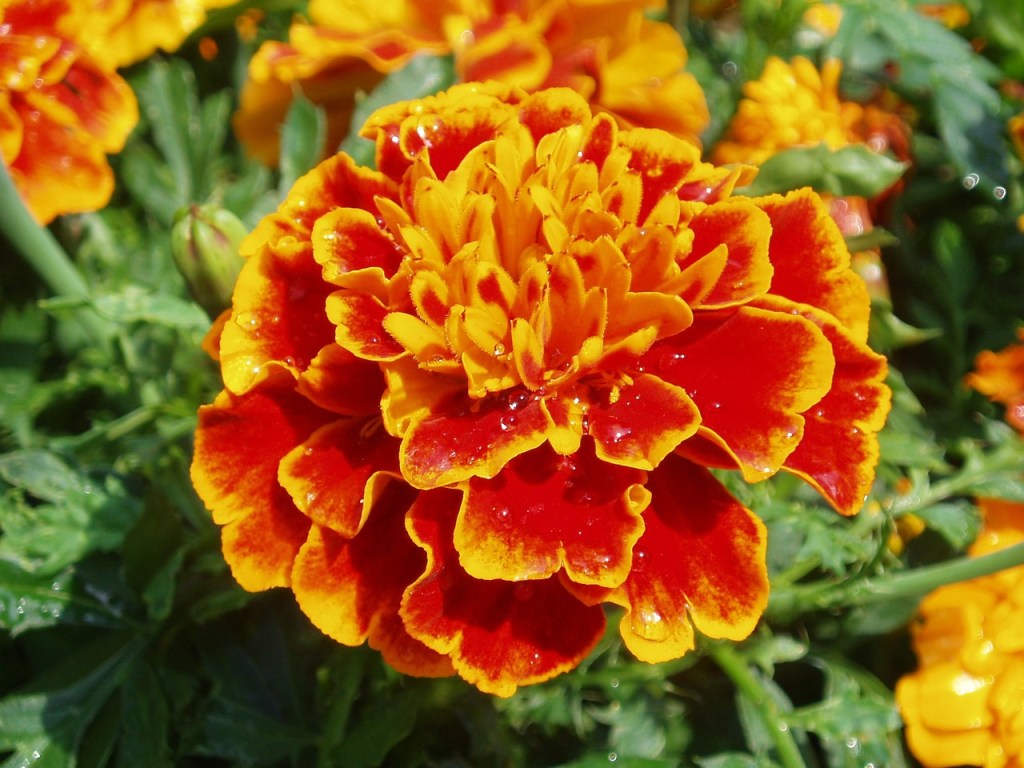
Calendula officianalis ‘pink surprise’- marigolds offer flowers from summer to autumn in warmer climes. Their demise is slug / snail related, not so much weather. Marigolds do best in full sun with well drained soil. They can self seed to prolong their lifespan. If you don’t want them, you need to pull them out once the flowers are spent.

Papaver orientale  – Poppies can be sown for spring and if provided with good drainage, a full sun aspect will return the following year. Equally, Eschscholzia californica, an annual though, under the right conditions can be treated as a perennial. It may self seed so be mindful if you don’t want it populating.

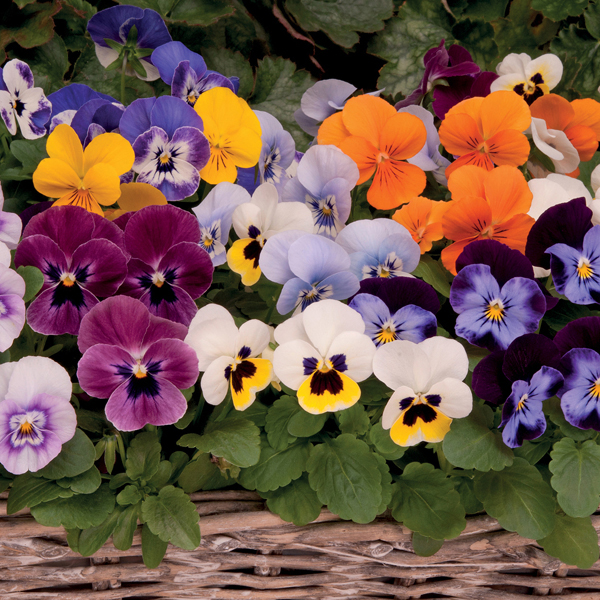
Viola – Wild violets are prolific in meadow areas and woodlands alike. These will return season after season. They’ll self seed and appear almost anywhere. The cultivated variety is an annual and normally dies after its season. It doesn’t self seed. They’re closely related to the pansy.

Pansies – There are summer and winter varieties. Single coloured and tricolour. Often described as a “cool weather annual” they can often survive prolonged cold snaps and on occasions come back when they’re not meant to.

Dianthus or pinks are a carnation flower suitable in rock gardens / herbaceous borders. The cut flowers, we associate with a florists spray (carnations) but the smaller ones are perennials. The plant is low growing with mat forming foliage. It offers fragrant flowers in the summer. Pinks can cope in poor soil.

Salvia horminum – clary sage / annual sage needs full sun or light shade but offers a show from summer through to autumn. The flowers attract beneficial insects so a bio diverse choice. it needs a decent, humus rich medium and does not sit well in poor soil.

Polyanthus / Primula – although these are removed to make way for summer bedding, this perennial survives cold snaps and returns the following year. It is argued that they come back stronger and flower in profusion.

Nasturtiums – an annual / perennial in the right conditions. The perennial variety – Tropaeolum – is hardy. The annuals, however, need to be sown early spring. if you are buying them as plugs slightly later.

Nigella damascena “Miss Jekyll” – Love-in-a-mist offers a blue accent in summer. The annual suited to a sunny spot will do well if a little sheltered.

Choosing a hedge

Unconventional hedging is becoming more common providing colourful foliage and suitable habitat for wildlife. In addition to this, most of these plants offer berries as a food source in the winter period. The overall effect and the purpose of the hedge (a boundary line, a deterrent, providing shelter, a food source, windbreak or winter interest) are certainly important to consider. The flowers, habit, growth rate and maintenance need to be looked at before this is achieved.

Elaeagnus, Photinia and Portuguese Laurel are relatively new to hedging offering colour, fragrance and resistancy – Elaeagnus can cope in very poor soil offering interesting foliage, flowers and fruit. Prunus lusitanica (Portuguese Laurel) is tolerant of almost all conditions bar sitting in wet soil. While these remain popular, they can’t outshine some of the more traditional species.

Privet (Ligustrum ovalifolium) is undoubtedly the 1st choice. While some may think its blandness offers nothing. It provides effective shelter for wildlife, it tolerates pollution, poor soil, is fast growing, the list goes on. It flowers but only when left unpruned. It’s a winner with its hardiness, ability to regenerate after being pruned quite severely.

Spotted Laurel (Aucuba japonica) (not to be confused with Laurus nobilis – a Bay tree). The shrub offers interesting foliage and a food source for wildlife. The variegated ‘Crotonfolia’ bears berries when a female is located close to a male. A hardy evergreen that effectively acts as a specimen plant or as hedging. It is tolerant of shade and able to cope with demanding neighbours (other large shrubs, trees).

Barberry bush (Berberis) A spring flowering shrub that can be sought in red B.thunbergii Atropurpurea – a decidious variety and green B. darwinii – an evergreen. There is a yellow too. It provides autumn colour but with being decidious, between winter and spring, be mindful it doesn’t offer anything.

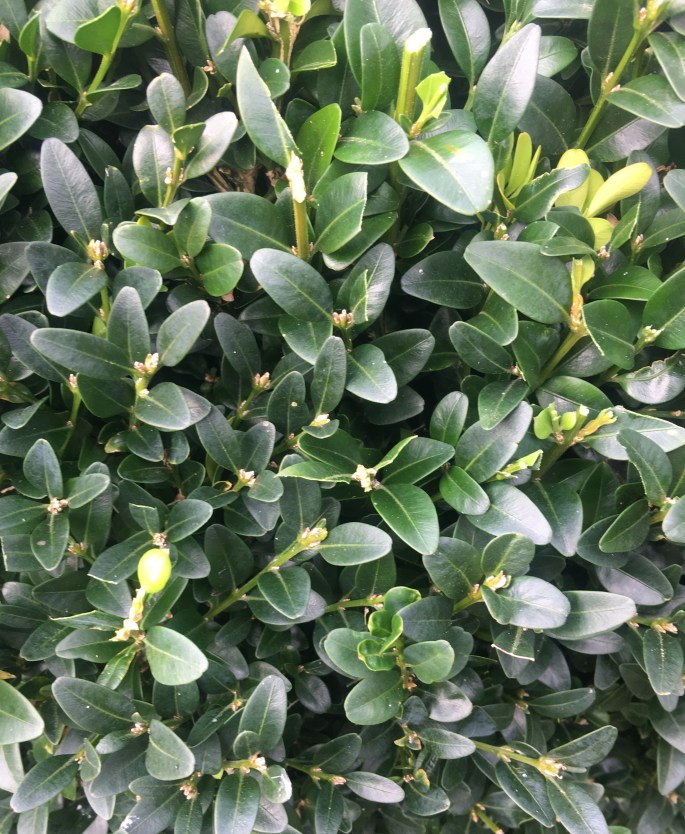
Common Box -(Buxus sempervirens). It can be sought already shaped or alternatively as a hedging choice. It’s slow in its growth which is why it is suited to topiary. It’s good in sun but tolerates a shaded position. It does, however, need a well drained environment. Its density thickens the more its clipped.

Hawthorn (Crataegus monogyna) offers fragrant flowers in spring to early summer and berries in autumn. It is good in both sun and shade although decidious so lacking interest in the dormant period. A fast growing shrub tolerant of exposed sites. It needs a trim after flowering. If it is done at the correct time this may not need more than an annual prune. It does need some sun so not a shade loving plant.

Blackthorn (Prunus spinosa) a fast growing habit offering flowers and berries. The flowers have no scent and although it offers interest in autumn, it eventually loses all signs of life until the following spring. It is very similar to Hawthorn although can cope in slightly more adverse conditions – this being the soil, air, nutrients and light. It is particuarly resilient in exposed areas with salt laden winds making it drought tolerant.

Pyracantha Saphyr Orange – this shrub flowers in summer and attractive berries are borne throughout autumn into winter. An evergreen, it provides interest at all times of the year including large thorns.

Conifers – encompass a large number of different species with different habits. Chamaecyparis lawsonia ‘Alumni’ – (False Cypress) is an evergreen that can be used as hedging. A hardy choice offering reliable foliage for little maintenance. Pinus and Thuja are conifers but usually used as an accent plant in a sunny border as opposed to a hedge. Cupressocyparis x leylandii ‘Castlewellan’ is fast growing and considered the typical choice for hedging. It does only require a shave to keep in check. A little every so often is key. A mistake that is made is that this hedge is left to get out of hand and then cut back in one go. This is needs to be clipped periodically rather than cut like privet. It doesn’t regenerate the same way and weakens it making it more prone to disease and fungal infection.

Forsythia x intermedia – a spring flowering shrub and Mahonia, an evergreen providing flowers, foliage and fruits in winter have been used but not particularly associated with hedging. Mahonia, a hardy evergreen tolerant of shade. It does need protecting from exposed areas though. It also flowers off last years growth so when you prune it, you pruning all the flowers away. The growth habit of both is informal, these plants shouldn’t be conditioned.