Winter Interest

This piece provides information on small trees/large, small shrubs that most of the year round may seem non-descript but it’s the autumn they come into their own.

Cornus alba ‘Sibrica’, a startling red bark in the colder periods but attractive white flowers in the warmer months. Some, Cornus mas yield a fruit shortly after foliage but you wouldn’t want to eat. Having said this, they look very attractive so may well be a food source for bio diverse wildlife.  For another purpose, Cornus ‘kousa’ var chinesis provides beautiful autumn foliage and subtle white later pink flowers in summer.

Another example would be Witchazel, namely, Hammamellis mollis x and Hammamellis x intermedia. These are hardy, frost resistant examples of splendid winter colour, they have a twisted branch habit with vibrant feathery flowers. Fantastic as a backdrop in a winter landscape.

A particularly valuable specimen for flowers and scent that can be found in winter is Chimonanthus praecox. Its common name being ‘wintersweet’ – an accurate definition of its traits. It provides autumn flowers and then foliage with no flowers in the warmer months. However, it produces heavily scented blooms borne on purely branches.  It needs, however, other similar flowering specimens around it. Other than its flowers and the oils it emits it has no other attributes.

You wouldn’t equate winter with Honeysuckle although there are varieties that flower in the autumn months. Lonicera x purpusii (an offspring of Lonicera fragrantissima). These not only give off a fragrance but can give an impressive flowering period between November and March. These also form on bare branches but does bear leaves through the non-flowering season. In this instance, good as a backdrop when other specimens at the front lie dormant and vice versa. Another benefit is they’re quite tolerant of windy or exposed settings and do not require protection as some climbers do. They provide a pollen source for beneficial insects that need support short of spring. However, these are quite large and can spread to an invasive size and so would be suited to a larger garden since no pruning is necessary and they should be left to their natural habit.

Mahonia x media ‘Charity’produces a full array of yellow flowers and can set off any shaded part of a garden. It can be in full sun but a little shade might be more desirable. The flowers are scented and will flourish from late autumn to early spring.  Both the foliage and flowers are impressive on their own and you benefit not just from aesthetics but also a fresh, vibrant fragrance which is certainly a pick me up in winter. It should be pruned straight after flowering otherwise it will affect next year’s growth. It will thank you to since the habit can also become straggly if left.

For the smaller garden or surburban space where room is scarce, Skimmia japonica can provide an all-round interest. They do prefer to be in partial shade so as not to get scorched and will benefit from being in well-drained soil.  Another benefit is they can be containerised or sit in the ground. The male form will produce red buds (not berries strictly) ready to unfold to give creamy – pink flowers, fragrant flowers throughout spring.

Hellerborus orientalis is another reminder of spring being imminent yet still enjoys frost – bitten mornings. When many things are asleep the Lentern Rose is anything but.  Not petals as such but a cluster of cup – like sepals adorn a very attractive dark, bold green serrated leaf. They are not keen on sitting in very moist environments but any other conditions they are very versatile and adapt well. They are frost hardy and have a “spring in their step” when some things are still underground!

For the flat/apartment balcony or ledge cyclamens are ideal and can be maximised to brighten any windowsill up. They don’t like getting too hot and don’t require a lot of water, just pull off spent flowers and another will form. You don’t need to submerge the crown (corm organ) and they generally are maintenance free. There are varieties that can be grown outdoors or in extension rooms.

Unsuitable Conditions

The kind of soil is an important factor when choosing plants for a given area. On one hand Clay based soil can get waterlogged. In dry periods it can go solid and easily become compacted. This is more time consuming to treat since you will have to work it over more but it does have a tendency to be more fertile and retains its moisture much better. It could probably be balanced mixed with sand, this would help break it up. this certainly would make it more free draining.  Conversely, Sandy soil, although easier to work will dry out quicker, will not retain moisture as well and will generally lack the bulk of humus matter to enrich the consistency of health. In addition, will be considered less fertile after time and quite poor in substance. Often more substantive material (leaf mould, organic matter, manure) will need to be added to give it some goodness and to improve its water retention.

With Plants in Clay Soil – you should break it up to make it more free draining, allow air to circulate and mix sand into the composition. Shrubs and small trees that sit quite comfortably include Choisya, Mahonia, Pyracantha, Virburnum, Rhododendron, Cotinus, Acer, Juniper, Trees would Sorbus, Malus, Betula but this isn’t exhaustive.

With Plants in Sandy Soil – you would do the opposite. You must bulk it out with humus rich matter and the consistency made thicker. Poppies, Penestemons and Lavender will do well as will Berberis, Elaegnus, Lonicera, Erica, Calluna, Juniper, Hamamelis mollis, Buddleja. Euphorbia, Salvia and Thyme too.

Most Plants will usually tolerate partial shade but never a fully sheltered spot since they need the light for the photosynethtic process (energy/fuel converted from light sources). Some can, however, adapt to a reduced light source (moderate/heavy).

Plants that tolerate Moderate to Heavy Shade

It can be avoided if the shaded area can be altered but there are so many shrubs that can tolerate this, it’s not necessary. Camellia japonica, Hypericum, Euonymous,, Acuba, Skimmia japonica, Taxus, Vinca (major/minor) and Pachsysandra (ground cover examples), Agapanthus, Liriope

Plants for Wet Soil

Again, this can be altered but boggy areas are valuable in the encouragement of bio diverse wildlife. This extends from birds to many beneficial insects that contribute to the food chain.

Hosta ‘Plaintain Lily’, Gunnera mannicata, Monarda , Iris sibirica, Iris laevigata, Rudbeckia, Hydrangea as in the name.

These will accommodate damp conditions and can be incorporated in moist/marshy areas. A variety of Shrubs:

Phormium (New Zealand Flax), Cornus, Salix, Spirea, Monarda

Plants for Poor Soil (tolerate little nutrient/drought conditions)

Sedum, Miscanthus, Carex, Pennistemon, Rosemarinus officianalis, Achillea sibirica and Erginghums, Cotoneasters are popular since they are built for neglect. Have attractive leaves and offer berries and being an evergreen provide interest all year round. Can have a standing shrub and a ground cover variety.

Plants for Humus Rich/Acidic Soil (4.5 -6.5)

Bergenia, Digitalis, Camellia, Pieris, Skimmia, Hydrangea, Rhodoendron, Magnolia, Acer and Azaeleas

Plants for Alkaline Soil (7.0) +

Usually in excess of 7.0 on Ph reading. High concentration of lime/ plants can be deprived of Iron and Zinc which limits the selection.

Alpine Plants could include Aubretia, Sedum, Lithodora, Linaria purperea and Saxifraga  – suitable for rockeries, What you will be trying to do is replicate the top of a mountain. Succulents  being Aeonium, Echeveria, Crassula *although these usually intended for indoors. Dianathus, , Potentilla fruitcosa, Clematis, Ceanothus  as this can be either a Shrub or low growing cover.

Quirky Characteristics

We know nature’s not perfect and we like it this way! By crossing species and cultivating we create new plants that look entirely different from their previous parent. We do this through general appearance, growth habit, vigour, scent and blooms. Roses can often be crossed for the latter reasons and importantly for resistance to diseases. The methods to achieve this vary. Often it is through grafting where two plants are fused. X usually defines this in the name. Rosa x centifolia.

Aucuba japonica “Crotonfolia” has a parent of a different appearance. The laurel has strictly speaking not been tampered with and is the effects of a friendly virus, namely the mosaic virus. We have, however, come to prefer it to its green counterpart and therefore cut out the green if the shrub begins to “revert” to its original form.

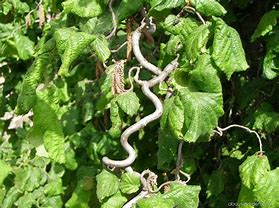
Corylus avellana ” Contorta” growers decided that the gnarled, twisted appearance was a better look for the hazel and therefore it is the more popular of cultivars. Again, if the plants starts to revert we use the same principle and cut out the “mutant” but really indigenous growth.

Euonymous fortunei is an attractive looking evergreen shrub but again through manipulation a variegated cultivar is more popular ranging from greens and creams to golden yellow. The leaf sizes vary from cultivars and the potential size of the shrubs can differ. Common examples Euonymous fortunei “Emerald n Gold”, “Emerald n Cream”, “Monrovia”.

Elaegnus ebbingei “compacta” has variegated states for instance Elaegnus ebbingei “Gilt Edge” and “Limelight”. These are two good examples of relatively common varieties where startling results can be achieved. The leaf is attractive in any case because of it slight opaqueness/silvery underside and their evergreen too!

These developments only improved the reputation of non flowering evergreens as before we may not have devoted an entire bed to evergreen shrubs. Often it was only shrubs that flowered would have achieved these effects. Much interest can be had from having no flowers to speak of, no real maintenance, only neat, compact and attractive all year round.

Naturalisation of Plants

Often a lawn can be a “statement” to your home. It does, however, need to be used and fit for purpose. Most lawns will have defects (lulls) along with clover, daisies and broadleaf weeds. The traffic on a daily basis will also determine how tough it needs to be.  A person may annually treat to ensure its health and vigour is maintained although weeds are dispersed by the second, so very hard to keep in abeyance.

Often the aspect – is it in full sun or partial shade – is the seed fit for purpose – do the cold winds prevail.  The soil – is it free draining, does it dry out – is it sandy – is it heavy, clay based.  The drainage – does it get water/logged. All these factors will determine its success.

Unless its an amenity lawn (Bowling green, sports space) its not hugely important if you want to use it. Grass that is not level can raised by sand or additional soil. Imperfections can be made more attractive by the naturalisation of bulbs or wild flowers. Parks especially adopt this due to costs and logistical reasons. Drifts of Bluebells, Daffodils, Crocuses are used for this purpose. Bluebells and Crocuses do well in shade, so they are very versatile. Another alternative to sprucing up an area of grass is to incorporate wild flowers. Seed packets of a mixture can be bought or alternatively you may decide to plant your own using colours or tones of your liking.

All to be done after they are spent is allow seed heads to disperse for the following year, the bulbs will do this for themselves. The only thing the bulbs will ask of you is to allow the goodness to return to the storage organ. Often several weeks after the foliage will sag, this a good indication that they can be cut down.

Self seeded flora can be seen as weeds, those that have blown from adjoining spaces can be considered a pain. However, the plethora of colour that can be achieved naturally is amazing, there is now colour where otherwise there would have been none.

Blues

Grape Hyacinths
Siberian Iris
Pasqueflower
Lesser Periwinkle
Forget-me-nots
Cornflower
Scabious
Butterwort

Yellow

Yellow Iris
Yellow Anemone
Buttercup (Creeping and Bulbous)
Stonecrop (succulent so can be used as ground cover and in rockeries)
Broom
Evening Primrose
Silverweed
Ragwort

Red/Pink

Fritillary (Snakes Head)
Meadow Saffron
Red Soapwort
Poppy
Cyclamen
Scarlet Pimpernel
Foxglove
Teasel

White

Ramsons
Snowdrops (unfortunately short-lived)
Campion
Christmas Rose
Meadow Saxifrage
White Rock Rose
Corn Chamomile
Feverfew

Green
Lord and Ladies
Hops
Sun Spurge
Cabbage Thistle
Sea Holly
Sweetflag
Wood Spurge
Stinking Hellebore