Healthy Growth

Often more than not your choice of shrubs will be performing as you expected them to but from time to time your garden may experience bouts of illness. A result of a Parasite, a Fungal Infection or a Virus.  It can often is exarcerbated by humidity and wet weather.

Rot can set in if roots sit in saturated soil and grass can appear matted, soaked and flat. A lawn can generally speaking is kept in good order if following steps are considered. Most of us have a typical utility lawn which can become compacted as a result of constant traffic, neglect and adverse weather.

By aerating the lawn simply with the tines of a fork air can circulate under the surface and improve the drainage of the area. On a larger scale land drains can be installed by way of a trench, corrugated plastic piping and gravel in the trench.

Making sure the grass is not cut too short. If it is an amenity area the seed is fit for purpose (it will contain premium seed: Festcues and Bents). A typical lawn contains Ryegrass and Annual meadow grass and although more robust and resilient can only be mowed to a certain height. It has not been designed for a very short habit and only cut with a rotary mower.

If you weed and feed each year, only use moss killer and fertiliser moderately. Excessive application will be indicative by black marks. If you’re not fussy it will grow back and knit together or can be patched up by removing the affected area.

Regular inspection of your plants will often raise an alert if necessary. If there are notches missing off the leaves, if they are unexpectedly wilting or lost their colour and vigour. If a pattern is emerging throughout the bed, it may be a sign of a cross infection. To identify what it is, it is half the battle! There are organic (non biological and non chemical) and biological and chemical forms of treatment. For a bout of aphids on Roses, Soapy water can often work since the insects cannot stay on the leaves thereby minimising the damage. By growing resistant crops like carrots or beans can minimise the likelihood of verticullum wilt attacking a bed.

Leather Jackets/Chafer Grubs are a problem for lawn and young shrubs or vegetables. They attack the root system and although live under the surface are close to soil level and can be identified just short of the roots.

Vine Weevils are one the most common culprits, a black beetle which has yellow speckles and can be identified as the problem when the leaves show notches eaten. The seem to host themselves in the ground and prowl about causing destruction at night-time. Pesticides can be used or now there are “nematodes” available these predators will eat the problem away. It is worth noting that the majority of the time they invade on Shrubs in containers.  

Verticullum Wilt can also be identified by a sudden setback of growth and appearance of dieback. It harbours itself in infected soil and penetrates through minor wounds or fine roots where their is weakness. It will last one year hosting on tissue so older plants usually recover. Younger ones, however, do not. If you experience a spate of this it is probably not worth putting a replacement in the same location since the fungus will remain in the soil. If you can cut into the tissue you will see a clear discolouration of an infected side and a healthy side.

Camellia’s suffer a mottle virus which produces yellow patches randomly on leaves. Research has shown it is not an insect but has evolved as a result of an infected knife/dirty secateurs. A lot of the time you can minimise these ailments but not eliminate them entirely. The list is extensive and sometimes linked to one particular Shrub. Good Practice should include clean tools, regular spraying if clearly susceptible to a particular condition, removing dead or diseased growth, regular feed and perhaps mulching in the colder months will all help.

Rust and Black spot can be particularly frustrating since it can inflict itself significantly quickly with Roses and on the undersides of the leaves you’ll notice orange spots. They will appear black in Autumn, reproduce and worsen the infection. By adding mulch around the crown in Winter and adopting a spraying programme you can keep these symptoms in abeyance.

Black spot does tend to affect Roses although it is known to attack other shrubs. A yellow -tinged black spot surrounded by a yellow lip. The leaves suffer chlorosis (discolouration) and die. This is usually in high humid, wet weather. Cutting out the diseased growth is the 1st step to its containment. Good housekeeping can help enormously, the debris being removed from the area and preventative spraying before the outbreak.

Viruses seem more difficult to diagnose and can only be sourced by poor management of tools, these should be cleaned regularly and thoroughly to avoid cross infection.
Viruses are usually carried by sucking insects like Aphids, leafhoppers and whitefly. Often agricultural crops will be chosen on their resistance merit as it is not uncommon for whole crops to be decimated.
Unusual Hedging

Deciding on a more Ornate Hedge, there’s never been so much choice. The days of an archetypal Privet around your property or Hawthorn are long gone. There is an increase in unconventional hedging using Laurel (green and spotted), Photinia, Eunonymus and Elaeagnus. However, if you have inherited a bit of a dull canvas you can easily add zing and intense colour with climbing annuals.

They can weave through the dense growth and provide an abundance of colour to perk up what essentially is a boundary line. There may be a redundant post, washing line, bland structure which will welcome a bit of casual growth and can almost train itself – it will find its way. Those who prefer a more structured approach can easily obtain canes, netting and even netlon to facilitate its development. Netlon can be bought in different lengths and widths and can adapt to several gardens of different styles and sizes since it can be cut to the dimensions that you want. One point to consider if you are using netlon or a similar product try and install in the early stages so it doesn’t be a problem when you’re cutting the hedge and keeping its shape. If you are filling a gap where growth has dies off. The climber should be able to train itself from its neighbouring partners. You can create a wigwam effect structure using three long canes and fasten tightly using twine, garden wire. There’s no method and it doesn’t matter what it looks like since you won’t see it.

The best thing about this type of project is that it can be done now in preparation to plant outside.

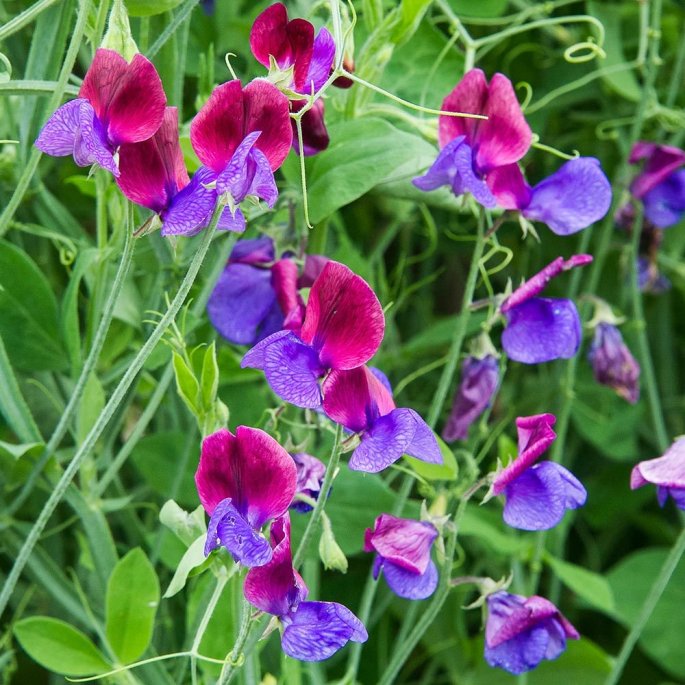
Sweet Pea’s, Lathyrus odoratus has a wonderful show of flowers and can be prolonged in flower production from dead-heading and cutting back. In full sun with well-drained soil, scent and colour can be enjoyed throughout summer. The plant is hardy and will come back each year.

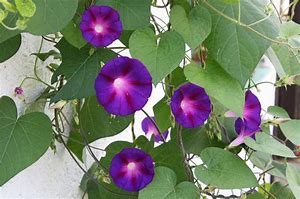
Ipomea (Morning Glory) unlike its feral counterpart Bindweed (white flower that is hugely invasive) can be sown and provide wonderful shades of purple, pink, blue. The plant, although related to convolvulus, is quite tender so care needs to be taken to protect it from the mildest of frosts. It doesn’t tolerate exposure so a sheltered spot in a warm environment is essential for its success.

Tropaeolum Nasturtiums usually adorn an orange or red flower, this annual is edible and effective in gaps. Easy to grow it needs to be in good fertile soil but not over rich. If it is too bulky you will get lots of leaves but no flowers. In addition, the annual doesn’t like too much moisture so in well-drained soil. It will brighten up any crisp morning against deep green hedging.

Solanum (Potato family) particular cultivars Solanum crispin ‘Glasnevin’ a deep purple or blue and Solanum jasminoides which is white and a has a faint scent. These are very hardy once they are established and resilient to most conditions.

Thunbergia alata ‘Black eyed Susan’ Length of flowering based on position of the plant, normally will flower all the way through until the frost. It is a tender annual. The plant most commonly is yellow but there are Blue and Purple varieties. It will need full sun and enrich soil. If protected or shielded from elements can continue flowering through the season as a conservatory plant.

These instructions are really for the purposes of a novice propagator so it’s not patronise. It is really to illustrate how straightforward propagation is. Take the seed tray and fill with soil (be mindful not to use from the garden for reasons of pests, diseases and cross infection) any soil-based compost, level out to lip. Grow bags will work but bear in mind nutrients will have gone the following year so use only new and just distribute outdoors any previous years). Buy choice of seeds and usually of whatever packet states keep indoors depending on instructions or find alternative accommodation for them like a cloche. Dib a hole with an instrument or simply use your thumb to gently push the seed to the top surface just under the level or sprinkle a thin layer on the top. Lots of light and warmth are key factors. It does sound like an obvious task but spray lightly with a fine spray to irrigate and this will produce a degree of humidity. In a matter of weeks the seeds should germinate under these conditions; with a little attention to encourage their growth. There is a method that sometimes can help of soaking seeds and does encourage the seeds to crack.  Leave the seedlings in the tray until they are independent and can stand alone. This foliage will be upright growth, evidence of a root system. Care needs to be taken to “prick” the seedlings out protecting the fiborous roots. The seedlings are potted on in small pots to develop their vigour and strength and the when the time is right, the ground is warm, the root system is established and foliage is mature they can be moved outside.

Past Times

With plants that bear fruit, some 19 and 20th century specimens seem to have folded in popularity. Their flora underappreciated and fruit not harvested. It can only be a good thing if these are encouraged more into open spaces and marketed to make a comeback along with the currant and berries that most of us consume.

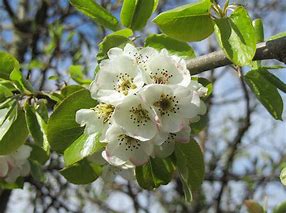
Pyrus communis (Wild Pear) Native to the UK but seems to have fallen out of fashion. No special treatment for this plant. It is largely independent of care. It is reliable for fruiting and flowers between April and May. The only condition it will ask of you is that it goes in full sun.

Emperium nigrum (Crowberry) It is evergreen providing winter interest as a food source and for the look. In autumn it bears berries which are edible, a little acidic though. It is well suited to moist, shaded areas and used as effective ground cover or in a rock garden. It is native to moorlands so these conditions are ideal.

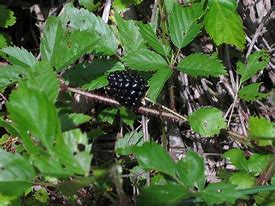
Rubus caesius (Dewberries) Black berries are borne. Robust and good in adapting to poor soil. It prefers rocky terrain with little or no nutrients. What goodness it needs it will draw itself.

Chaenomeles japonica (Quince) A summer fruit. The flowers will come in mid spring and are usually appreciated more than the fruit. An underrated shrub now and adorns very delicate flowers. They do have very thorny stems though which makes many just leave it alone when they inherit it through outdoor space. Their use was maximised in the 19th and 20th Century but seems now to have been forgotten as a staple for puddings and jams. A quince has more vitamin C than a lemon yet not used in the main. Quinces do not welcome a shaded or secluded spot or wet conditions. A free draining environment is preferred. In addition, a full sun aspect is better with warmth and not exposed to frost or wind. it is a good idea to thin the plant after it’s fruit yield and removed dead, diseased branches. Since it likes to retain the moisture it needs less sandy or chalky soils with organic matter added if necessary.

Sorbus aucuparia (Rowan) The berries are borne mid – late summer and in spring offers an abundance of white flowers. It is of benefit to both insects and birds too. The berries are edible although a touch on the sour side.

Prunus spinosa (Blackthorn – Sloes) The flowers will appear in early spring March onwards, the fruit is borne in early autumn that being August – September. Their main characteristic are very large spines off the branch. It can be used as hedging because of their thorny exterior. They do benefit from being left to their own devices – pollination by insects. They bear white, creamy flowers and adorned with fruit in autumn and so do have a dual purpose. They are larger specimens (more trees) and generally are found in woodland areas so container planting is obviously not an option!

Vaccinum oxycoccos (Cranberries) A pink berry climbing vine, it can be planted in containers and trained. It can also be used ground cover, these autumn fruits are known to most (Ocean Spray) but to grow they are relatively straightforward. The only downside is they take a little time to establish themselves usually after two years start to do anything. These tend to be less spiky and have more hairy stems. Pruning is minimal and in spring all that is required is to remove straggly off shoots and thin a little. They have pink flowers and a purple spike protruding from the mainstem. The fruit usually by September- October. It is an evergreen so once the flowers have spent, the fruit is borne, the leaves have yet to still go a reddish colour and provide winter interest. The growing conditions are similar to Rhododendrons so they prefer ericaceous (acidic) soil. The soil needs to be sandy more than anything else. Irrigation needs to be consistent but able to free drain.

Ribes grossularia (Gooseberries) They have been cultivated for example, ‘invictus’ AGM but known more in their wild state. Because of its growth habit they are found as overgrowth and missed on inspection. Very easy to encourage and generally most soils will please the plant. Gooseberries do prefer direct sun or they will not bear fruit. The stems do tend to be thicker but unfortunately no less spikey. The gooseberry is ideal for smaller gardens since they can be grown as a shrub, trained up a wall and even cultivated in a container. They do like some moisture and although tolerate dry spells if container bound irrigation is needed. The fruit is born mid- summer and can be used for a variety of culinary purposes.

Winter Interest

This piece provides information on small trees/large, small shrubs that most of the year round may seem non-descript but it’s the autumn they come into their own.

Cornus alba ‘Sibrica’, a startling red bark in the colder periods but attractive white flowers in the warmer months. Some, Cornus mas yield a fruit shortly after foliage but you wouldn’t want to eat. Having said this, they look very attractive so may well be a food source for bio diverse wildlife.  For another purpose, Cornus ‘kousa’ var chinesis provides beautiful autumn foliage and subtle white later pink flowers in summer.

Another example would be Witchazel, namely, Hammamellis mollis x and Hammamellis x intermedia. These are hardy, frost resistant examples of splendid winter colour, they have a twisted branch habit with vibrant feathery flowers. Fantastic as a backdrop in a winter landscape.

A particularly valuable specimen for flowers and scent that can be found in winter is Chimonanthus praecox. Its common name being ‘wintersweet’ – an accurate definition of its traits. It provides autumn flowers and then foliage with no flowers in the warmer months. However, it produces heavily scented blooms borne on purely branches.  It needs, however, other similar flowering specimens around it. Other than its flowers and the oils it emits it has no other attributes.

You wouldn’t equate winter with Honeysuckle although there are varieties that flower in the autumn months. Lonicera x purpusii (an offspring of Lonicera fragrantissima). These not only give off a fragrance but can give an impressive flowering period between November and March. These also form on bare branches but does bear leaves through the non-flowering season. In this instance, good as a backdrop when other specimens at the front lie dormant and vice versa. Another benefit is they’re quite tolerant of windy or exposed settings and do not require protection as some climbers do. They provide a pollen source for beneficial insects that need support short of spring. However, these are quite large and can spread to an invasive size and so would be suited to a larger garden since no pruning is necessary and they should be left to their natural habit.

Mahonia x media ‘Charity’produces a full array of yellow flowers and can set off any shaded part of a garden. It can be in full sun but a little shade might be more desirable. The flowers are scented and will flourish from late autumn to early spring.  Both the foliage and flowers are impressive on their own and you benefit not just from aesthetics but also a fresh, vibrant fragrance which is certainly a pick me up in winter. It should be pruned straight after flowering otherwise it will affect next year’s growth. It will thank you to since the habit can also become straggly if left.

For the smaller garden or surburban space where room is scarce, Skimmia japonica can provide an all-round interest. They do prefer to be in partial shade so as not to get scorched and will benefit from being in well-drained soil.  Another benefit is they can be containerised or sit in the ground. The male form will produce red buds (not berries strictly) ready to unfold to give creamy – pink flowers, fragrant flowers throughout spring.

Hellerborus orientalis is another reminder of spring being imminent yet still enjoys frost – bitten mornings. When many things are asleep the Lentern Rose is anything but.  Not petals as such but a cluster of cup – like sepals adorn a very attractive dark, bold green serrated leaf. They are not keen on sitting in very moist environments but any other conditions they are very versatile and adapt well. They are frost hardy and have a “spring in their step” when some things are still underground!

For the flat/apartment balcony or ledge cyclamens are ideal and can be maximised to brighten any windowsill up. They don’t like getting too hot and don’t require a lot of water, just pull off spent flowers and another will form. You don’t need to submerge the crown (corm organ) and they generally are maintenance free. There are varieties that can be grown outdoors or in extension rooms.

Unsuitable Conditions

The kind of soil is an important factor when choosing plants for a given area. On one hand Clay based soil can get waterlogged. In dry periods it can go solid and easily become compacted. This is more time consuming to treat since you will have to work it over more but it does have a tendency to be more fertile and retains its moisture much better. It could probably be balanced mixed with sand, this would help break it up. this certainly would make it more free draining.  Conversely, Sandy soil, although easier to work will dry out quicker, will not retain moisture as well and will generally lack the bulk of humus matter to enrich the consistency of health. In addition, will be considered less fertile after time and quite poor in substance. Often more substantive material (leaf mould, organic matter, manure) will need to be added to give it some goodness and to improve its water retention.

With Plants in Clay Soil – you should break it up to make it more free draining, allow air to circulate and mix sand into the composition. Shrubs and small trees that sit quite comfortably include Choisya, Mahonia, Pyracantha, Virburnum, Rhododendron, Cotinus, Acer, Juniper, Trees would Sorbus, Malus, Betula but this isn’t exhaustive.

With Plants in Sandy Soil – you would do the opposite. You must bulk it out with humus rich matter and the consistency made thicker. Poppies, Penestemons and Lavender will do well as will Berberis, Elaegnus, Lonicera, Erica, Calluna, Juniper, Hamamelis mollis, Buddleja. Euphorbia, Salvia and Thyme too.

Most Plants will usually tolerate partial shade but never a fully sheltered spot since they need the light for the photosynethtic process (energy/fuel converted from light sources). Some can, however, adapt to a reduced light source (moderate/heavy).

Plants that tolerate Moderate to Heavy Shade

It can be avoided if the shaded area can be altered but there are so many shrubs that can tolerate this, it’s not necessary. Camellia japonica, Hypericum, Euonymous,, Acuba, Skimmia japonica, Taxus, Vinca (major/minor) and Pachsysandra (ground cover examples), Agapanthus, Liriope

Plants for Wet Soil

Again, this can be altered but boggy areas are valuable in the encouragement of bio diverse wildlife. This extends from birds to many beneficial insects that contribute to the food chain.

Hosta ‘Plaintain Lily’, Gunnera mannicata, Monarda , Iris sibirica, Iris laevigata, Rudbeckia, Hydrangea as in the name.

These will accommodate damp conditions and can be incorporated in moist/marshy areas. A variety of Shrubs:

Phormium (New Zealand Flax), Cornus, Salix, Spirea, Monarda

Plants for Poor Soil (tolerate little nutrient/drought conditions)

Sedum, Miscanthus, Carex, Pennistemon, Rosemarinus officianalis, Achillea sibirica and Erginghums, Cotoneasters are popular since they are built for neglect. Have attractive leaves and offer berries and being an evergreen provide interest all year round. Can have a standing shrub and a ground cover variety.

Plants for Humus Rich/Acidic Soil (4.5 -6.5)

Bergenia, Digitalis, Camellia, Pieris, Skimmia, Hydrangea, Rhodoendron, Magnolia, Acer and Azaeleas

Plants for Alkaline Soil (7.0) +

Usually in excess of 7.0 on Ph reading. High concentration of lime/ plants can be deprived of Iron and Zinc which limits the selection.

Alpine Plants could include Aubretia, Sedum, Lithodora, Linaria purperea and Saxifraga  – suitable for rockeries, What you will be trying to do is replicate the top of a mountain. Succulents  being Aeonium, Echeveria, Crassula *although these usually intended for indoors. Dianathus, , Potentilla fruitcosa, Clematis, Ceanothus  as this can be either a Shrub or low growing cover.