This slideshow requires JavaScript.


We know nature’s not perfect and we like it this way! By crossing species and cultivating we create new plants that look entirely different from their previous parent. We do this through general appearance, growth habit, vigour, scent and blooms. Roses can often be crossed for the latter reasons and importantly for resistance to diseases. The methods to achieve this vary. Often it is through grafting where two plants are fused. X usually defines this in the name. Rosa x centifolia.
Aucuba japonica “Crotonfolia” has a parent of a different appearance. The laurel has strictly speaking not been tampered with and is the effects of a friendly virus, namely the mosaic virus. We have, however, come to prefer it to its green counterpart and therefore cut out the green if the shrub begins to “revert” to its original form.
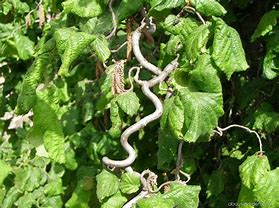
Corylus avellana ” Contorta” growers decided that the gnarled, twisted appearance was a better look for the hazel and therefore it is the more popular of cultivars. Again, if the plants starts to revert we use the same principle and cut out the “mutant” but really indigenous growth.
Euonymous fortunei is an attractive looking evergreen shrub but again through manipulation a variegated cultivar is more popular ranging from greens and creams to golden yellow. The leaf sizes vary from cultivars and the potential size of the shrubs can differ. Common examples Euonymous fortunei “Emerald n Gold”, “Emerald n Cream”, “Monrovia”.
Elaegnus ebbingei “compacta” has variegated states for instance Elaegnus ebbingei “Gilt Edge” and “Limelight”. These are two good examples of relatively common varieties where startling results can be achieved. The leaf is attractive in any case because of it slight opaqueness/silvery underside and their evergreen too!
These developments only improved the reputation of non flowering evergreens as before we may not have devoted an entire bed to evergreen shrubs. Often it was only shrubs that flowered would have achieved these effects. Much interest can be had from having no flowers to speak of, no real maintenance, only neat, compact and attractive all year round.


Often a lawn can be a “statement” to your home. It does, however, need to be used and fit for purpose. Most lawns will have defects (lulls) along with clover, daisies and broadleaf weeds. The traffic on a daily basis will also determine how tough it needs to be. A person may annually treat to ensure its health and vigour is maintained although weeds are dispersed by the second, so very hard to keep in abeyance.
Often the aspect – is it in full sun or partial shade – is the seed fit for purpose – do the cold winds prevail. The soil – is it free draining, does it dry out – is it sandy – is it heavy, clay based. The drainage – does it get water/logged. All these factors will determine its success.
Unless its an amenity lawn (Bowling green, sports space) its not hugely important if you want to use it. Grass that is not level can raised by sand or additional soil. Imperfections can be made more attractive by the naturalisation of bulbs or wild flowers. Parks especially adopt this due to costs and logistical reasons. Drifts of Bluebells, Daffodils, Crocuses are used for this purpose. Bluebells and Crocuses do well in shade, so they are very versatile. Another alternative to sprucing up an area of grass is to incorporate wild flowers. Seed packets of a mixture can be bought or alternatively you may decide to plant your own using colours or tones of your liking.
All to be done after they are spent is allow seed heads to disperse for the following year, the bulbs will do this for themselves. The only thing the bulbs will ask of you is to allow the goodness to return to the storage organ. Often several weeks after the foliage will sag, this a good indication that they can be cut down.
Self seeded flora can be seen as weeds, those that have blown from adjoining spaces can be considered a pain. However, the plethora of colour that can be achieved naturally is amazing, there is now colour where otherwise there would have been none.
Blues
Grape Hyacinths
Siberian Iris
Pasqueflower
Lesser Periwinkle
Forget-me-nots
Cornflower
Scabious
Butterwort
Yellow
Yellow Iris
Yellow Anemone
Buttercup (Creeping and Bulbous)
Stonecrop (succulent so can be used as ground cover and in rockeries)
Broom
Evening Primrose
Silverweed
Ragwort
Red/Pink
Fritillary (Snakes Head)
Meadow Saffron
Red Soapwort
Poppy
Cyclamen
Scarlet Pimpernel
Foxglove
Teasel
White
Ramsons
Snowdrops (unfortunately short-lived)
Campion
Christmas Rose
Meadow Saxifrage
White Rock Rose
Corn Chamomile
Feverfew
Green
Lord and Ladies
Hops
Sun Spurge
Cabbage Thistle
Sea Holly
Sweetflag
Wood Spurge
Stinking Hellebore


Most plants are able to adapt to adverse conditions their makeup wasn’t ready for, whether it’s Ph balance, competing plants or the ability to absorb potassium (affecting shape size, colour). If the soil is dry the plant can’t absorb anything. There is, however, one condition that is non–negotiable for them and that’s wind. Some plants will not tolerate it at all. With this in mind, care needs to be taken choosing plants for a coastal location.
Although it might appear milder in conditions with less chance of frost, the plant will have to cope with extreme winds and salt laden moisture. The shelter will need to start from the outer layer. A hedge to act as a windbreak that will protect a tree then more enclosed a shrub to an eventual perennial or hardy bedding plant. These plants need to be tough to deal with adverse weather conditions that cease to stay consistent. They will be exposed to harsh winds and excessive water, although moisture, it will have a high concentration of salt. With more sun than shade it is inevitable that these plants will dehydrate, they need to be resilient with little maintenance. The conditions ongoing yet keeping a colour and vigour all year round.
Some grasses (Stipa) are popular and ferns (Asplenium) are encouraged to grow through cracks in walls. They will thrive off the minerals of the stone and tolerate alkaline conditions. At times the plant can be found in an inaccessible location and needs to be therefore self-sufficient. The salt content is an important factor and often Rhododendrons (Evergreen) and Wild Roses ( die back but doesn’t lose growth so cut to ground level) can be used, they can survive in these conditions.
The soil is often very sandy with no loam (humus matter – bulk) all moisture will drain away as will nutrients if added. Often the soil particles are poor and has no substance to retain the goodness in addition to the prevailing wind.
It is important for particular plants to be given the right location with the right protection. Otherwise, it will render the species burnt and blackened, the leaves will be damaged and it will eventually destroy the plant. The sand accompanied by the salty water can be damaging. Suitable plants usually have some form of waxy layer or may have tiny hairs on their outer shell (leaves/bracts/shoots). Often it is advisable to choose perennials that die back to ground level or choose specimens that lose their leaves thereby going into hibernation and resourcing their energy levels.
Structures or embankments are suitable as they can act as windbreaks but walls aren’t a solution. They can almost compound the wind problem and can even channel turbulence to really fuel the problem. Hedges are, therefore more effective than walls, the wind moves through the gaps as opposed to applying pressure.
There is one benefit to these very adverse conditions, the climate, the temperature is mild so more borderline plants can be incorporated which would otherwise not cope. Typical examples below.
Suitable Hedging/Windbreak
Berberis (Barberry bush)
Hawthorn (Crataegus monogyna)
Rosa rugosa (Wild Rose)
Suitable Trees (adding sheltered pockets)
Pinus (Pine)
Salix pursuer (Willow)
Cytisus (Broom)
Suitable shrubs tolerant of wind/salt
Cordyline
New Zealand Flax
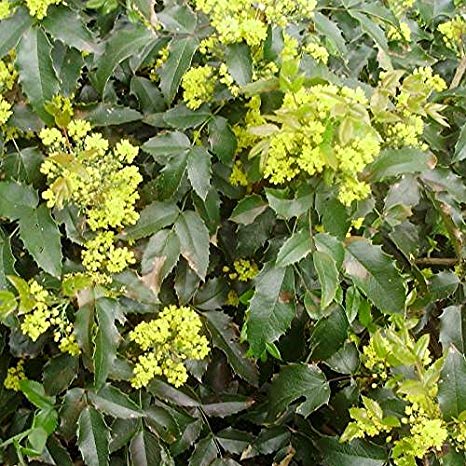
Mahonia Virburnum
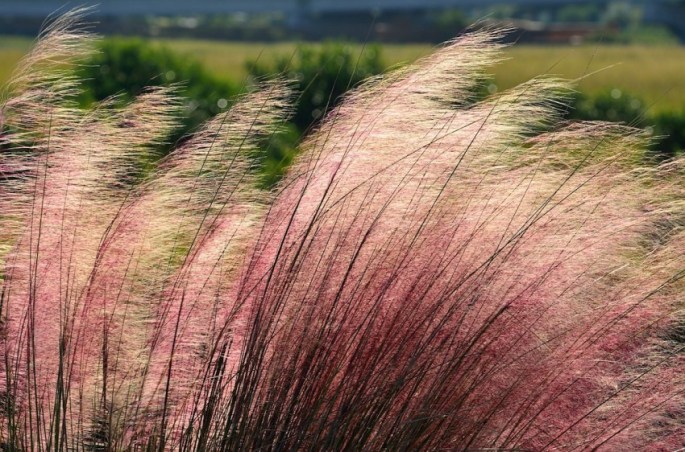
These are really low maintenance plants and can achieve a strong mediterranean effect . The Ornamental Grasses- good for coastal spots and windy locations that suffer drought like conditions. Usually most will survive in mixed conditions although usually must be well drained, they can tolerate semi fertile soil without additional food. This includes most soil types whether Chalky, Sandy or Loamy. The conditions are usually a full sun/partial shade aspect/free draining soil. They can add an archeitectural element to the garden without much effort. There is very little to do them bar a handful.
Pampas Grass can often need some attention because usually people wait until its too late and you have a front garden with 1 Pampas Grass dominating the entire green space. A yearly crop to the base 6 inches and it will regenerate better than you think coupled with helping maintain its size and shape. Dividing will help and you will have more plants equally , bear in mind that cutting back dead growth will encourage next years so do take it to the base. Either when spent before dormant season or just as it is warming up (Spring). They are quite resilient so don’t be too alarmed at the bald lump that is left after giving it a good cut. Very rarely does it fail to replenish, it controls it too.
Bamboo is not associated just with towering specimens that dominate the designated spot. There are dwarf and standard varieties. Pleioblastus variegatus can provide the same bamboo foliage on a smaller scale. Some are suited to shade, some full sun and others exposed areas but again the salient point being not too wet and free draining. They are fit for purpose whether in a pot as a wind break, clump forming or in a running course. Varieites suited for potting as Shibataea Kumasca, Fargesia nitida better placed for hedging and a running course and Chusuea culeou/Phyllostachys nigra for your wind breaker/screening
Carex buchananii (Brown) Glauca (Blue/Green) Sedge, Fescua Glauca (Blue) can all be used as an effective contrast plant. Stipa tenufolia (Pheasant Grass), Ophiopogon nigrescens (Black Mondo) once in situ doesn’t need anything more than cutting rough ends and can be left to their own devices.Drifts of them can be quite dramatic. Miscanthus – which whistles in the wind (nice attribute) sinensis – many different varieties including some variegated leaved forms. They usually add good autumn interest and need cutting back to the base to encourage new growth. ‘Graziella’ Pink and then silver. ‘Marlepartus’ Purple plumes and the silver in Winter. Most varieties are quite self contained and neat clump forming. Smaller varieties M . sinensis ‘Adagio’, ‘Gnome’ do not usually have a clump habit and would be planted in drifts. These both are smaller but have quite dense foliage.
The range doesn’t stop at shades of Brown and Green. There are varieties as Arthropodium candidum ‘purpureum’ Rock lily that has a show of Purple bronzed leaves and forms tiny white flowers as an extra element. Carex dipsacea ‘coppertop can provide a vibrant a bronze effect with specks of orange appearing at tips. In addition, Carex testacea ‘Indian Summer’ can provides a rusty, orange glow at its peak.
A contrast example might be the variegated leaved varieties which Carex shares one Carex brunnea ‘variegata’ of but also Bromus inermis ‘Skinners Gold’ or Acorus gramineus are possibilities for a green/yellow effect. . There are specimens suited to being potted Arundo donax ‘Golden Chain’ and ‘versicolour’ is another but sometimes check for hardiness as with some they require extra protection in the chillier months. Arundo donax can reach a mammoth size there is a type that falls short of Bamboo that being the above. This reed like structure towers above most and is hollow inside. Nonetheless, it shows why they are such attractive and versatile plants which can be used for a variety, adapt to diverse conditions, need little or no attention and achieve quite startling effects.

