Slug Resistant Plants

The weather has a massive effect on the gravity of a slug invasion. The ground is wet and a rainy night is sure to invite the unwanted pests for a midnight chomp.

Slugs prefer cool, dark and moist conditions and thrive all year round. They hide under decomposing leaves and organic matter. The predators of slugs do keep numbers down but in recent years these numbers have diminished from the lack of biodiversity. A milder climate means they survive the hibernation period more often than not. The use of pesticides may keep weeds or surplus growth in abeyance but also kills off predatory species that would reduce the reproduction. The uniformity of gardens plays an important factor, some gardens can be too clear of debris thereby decreasing the number of predatory species.

With this in mind, plants can unnecessarily be decimated without biological control or organic deterrent. A sustainable and ethical method may be to plant species that repel the slug community. A slug is very effective at breaking down organic matter. They play a role in the soil ecosystem but not welcome when it affects your border. Hostas and Marigolds are favourites with these gastropods, the texture of the leaf is quite significant in the attractiveness. Often leaves that are bitter, more rigid and less soft can deter them. Equally anything with bristles or small hairs. Woody plants usually are low risk, it is usually the soft, immature leaves that they prey on. Ornamental grasses are often a good choice Carex, Miscanthus, Phormiums and alike. Euphorbias (Spurge) are poisonous by their sap and for slugs they have a bitter taste. Hellebores are equally effective but for a different reason. Their waxy leaves means they get left alone. Stachys byzantina (Lambs ears) too but for their fur. Nepeta (Catmint) emits a strong scent that slugs stay clear of and this can be said for other strong smelling herbs. Rosemary, Lavender, Sage and Oregano to mention a few. The scent in smaller plants seems to be a deciding factor when discouraging slugs. Lily of the valley, Alliums and for their scent. Begonias too for their waxy leaves.

The maturity of the plant can be relevant. Often in their early years Delphiniums, Primroses and Dahlias can be tempting and as they grow older they lose the attraction. Often this can be achieved by transplanting in a cloche or coveted areas and harden of what has been propagated. This is good practice for hardiness in temperature but also in the battle against slug destruction. The leaves as they become older are less palatable.
Irritant Sap

Some plants secrete a sap or fluid from their stems or leaves. At times these may cause an allergic reaction and therefore any maintenance, the use of gloves is advised.

Euphorbia crucifolia – Spurge – an interesting effect from spring to summer, an evergreen that is quick growing and perfect in well drained soil. It has attractive greenish yellow flowerheads. It has a common variety that can become quite invasive, Euphorbia des garrigues can become overwhelmingly settled and you have to entertain the milky sap too.

Hedera – An evergreen and a climber. The cultivated forms offer attractive variegated leaves, berries for winter and a stable habit for wildlife. Hedera helix – English Ivy and a cultivar Hedera colchica (Suphur Heart) it has been argued that Ivy doesn’t really smother other plants or trees – I disagree. By its habit and invasive nature it is a problem in the wrong place. Poison/Common Ivy contain a compound that irritates the skin and the ground is inert for anything else to grow for a period of time. Only Ivy.

Berberis thurburgeii startling results of reds, oranges and yellow in autumn. A versatile plant, has interesting leaves although will cause an allergic reaction when in contact with skin.

Rudbeckia – Black eyed Susan has coarse hairs along the stems that will temporarily be of discomfort. This dissipates quite quickly when cleaned off.

With Irises, care needs to be taken in dividing and transplanting the plants. The storage organ has toxic compounds that can permeate through the skin.

Aconitum carmichaelli or napellus are known not just to be an irritant but highly toxic. It difficult to confuse the dangers but infection could arise from a cut or broken skin so gloves are always advised.

Thistles and stinging nettles along with other abrasive plants (berries) will cause discomfort for a time. Giant hogweed can poses a risk and has damaging qualities although not usually left by others to become a problem.

Mediterranean Plants

Plants associated with this term are normally of strong structure and have the ability to withstand drought conditions. They have adapted to survive in extreme heat although their native environment would have been dry summers and mild but wet winters. Often more than not they thrive in full sun but periodically can cope in partial shade.

Cotinus coggygria (Smokebush) an effective foliage plant. It will thrive in full sun but is deciduous and so offers no winter interest. It provides orange-red-purple foliage from spring to autumn. This plant is very easy to look after and only requires the removal of unnecessary growth for a desired shape. In Spring, to check for dead, diseased or damaged stems and remove. It is usually fine in most soils although not poor. It does need some nourishment. An application of manure or humus rich matter can help.

Trachycarpus fortunei (Chinese windmill palm) a fully hardy specimen with strong architectural qualities. A quick growing specimen and ideal for climates where there can be severe winters. A point of concern is maybe in a sheltered location. It is not so fond of strong winds. However, they adapt well to full sun and shade.

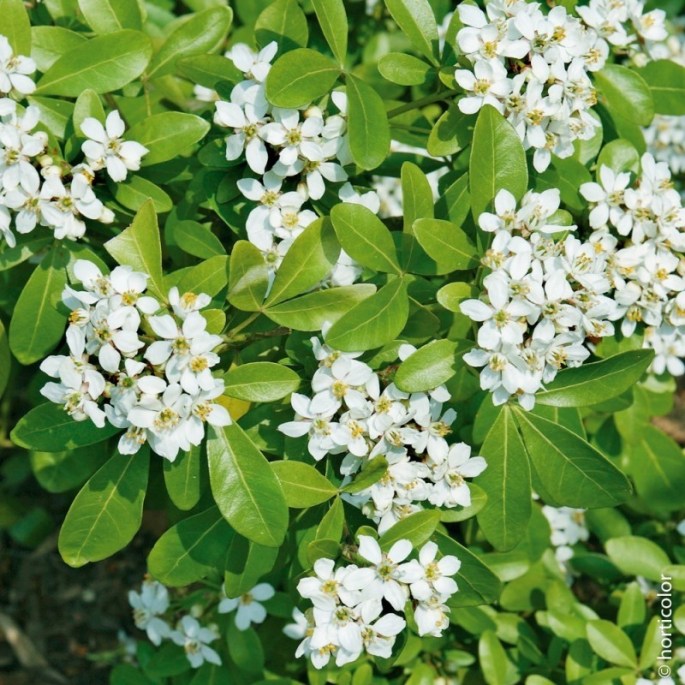
Choisya ternata (Mexican Orange Blossom) A fragrant neatly shaped shrub. An evergreen, it has attractive leaves and highly scented flowers. It also provides food for beneficial insects. It’s highly scented flowers appear in late spring and if clipped after flowering a second flush can often occur in late summer/early autumn.

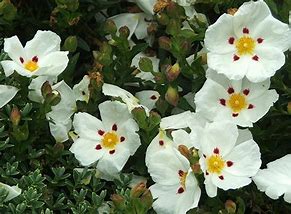
Cistus ladanifer (Crimson rockrose) A hardy choice. An evergreen, offering a profusion of colour throughout summer. It has adapted to cope with a poor environment where the soil has little nutrients. The flowers only last a day but so many in succession you would never notice. You mustn’t prune a cistus though, just pinch the spent growth off. Cutting back to the older growth will kill it.

Lavatera x rosea (Tree Mellor) A semi-evergreen providing continuous blooms all summertime. This variety is a shrub although there are perennials varieties available. L. thuringiaca is a perennial that comes into fruition in summer. You just cut the stems down in autumn. As with L x rosea the flowers attract butterflies and relatively speaking quite low maintenance save cutting back to avoid it becoming leggy each year. 2nd or third leaf node when they appear. The new growth will be luscious and less tired. It is not a fan of heavy clay soil, free draining soil is ideal as it prefers a light medium. It can cope with salt laden winds too.

Bougainvillea An evergreen climber/vine. It will thrive in full sun but when established will benefit from a little shade. Bougainvillea’s must be protected from frost so a container is probably more sensible unless the temperature in your location doesn’t go below 10 Celsius. Below this temperature and still protected, the leaves will fall off but it will survive. As the dormant period approaches the plant will no longer need irrigating so a good idea to stop watering. It does tend to need feeding. A high nitrogen to get it’s foliage under way. After this, a more balanced NPK 10-10-10, to encourage flowers.

Invasive Plants

As pretty as they may be, some plants want all the space. They will take without negotiation. They will deprive light, food and nourishment that their neighbouring plants would enjoy so an idea to keep these containerised.

Hedera vulgaris (Common Ivy). They range from the wild to specimens like H. colchica (Sulphur heart). But by their habit they inevitably climb on other plants, wrapping their tendrils around healthy stems and eventually killing them. The Ivy will provide birds with food, invaluable nectar for many insects and adequate habitat in the winter months. Once in situ though, this plant is not slow growing. So as long as maintenance of growth control is adhered to it doesn’t pose any issue. It is only in situations where it is left and can potentially cause problems.

Hypericum calycinum (Rose of Sharon/St Johns Wort) A versatile evergreen that flowers for a longer period than most plants. In the dormant period it can be cut back for new growth to be encouraged. A yellow flower and quite attractive leaves, but it’s habit is what makes it a problem. It is low growing and effective ground cover. Very resilient and by no means delicate. It grows too quick though and spreads smothering other plants. It can survive in all conditions: dry, wet, sandy, clay, humus rich, and light – both shaded and in full sun.

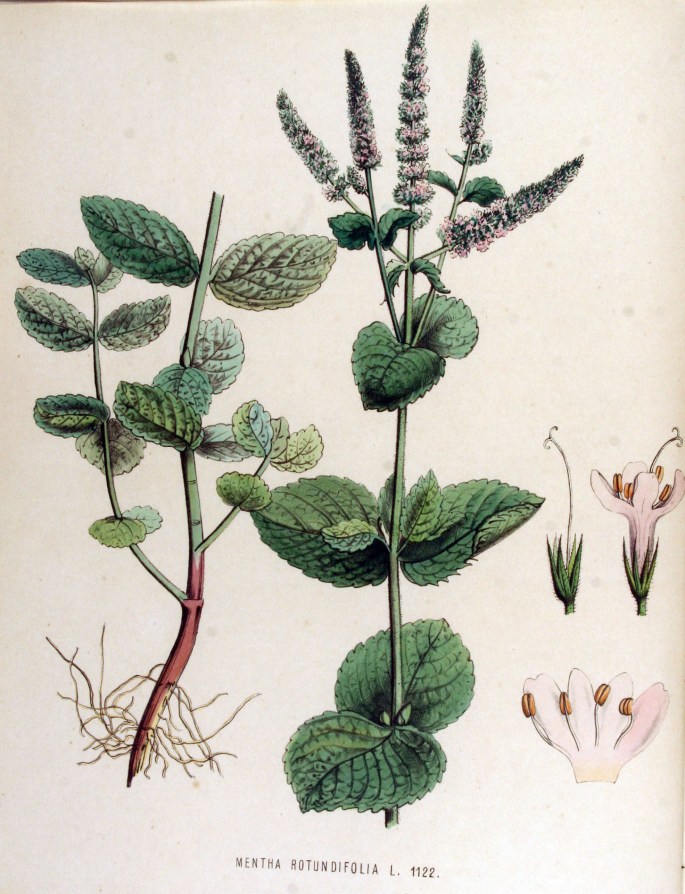
Mentha suaveolens (Mint) A herb used widely. The flowers also attract beneficial insects which is clearly a attribute. It does also show mauve flowers in Summer. However, this is very fast growing. Clusters that are too big lose their scent or if differing cultivars put too close together it can happen. To benefit from the aromatics, split periodically to revitalise the plant.

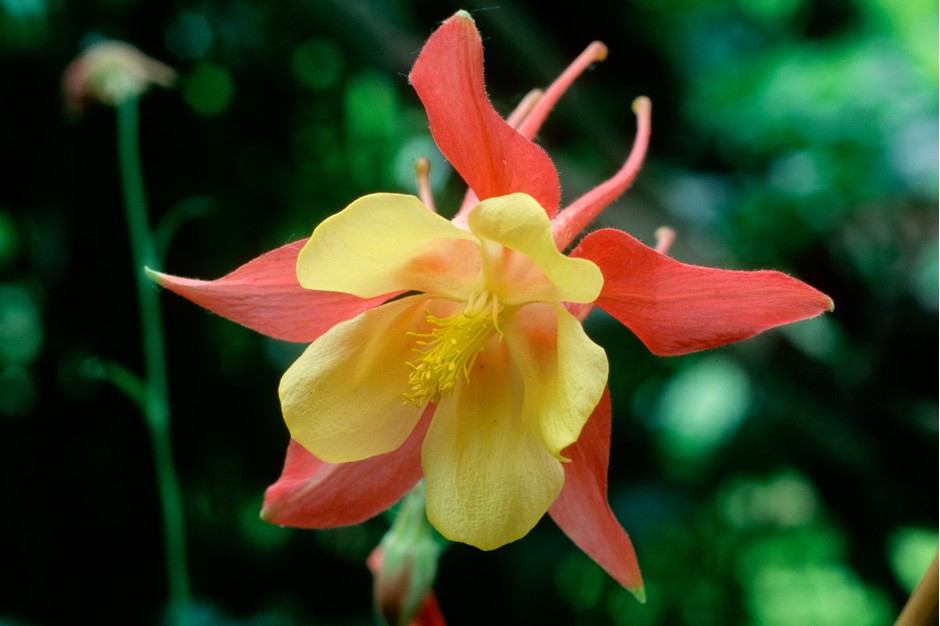
Aquilegia (Colombine) a weed or not considered by some. The true plant from seed is very attractive with distinctly unique flowers. It will show for only a short period but it will appear somewhere else shortly after. Good for rockeries and areas of poor soil or no loam. Very difficult to control though. The parent plant (from seed) can often crossbreed with a common variety causing a number of mutations and self seeding hybrids forming. The change in the colour and shape of the flower is distinct. The environment they thrive in can differ too. From a meadow to the higher terrain of a mountain.

Urtica dioca (Stinging nettle) Quick spreading roots. Yellow in colour. The plant dies back in winter. This would be the ideal time to unsurface roots and dig up if not wanted. This is easier since in the height of season nettles can grow very tall and difficult to manage. Beneficial to butterflies but will smother everything if left.

Herbaceous Perennials

An effective accompaniment to Shrubs. They not only offer colour each year but fill in spaces to offer height interest and differing habits in a planting scheme.

They do not have a woody stem, the goodness returns to the base rather like a Bulb or Rhizome would. It dies back in the dormant period but remains alive underground. They require little maintenance save cutting back after their blooming period.

Reds

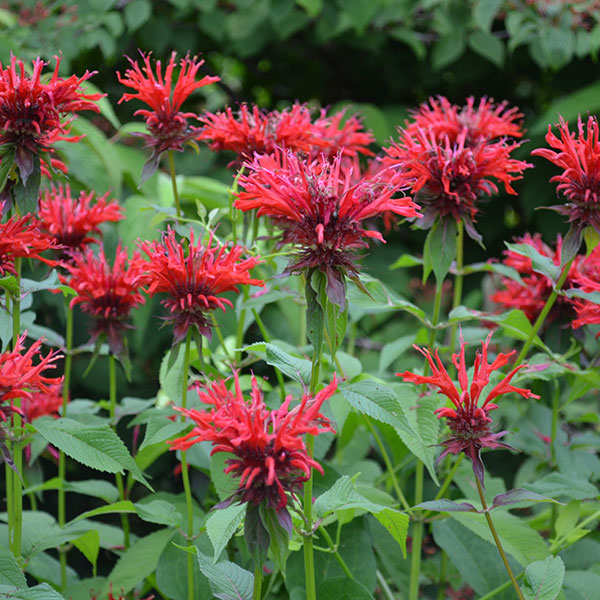
Monarda ‘Cambridge Scarlett’ – in full sun, this perennial offers delicate flowers in late summer, often red in bloom although their are pink varieties. It encourages beneficial insects so a valuable asset to the garden

Dianthus – come in a variety of colours from red, pink to white, summer flowering. Give them a clip to retain vigour of growth and prevent them from becoming straggly. Will prolong flowering as an added bonus

Mobretia or alternaively Crocosmia – come in a variety of oranges and reds. Very attractive flowers and very delicate in late summer. Invasive, however, and needs the corms dividing periodically to avoid it taking control

Salvia – a full sun loving perennial. An ornamental variety of the herb commonly known as sage. This is purely for decorative purposes and the variety ‘splendens’ can go from pinks to purples. So a choice for colour.

Orange

Helenium – a perennial that enjoys full sun in mid to late summer. Very robust and hardy. These perennials can be divided to produce other plants and this will always improve the plants performance.

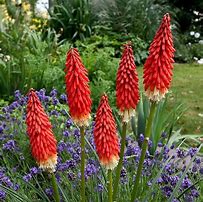
Knipfolia – Red hot pokers provide a striking display providing they get full sun. They must also be in drained soil and do not like sitting in unnecessary moisture. Periodically they will benefit from division too. Might need training to stay upright with poles! Tall.

Purple

Liriope Muscari – an autumn loving perennial that can endure little water and at times a small amount of light. Purple spikes protrude from an ornamental grass habit. Divide this plant when it appears smothered and tired from excessive flowering.

A near cousin Liriope armeniacum Grape Hyacinth – provide fantastic ground cover in winter months and most flower early spring when nothing has surfaced. Very tough but very delicate and good in shade or partial sun making it ideal under trees and coveted spots.

Pink

Bergenia cordifolia – ‘Elephants Ears’ is a pink flowering evergreen known for its flowers as well as its leaves. Very easy to look after. Will provide pink flowers in Spring but attractive foliage and effective ground cover all year round. Good in shaded and ignored areas and drought tolerant once established. Will attract beneficial insects including bees so a lovely addition to a border.

Foliage

Ferns are great to fill a gap where other plants would struggle. Not only do they thrive in shaded, moist spots they provide effective foliage most very attractive but are also relatively pest and disease free. They add a unique textural quality that can not be replicated in the same way.

Heuchera – come in red and green varieties. Very easy to look after. Cut back after they have spent their blooming period. They will just come back the next year and effective in close clusters

Stachys byzantina – (Lambs Ears) a choice for the foliage element. Very neat compact habit, almost silver like leaves. These leaves are of a fur like nature.

Hosta’s are perfect because of their diversity, preferring a shaded spot they are ok for the less developed part of a garden or secluded but be mindful they are not taken over by other perennials too close. Most locations but not full sun and good for rockeries and as an edging plant.