Textural Plants


Amazing results can be achieved by using textural elements of plants, either through the leaves or flowers. Usually perennials will give your border that extra zing when coupled with contrasting plants or as a cluster of the specimen.

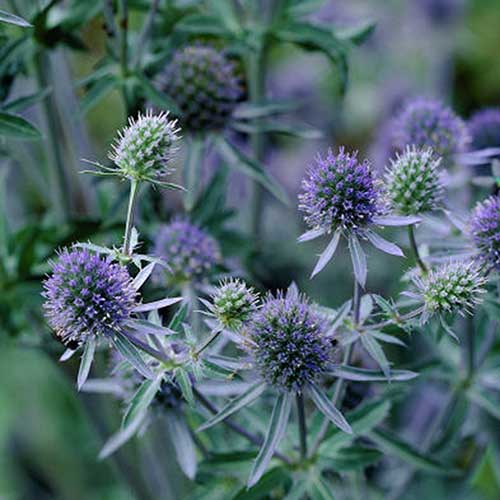
Echinops bannaticulus (blue globe thistle) these flower in summer and are best planted in a cluster. The flowering period can be prolonged by cutting off dead heads. On the whole, very low maintenance but have a tendency to disperse in wind. These seeds can easily germinate where their not wanted so another reason to cut flowers heads off when spent.

Another Echinops is ritro ‘veitch ‘s blue’ – this flowers in late summer and again the same rules apply. The specimen tolerates all soils as long as it is free draining. You can propagate these by division.

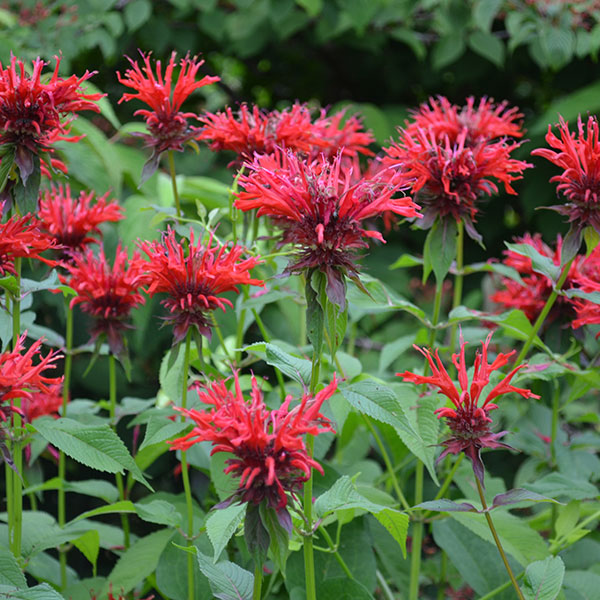
Monarda, or ‘Bergamot’ as it is commonly known possess strikingly attractive flowers. In summer, it offers an architectural element in any mixed border and its crimson colour is distinctive especially in a cluster grouped with any contrasting foliage.

Monarda didyma is commonly used for its crimson red effect although there are pink and purple varieties.

Eryngium bourgatii (Sea holly) runs throughout summer and offers architectural value in a perennial border up until autumn. It survives in poor soil as long as it has light and is sheltered to an extent. It also prefers to be in free draining soil and will not sit in waterlogged loam.

Eryngium planum offers summer flowers and is particularly good in clusters. Needs to be in full sun. Eryngium can have quite long roots. When they are settled avoid root disturbance as they don’t like being moved.

Stachys byzantina ‘Silver Carpet’ is a perfect foliage plant that provides effective mat forming clumps or low growing ground cover at the front of any perennial border. Very hardy. Stachys does lose its leaves eventually in winter ready for its spring growth. Survives in sandy soil and can withstand drought conditions.

Hosta undulata ‘ Mediovariegata’ is another choice for effective foliage at the front of a mixed border. The variegated leaves are clump forming and provide effective colour – they prefer slight shade and an acidic more humus rich environment. If the soil is too alkaline the leaves will suffer chlorosis. It is also a good idea to place them in a slightly sheltered spot as they don’t tolerate particularly cold winds.

A relatively recent addition to the foliage selection is Senecio ‘Angel Wings’ it has proven to be very successful despite only being cultivated in the last couple of years. Clump forming and generally maintenance free it offers all year round colour. It does bear yellow flowers in summer although that’s not what it known for. Needs a more humus rich than sandy soil. However, it will not tolerate being wet so must be free draining but have some substance. It likes the sun and will thrive in these conditions. It is good at sustaining its vigour with harsh cold winds but if the temperature really drops well below 0, it is a good idea to relocate or protect from the elements.

Unsuitable Conditions

The kind of soil is an important factor when choosing plants for a given area. On one hand Clay based soil can get waterlogged. In dry periods it can go solid and easily become compacted. This is more time consuming to treat since you will have to work it over more but it does have a tendency to be more fertile and retains its moisture much better. It could probably be balanced mixed with sand, this would help break it up. this certainly would make it more free draining.  Conversely, Sandy soil, although easier to work will dry out quicker, will not retain moisture as well and will generally lack the bulk of humus matter to enrich the consistency of health. In addition, will be considered less fertile after time and quite poor in substance. Often more substantive material (leaf mould, organic matter, manure) will need to be added to give it some goodness and to improve its water retention.

With Plants in Clay Soil – you should break it up to make it more free draining, allow air to circulate and mix sand into the composition. Shrubs and small trees that sit quite comfortably include Choisya, Mahonia, Pyracantha, Virburnum, Rhododendron, Cotinus, Acer, Juniper, Trees would Sorbus, Malus, Betula but this isn’t exhaustive.

With Plants in Sandy Soil – you would do the opposite. You must bulk it out with humus rich matter and the consistency made thicker. Poppies, Penestemons and Lavender will do well as will Berberis, Elaegnus, Lonicera, Erica, Calluna, Juniper, Hamamelis mollis, Buddleja. Euphorbia, Salvia and Thyme too.

Most Plants will usually tolerate partial shade but never a fully sheltered spot since they need the light for the photosynethtic process (energy/fuel converted from light sources). Some can, however, adapt to a reduced light source (moderate/heavy).

Plants that tolerate Moderate to Heavy Shade

It can be avoided if the shaded area can be altered but there are so many shrubs that can tolerate this, it’s not necessary. Camellia japonica, Hypericum, Euonymous,, Acuba, Skimmia japonica, Taxus, Vinca (major/minor) and Pachsysandra (ground cover examples), Agapanthus, Liriope

Plants for Wet Soil

Again, this can be altered but boggy areas are valuable in the encouragement of bio diverse wildlife. This extends from birds to many beneficial insects that contribute to the food chain.

Hosta ‘Plaintain Lily’, Gunnera mannicata, Monarda , Iris sibirica, Iris laevigata, Rudbeckia, Hydrangea as in the name.

These will accommodate damp conditions and can be incorporated in moist/marshy areas. A variety of Shrubs:

Phormium (New Zealand Flax), Cornus, Salix, Spirea, Monarda

Plants for Poor Soil (tolerate little nutrient/drought conditions)

Sedum, Miscanthus, Carex, Pennistemon, Rosemarinus officianalis, Achillea sibirica and Erginghums, Cotoneasters are popular since they are built for neglect. Have attractive leaves and offer berries and being an evergreen provide interest all year round. Can have a standing shrub and a ground cover variety.

Plants for Humus Rich/Acidic Soil (4.5 -6.5)

Bergenia, Digitalis, Camellia, Pieris, Skimmia, Hydrangea, Rhodoendron, Magnolia, Acer and Azaeleas

Plants for Alkaline Soil (7.0) +

Usually in excess of 7.0 on Ph reading. High concentration of lime/ plants can be deprived of Iron and Zinc which limits the selection.

Alpine Plants could include Aubretia, Sedum, Lithodora, Linaria purperea and Saxifraga  – suitable for rockeries, What you will be trying to do is replicate the top of a mountain. Succulents  being Aeonium, Echeveria, Crassula *although these usually intended for indoors. Dianathus, , Potentilla fruitcosa, Clematis, Ceanothus  as this can be either a Shrub or low growing cover.