Roses – Part 1

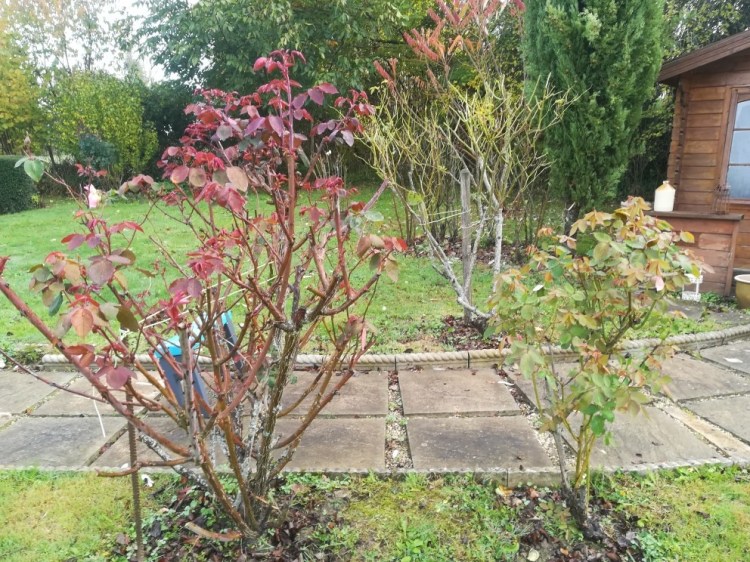
A time to start cutting these down. It will be to remove dead, damaged and diseased wood. In high winds, it ensures minimal damage to branches if it can move through the Rose. It will improve next years flowering – if there are no pointless branches the energy can move through to where it is needed most. Some leave until spring to do only once. You can return to them in spring if uneven growth starts to bolt. This job should really be done from september in preparation for winter, if not then do leave till spring. It will acclimistise for winter but hard pruning in “baltic” conditions will weaken it.

There is some disparity in the the care of Roses. Some say time-intensive, some argue too much method. Roses are relatively straightforward if you follow a few steps, if anything disease is more likely to thwart it than you.

Prune to a leaf node/bud to avoid dieback. This is an improper cut to the stem which simply goes brown and remains inert. It stores no energy so remove. Dieback however, can be a result of infected soil from previous planting harbouring grey mould and canker. Cutting back in a correct manner highly reduces this risk.

Remove any crossing branches to ensure full circulation and stems do not touch. This is general practice to avoid diseases spreading, cross contaminations. It is also reshaping the Rose so it retains its desired habit.

Cut back spent growth, straggly or unwanted. Look for central stem and 3/4 outward stems (dependent on how big), cut back shoots to 3/4 leaf nodes from the bottom. This should be maybe a third of its height. You can use your discretion for aesthetics. It depends how brave but it will be absolutely fine.

Roses seem susceptible to a number of diseases and pests although some varieties more than others. Varieties are crossed for resistance but as the cross species adapts to fight off the disease, the disease also adapts to survive.

Rust is a fungal disease, it affects the leaves – they will fall before they should. The plants overall performance is affected, in extreme cases can kill a Rose.

Powdery Mildew is a debilitating condition for a Rose. It is easily avoidable. It is usually to high conditions of humidity and lack of air circulation. Spores will infect the plant and impede its performance. Grey mould is pretty much the same thing.

Black spot, a fungal infection that blackens the leaves. Varieties are created to overcome infection but as discoveries are made, Black spot adapts to survive. Older varieties seem to be safer for some reason. Cut out the infected area and remove diseased leaves in autumn.

Winter shrubs

It is a fallacy that the garden goes to sleep at winter time. There are so many shrubs that are specifically chosen for this seasonal interest, in fact non descript for most of the year until they come into their own.

Camellia sasanqua is one of a few that have autumn flowering properties. They do prefer to be in full sun, acidic soil and with that well watered. These are not drought tolerant. They offer a strong fragrance throughout late summer to winter. Various colours and various flowerheads. Do prune after they have flowered since they can become leggy otherwise.

Mahonia x media ‘winter sun’ is an evergreen and another example of a shrub that can become leggy. Cut out branches that are unruly and seem to have no place. Mahonia do prefer a spot in full sun although like some shelter too so against a wall or fence would be fine. This will flower from November onwards. In good soil, Mahonia’s do thrive. Even apply some organic matter to keep it nourished.

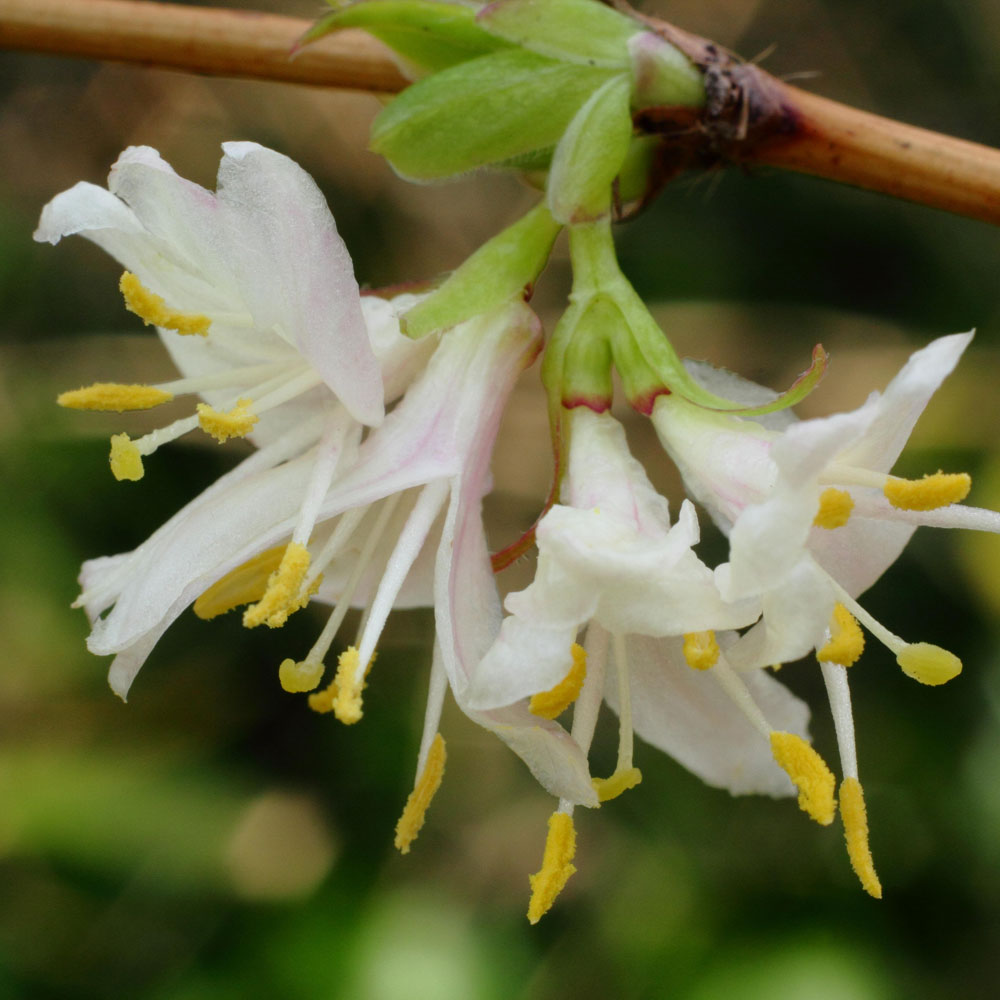
Lonicera x purpusii is a honeysuckle climber with strongly scented flowers in winter. It may be bare stemmed but the aroma it gives makes it’s presence known. Beneficial insects are attracted its flowerheads so provides them with food. It is a sun loving plant, it will provide you with a strong scented and delicate flowers through to February.

Hamamelis x intermedia is a shrub that will also loose its leaves when it flowers in late winter and on. The flowers are very fragrant in the main although one namely ‘Diane’ has a show of flowers but little scent. They do spread quite widely so give them room to develop. The plant is a hardy suggestion and often will not be phased by a cold spell.

Daphne Bholua is a medium sized evergreen that will flower during the coldest of spells. It will provide fragrant flowers in late winter followed by berries. It does need to be in a sunny spot but will provide frgrance, foliage and flowers though the year. It is relatively robust as long as not very exposed and has some shelter.

Callicarpa bodinieri ‘profusion’ whilst it offers flowers in mid summer, the vibrancy of its berries demands that it is mentioned as an excerpt. It is decidious but before the leaves are lost they turn a red. It is very hardy and will withstand severe conditions. It is good in most soils and generally easy to look after. The habit is not dense so a cluster of them is needed to make any impact. It is generally not tolerant in alkaline soils and discolouration of the leaves will indicate this.

Sweet Smelling Shrubs

To have fragrance in a garden is a certainty. Your Lavender, Roses and Nepeta are all worthy candidates for bringing that aroma to your patio in the warmer months. In addition there are shrubs that provide a sweet smelling scent coupled with annuals like sweet peas to relax your senses.

Philadelphus (Mock Orange) A decidious shrub offering a scent of citrus. It attracts beneficial insects and flowers in spring. A favourite amongst growers is P. ‘Belle Etoile’. The more common variety P. ‘coronarious’ is relatively low maintenance and can cope with neglect. Fully hardy too. Periodically, it would benefit from being cut back when the new buds appear to minimise legginess and improve blooms. Cut back top growth to 4 or 5 leaf nodes.

Choisya (Mexican Orange Blossom) An evergreen with attractive leaves. It does tolerate most conditions, although it is fine in shade it would prefer a full sun aspect. These are very easy to look after. The plant is hardy and will withstand being left. C. dewitteana ‘ Aztec Pearl’ is a variety that will flower in early summer but by dead heading a second show is possible. A more sheltered position is better than exposed as they can be prone to damage in high winds.

Choisya ternata sundance A half hardy alternative. It is usually preferred in a neutral soil or slightly acidic/alkaline but certainly not too much. It will not do well in extreme conditions. It is generally low maintenance other than removing unwanted growth.

Daphne Odora A semi evergreen shrub. It provides interest all year round. It flowers in succession between spring and summer. It is highly scented and hosts attractive foliage. D. transatlantica ‘eternal fragrance’ a compact habit suitable for smaller areas.

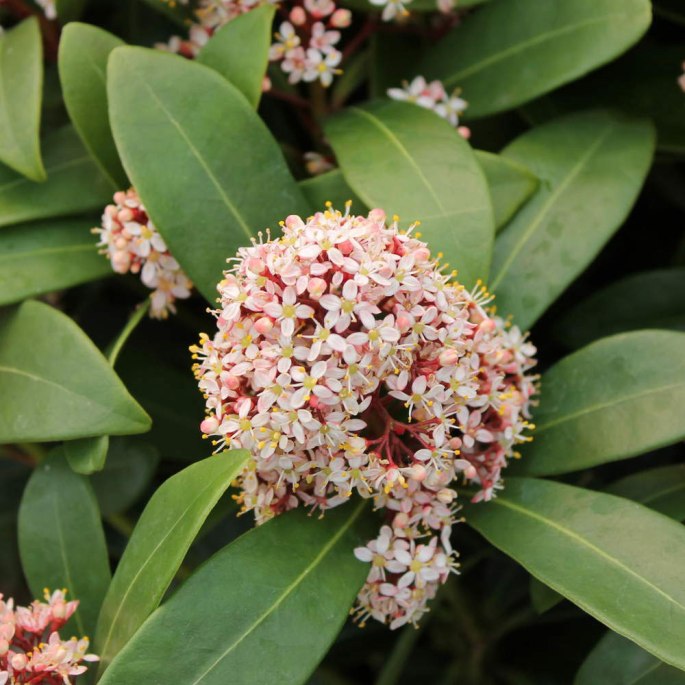
Skimmia japonica ‘Rubella’ An evergreen which prefers to be in full sun although it can tolerate shade. It is low maintenance and provides berries for wildlife until spring and the flowers open. It is worth bearing in mind this is male and only when coupled with the opposite sex will S. japonica ‘nymans’ produce berries. A common problem that is known to these species is the yellowing of the leaf. It is an indication that the soil is too alkaline.

In the winter months Chimonathus praecox ‘wintersweet’ provides a highly scented decidious shrub. This needs to be in full sun in a sheltered position but relatively versatile in the conditions it grows in.

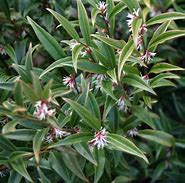
Sarcococca (Christmas Box) A winter flowering shrub. A hardy specimen but in an immature state provide a little more protection. Ideally in a shaded position or a little sheltered in the ground.

Wind Tolerance.

Usually with a windbreak, whether live or inert, plants can withstand some thrashing. However, for prevailing winds some plants will stand their ground and wait for it. They do not mind a battering and strangely their makeup has been designed for it. A lot of the time their habit and shape of leaves/bracts is relevant. Often grasses are very good and those specimens that are drought tolerant.

Miscanthus sinesis ‘Zebrinus’ (Zebra Grass) – In full sun these ornamental plumes do very well. Late summer into early autumn. Creamy fountain of grass with upright habit. Known for whistling in wind as other Miscanthus.

Pennisetum rubrum (Purple fountain grass) – In full sun will provide a cascade of purple foliage streaming foliage through other contrasting grasses. The shape can almost allow the wind to go through them and not at them.

Stipa tenuissima – is an evergreen which in full sun will work with other grasses and herbaceous perennials. A hardy ornamental grass that is hardy and relatively low maintenance.

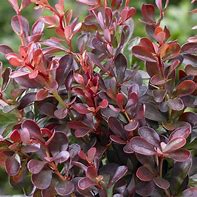
Berberis thunbergii – the barberry bush is a good staple shrub. It is a relatively hardy and robust shrub although at times to manage is a bit uncomfortable. A shear now and again is all that is necessary to keep its habit. It can be used in an unconventional hedge since pruning will make it denser. You will find foliage of green and a deep plum in varieties.

Cordyline australis (Cabbage Palm) is a good foliage plant but to probably keep to a container since you may have to move if the cold spells come. It is hardy to an extent maybe -9 so if sheltered or in good conditions will remain evergreen even with a bit of help.

Rosa Rugosa – a vigorous almost wild rose will live in the most of barren of environments. A fusion of our choice specimens and the wild variety. Very robust, very low maintenance. Can act as a shrub in its own entirety or as part of a hedge. Very resilient to all elements and very easy to look after.

Not a fan of conifers although many different sizes, habits and qualities, they are still worth a mention. A juniper bush or ground cover variety is a good choice for something of interest. Juniperus ‘squamata’ a blue grey variety which is hardy, tolerant of little care and will sit in quite problematic conditions. Full sun or partial shade and exposed or sheltered. Juniperus x media ‘Carberry gold’ a low dense habit which will provide you with equally lovely green-yellow foliage. Again its dynamics are quite easy going and will take full sun or partial shade and most importantly exposed.

Shrubs for Confined Spaces.

Despite having limited space startling results can be achieved using dwarf shrubs that retain a compact habit. They will provide flowers and foliage throughout spring, summer and longer. They are identical in effect to their larger counterparts.

Syringa ‘Boomerang’ – a dwarf Lilac providing two shows, one in early and one in late summer. These specimens are deciduous but are hardy so can stay in situ. They need full sun though. A highly scented choice. It requires little pruning just a trim to retain it shape.

Azalea ‘Dwarf Orange’ – an evergreen variety needing full sun and flowers in late spring. A hardy variety too and can be grown alternatively in containers. It is a slow growing shrub and although it’s flowers aren’t scented the shrub is very happy in most aspects. There are scented varieties but dwarf varieties not commonly used for aroma but for their flora. The larger varieties tend to be scented and be closer related to the Rhododendron. And whilst an Azalea is a Rhododendron, it is not true of the other way.

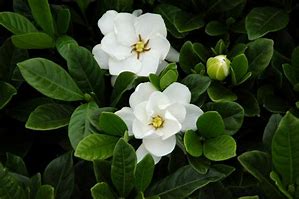
Gardenia jasminoides – These need to be in partial shade ideally but can cope with full sun. An evergreen known for it deep leaves and highly scented flowers. It is slow in growth but if space is an issue this is probably better. It will flower in late summer to early autumn. It is hardy but dependant on location may need to put in sheltered spot, so in a container may be more sensible unless your climate is mild.

Hydrangea quercifolia ‘Munchkin’ or ‘Sike’s dwarf’ – An attractive leaf and offers a show from summer to late. Has a compact habit and generally robust. The foliage will turn a rosy shade in autumn. Its needs are not specific and will work in most places, exposed too.

Acer palmatum ‘Shaina’ – A dwarf Acer that offers deep foliage through the seasons. Although more medium sized than small, a comparatively dwarf variety judging by how large they can be. It is quite slow growing so will take time to get to maximum size. Avoid full sun, it will burn the leaves or at the least provide some shade for it throughout the day. It is fully hardy but has no flowers so for foliage effect.

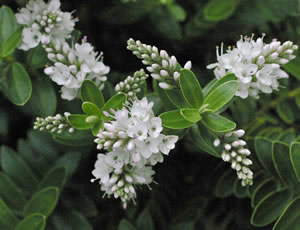
Hebe’s can be rather under – represented but these plants offer both foliage and flowers throughout all seasons. They are generally hardy, mostly evergreen and nearly all are disease free. Some varieties flower in summer but in winter too. Attractive leaves in a compact mound with often spikes/tubular racemes from the centre. Hebe ‘Wiri mist’ a late spring to summer offering whites spikes. A tough variety and fairly resilient to pests/diseases. Hebe ‘Midnight sky’ an evergreen variety which can flower early summer but offers deep foliage through autumn into winter. Hebe ‘Mrs Winder’ that will bear mauve flowers and takes the colour from summer right into winter.