Variegated Plants

To achieve consistent interest in your space throughout the year, an easy method would be to incorporate variegated foliage. All year round, you will be provided with beautiful leaves, flowers as a bonus and offering a hardy canvas for bulbs, perennials and bedding.

Hebe – Hebes flower between summer and autumn – purple / blues mostly. The aspect is not particularly important although Hebes don’t like prevailing winds or exposed areas. The wind damages the foliage. The plant needs some shade but sheltered is the key. It is not a terribly hardy plant, may need a degree of protection in severe conditions. It’s suited to a container, so be moved to an insulated / coveted wall if need be. Cut back dead, diseased and damaged after frosts.

A particularly interesting Miscanthus ‘zebrinus’ (Zebra Grass) – it provides colour (green / yellow to pink and silver) throughout the year; textural qualities in winter too. The pruning is only necessary in spring, highly ornamental in all seasons. As a Miscanthus, it “whistles in the wind”, which adds a quirkiness to the garden. The new growth will start to emerge from the crown, this will indicate the grass is ready for pruning.

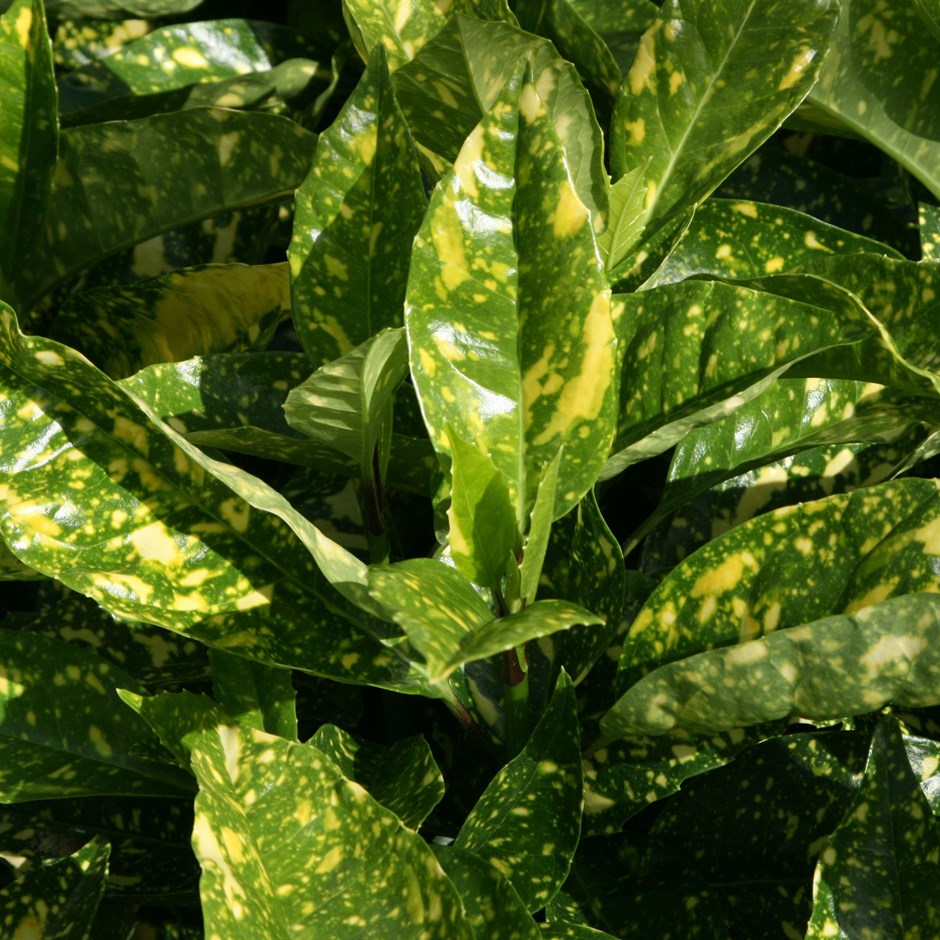
Aucuba japonica ‘crotonfolia’ – (Spotted Laurel). The spots, a result of a “friendly virus – “the mosaic” – it doesn’t harm the plant in any way and simply mutates its leaves. In the event of the plant reverting, cut the green out. It produces berries after the height of summer through to the next season. It is a very robust specimen. Good in all soils, aspects and conditions especially polluted air which makes it popular in urbanised areas or those with a high traffic content. No pruning, just unecessary / unwanted growth.

Other Bamboo / Sedges – Hakonechla macra / Carex variegata / Pleioblastus fortunei (Bamboo, sedges and grasses) – related but very different in habit. Most the pruning is in spring but some die back in winter. Hakonechla is mound forming, stays relatively compact but decidious. Carex everillo, Acorus is evergreen and Pleioblastus fortunei is too. There are different species, growth habits, sizes for varying purposes. These too in a variety of colours. Pennistemon (not typically recognised as a sedge/grass) are tolerant to moderate frosts and although do like full sun, can tolerate partial shade. These plants do prefer well drained soil and not in a waterlogged environment.

Euonymous fortunei – ” Emerald ‘n Gold”. A hardy staple evergreen, there is a cream variety too. ‘Silver Queen’. Good with adverse conditions. (Poor soil, light and water). These plants can be used as groundcover – an embankment or difficult location (very good as a weed suppressant). The plant does revert to its green state, you need to cut this unwanted foliage out to retain its variegation.”Colouratus” is the ground cover variety as a few others. The leaves turn a pinkish tinge if provided with full sun in autumn. The plant is very low maintenance, can cope with almost any soil without water or nutrients. It requires almost no pruning save unwanted growth.

Eleagnus ebbengeii offers the most eyecatching combination with their silver – green foliage mixed with Photinia as an evergreen hedge.  The plant is tolerant of little water, a drying atmosphere – so coastal areas, salt laden winds are fine. What Eleagnus don’t tolerate is the cold, so an exposed position is ok but with a good degree of sun.

Ornamental Grasses

These Ornamental plants are incredibly easy to look after. Most are almost self sufficient. Once in situ they offer texture, shape, colour and structure.

An example would be Cortaderia selloana (Pampas Grass). In the 1970’s, there was a popular trend in planting Pampas in a small frontage, then to find it 20 years on dominating the entire space. Each year the width increases so the plant should be cut 6 or so inches off the ground. The dead growth pulled out. This invigorates the plant, encourages fresh growth and curbs the size too. These plants are not nice to maintain, the sheaths of foliage are very sharp and must be handled with gloves. Division in the early years will manage the health and size too.

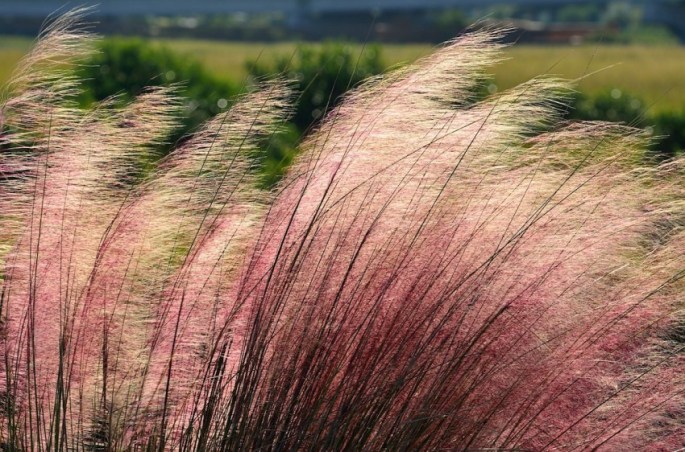
Miscanthus (Maiden Grass) is wonderful as it whistles in the wind and comes in different coloured foliage. M. ‘Zebrinus’ commonly known as Zebra Grass is a stripey variety. They add sound autumn colour and only need cutting back close in Spring encouraging new growth. ‘Graziella’ offers a Pink finish then turning silver. ‘Marlepartus’ provides Purple plumes and Silver in Winter. Most varieties are quite self contained and neat clump forming. Smaller varieties M . sinensis ‘Adagio’, ‘Gnome’ do usually have a smaller clump habit and would be planted in drifts. These both have quite dense foliage.

Hakonechloa Aureola ‘macra’ (Japanese grass) is a bright variegated grass. It has an arched habit, striking colour in its peak. It does provide an autumn brown effect when spent but then it does lose its leaves unlike some grasses. A striking red grass would be Imperata cylindrica (Japanese blood grass) again decidious. In early spring, the dead growth would be cut back to the base, other than this no maintenance. A softer choice would be Stipa tennuissima which is clump forming offering very fine foliage with delicate silver green flowerheads. Little to be done except the removal of dead growth and a “chop” in Spring.

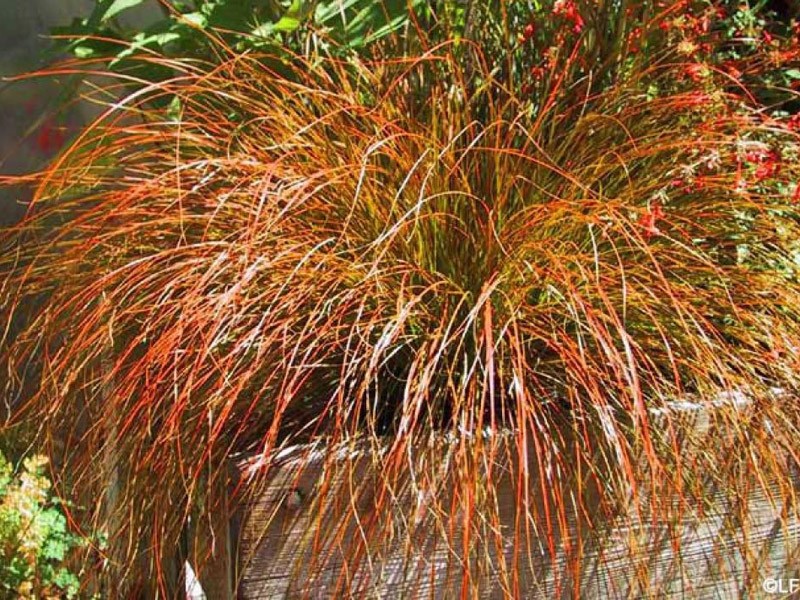
Arthropodium candidum ‘purpureum’ is an unusual addition that offers a contrasting effect to Browns or Greens. The plant has a show of Purple bronzed leaves and forms tiny white flowers as an extra element in midsummer. Carex (Sedge) buchananii (Brown) glauca (Blue/Green), Fescua glauca (Blue) all offer quite vivid colours. These too are effective as contrast plants. Carex dipsacea ‘coppertop’ can provide a bronze/rusty effect with specks of Orange appearing at tips. Similarly, Carex testacea ‘Indian Summer’ has a rusty, Orange glow at its peak. On the darker side, Ophiopogon nigrescens (Black Mondo) once in situ doesn’t need anything more than cutting rough ends off and can be left to their own devices. Drifts of them can be quite dramatic. The plant is quite small and so a large number is necessary for any impact.

Grasses

These are really low maintenance plants and can achieve a strong mediterranean effect . The Ornamental Grasses- good for coastal spots and windy locations that suffer drought like conditions. Usually most will survive in mixed conditions although usually must be well drained, they can tolerate semi fertile soil without additional food. This includes most soil types whether Chalky, Sandy or Loamy. The conditions are usually a full sun/partial shade aspect/free draining soil. They can add an archeitectural element to the garden without much effort. There is very little to do them bar a handful.

Pampas Grass can often need some attention because usually people wait until its too late and you have a front garden with 1 Pampas Grass dominating the entire green space. A yearly crop to the base 6 inches and it will regenerate better than you think coupled with helping maintain its size and shape. Dividing will help and you will have more plants equally , bear in mind that cutting back dead growth will encourage next years so do take it to the base. Either when spent before dormant season or just as it is warming up (Spring). They are quite resilient so don’t be too alarmed at the bald lump that is left after giving it a good cut. Very rarely does it fail to replenish, it controls it too.

Bamboo is not associated just with towering specimens that dominate the designated spot. There are dwarf and standard varieties. Pleioblastus variegatus can provide the same bamboo foliage on a smaller scale. Some are suited to shade, some full sun and others exposed areas but again the salient point being not too wet and free draining. They are fit for purpose whether in a pot as a wind break, clump forming or in a running course. Varieites suited for potting as Shibataea Kumasca, Fargesia nitida better placed for hedging and a running course and Chusuea culeou/Phyllostachys nigra for your wind breaker/screening

Carex buchananii (Brown) Glauca (Blue/Green) Sedge, Fescua Glauca (Blue) can all be used as an effective contrast plant. Stipa tenufolia (Pheasant Grass), Ophiopogon nigrescens (Black Mondo) once in situ doesn’t need anything more than cutting rough ends and can be left to their own devices.Drifts of them can be quite dramatic. Miscanthus – which whistles in the wind (nice attribute) sinensis – many different varieties including some variegated leaved forms. They usually add good autumn interest and need cutting back to the base to encourage new growth. ‘Graziella’ Pink and then silver. ‘Marlepartus’ Purple plumes and the silver in Winter. Most varieties are quite self contained and neat clump forming. Smaller varieties M . sinensis ‘Adagio’, ‘Gnome’ do not usually have a clump habit and would be planted in drifts. These both are smaller but have quite dense foliage.

The range doesn’t stop at shades of Brown and Green. There are varieties as Arthropodium candidum ‘purpureum’ Rock lily that has a show of Purple bronzed leaves and forms tiny white flowers as an extra element. Carex dipsacea ‘coppertop can provide a vibrant a bronze effect with specks of orange appearing at tips. In addition, Carex testacea ‘Indian Summer’ can provides a rusty, orange glow at its peak.

A contrast example might be the variegated leaved varieties which Carex shares one Carex brunnea ‘variegata’ of but also Bromus inermis ‘Skinners Gold’ or Acorus gramineus are possibilities for a green/yellow effect. . There are specimens suited to being potted Arundo donax ‘Golden Chain’ and ‘versicolour’ is another but sometimes check for hardiness as with some they require extra protection in the chillier months. Arundo donax can reach a mammoth size there is a type that falls short of Bamboo that being the above. This reed like structure towers above most and is hollow inside. Nonetheless, it shows why they are such attractive and versatile plants which can be used for a variety, adapt to diverse conditions, need little or no attention and achieve quite startling effects.