Sufficient Drainage

Other than plants intended for the pond, marginalised or oxygenating – species like to dip into moisture but not to sit in it. Lily of the valley, Daylilllies and Hibiscus can all tolerate more than enough moisture.

It is worth understanding then why the area is wet or over saturated. An ill drained area can be altered to improve water runaway so that the area is moist but drains. If the soil is compact this might be the reason for the accumulation of water. It might an option to install land drains or conversely change the consistency of the soil to allow water to penetrate.

Cornus do well in moist areas and provide effective winter colour. Dogwood produces attractive foliage with white flowers so has a purpose all year around. Very easy to keep and most aspects are adapted to. Easy to prune, a couple of inches from base and it comes back up in Spring.

Spring flowering Kalmia do well in these conditions with a good degree of light. As long as the sun is shining on the species, the plant can sit in moisture. It can tolerate partial shade as long as the soil has some drainage and on the acidic side which is why it goes well with Camellia’s and Rhodendrons. Little pruning is necessary but have a tendency to become leggy. A clip to keep its shape but is slow to grow out of control.

Some Salix alpine varieties will cope with some saturation as will Betula pendula, the silver birch, although some drainage is still needed. Hydrangeas are probably one of a few plants that devour H20. However, Hydrangeas cannot sit in it either as to do so would kill them rather quickly. They prefer cool, moist and shaded spots. A smaller water lover is a certain grass, Carex. This is usually in planting combinations with other ornamental grasses so often doesn’t lend itself to a pond location.

There are smaller species like Hostas (a rich and acidic soil for these plants) and Ferns (generally anywhere) that sit well in moist areas but again a crown rot issue can arise if proper care not taken of them. A grass that goes well with Hostas is Hakonechloa macra, it doesn’t mind moist soil but it must be well drained. Monarda – well drained, Rudbeckia – well drained. The problem of moist not wet still resides. Liriope too is resilient of tough conditions and can cope with full shade but not over saturated soil. It still needs to be well drained.

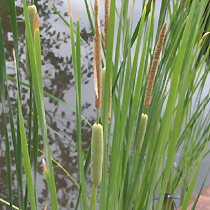
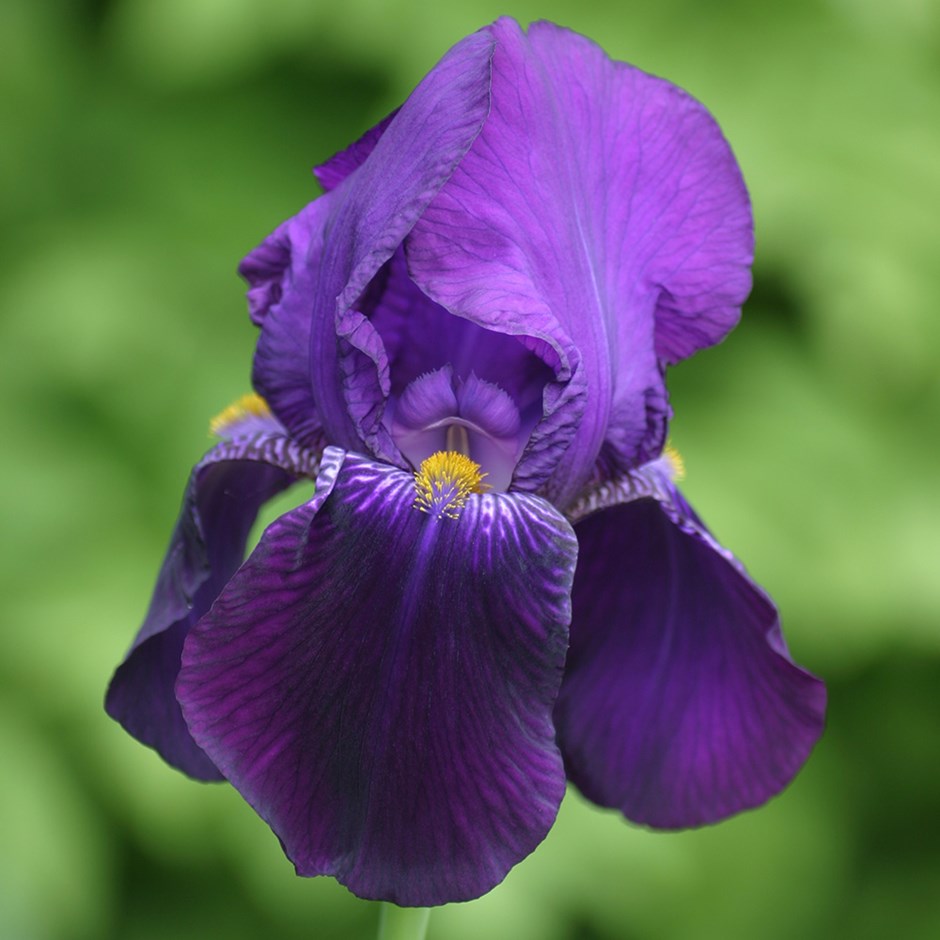
Nothing would be better than probably addressing the problem unless you want to create an actual bog or marsh area for Bull rushes, Gunnera, Irises and alike and even here there needs to be a degree of drainage. Not too much seems to survive in a pool of water.

Textural Plants


Amazing results can be achieved by using textural elements of plants, either through the leaves or flowers. Usually perennials will give your border that extra zing when coupled with contrasting plants or as a cluster of the specimen.

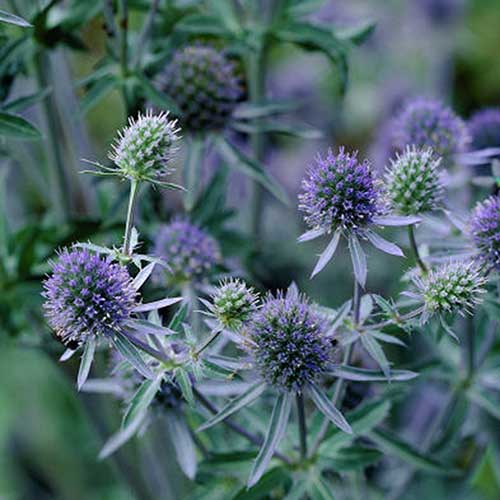
Echinops bannaticulus (blue globe thistle) these flower in summer and are best planted in a cluster. The flowering period can be prolonged by cutting off dead heads. On the whole, very low maintenance but have a tendency to disperse in wind. These seeds can easily germinate where their not wanted so another reason to cut flowers heads off when spent.

Another Echinops is ritro ‘veitch ‘s blue’ – this flowers in late summer and again the same rules apply. The specimen tolerates all soils as long as it is free draining. You can propagate these by division.

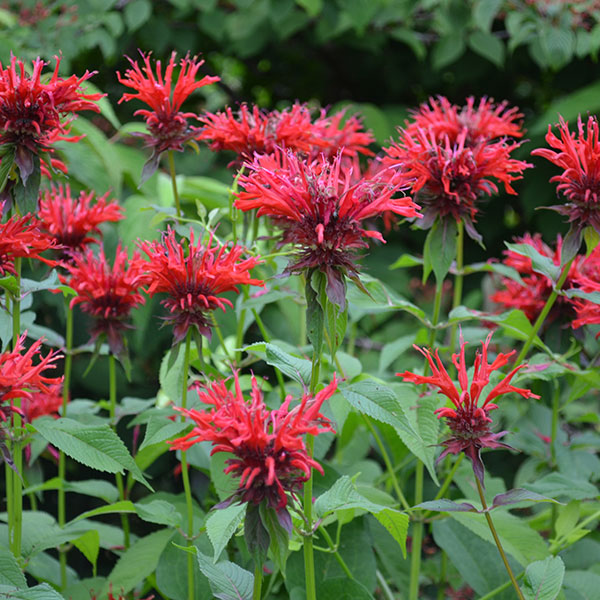
Monarda, or ‘Bergamot’ as it is commonly known possess strikingly attractive flowers. In summer, it offers an architectural element in any mixed border and its crimson colour is distinctive especially in a cluster grouped with any contrasting foliage.

Monarda didyma is commonly used for its crimson red effect although there are pink and purple varieties.

Eryngium bourgatii (Sea holly) runs throughout summer and offers architectural value in a perennial border up until autumn. It survives in poor soil as long as it has light and is sheltered to an extent. It also prefers to be in free draining soil and will not sit in waterlogged loam.

Eryngium planum offers summer flowers and is particularly good in clusters. Needs to be in full sun. Eryngium can have quite long roots. When they are settled avoid root disturbance as they don’t like being moved.

Stachys byzantina ‘Silver Carpet’ is a perfect foliage plant that provides effective mat forming clumps or low growing ground cover at the front of any perennial border. Very hardy. Stachys does lose its leaves eventually in winter ready for its spring growth. Survives in sandy soil and can withstand drought conditions.

Hosta undulata ‘ Mediovariegata’ is another choice for effective foliage at the front of a mixed border. The variegated leaves are clump forming and provide effective colour – they prefer slight shade and an acidic more humus rich environment. If the soil is too alkaline the leaves will suffer chlorosis. It is also a good idea to place them in a slightly sheltered spot as they don’t tolerate particularly cold winds.

A relatively recent addition to the foliage selection is Senecio ‘Angel Wings’ it has proven to be very successful despite only being cultivated in the last couple of years. Clump forming and generally maintenance free it offers all year round colour. It does bear yellow flowers in summer although that’s not what it known for. Needs a more humus rich than sandy soil. However, it will not tolerate being wet so must be free draining but have some substance. It likes the sun and will thrive in these conditions. It is good at sustaining its vigour with harsh cold winds but if the temperature really drops well below 0, it is a good idea to relocate or protect from the elements.

Special Features

Plants can possess a number of traits that makes them popular and widely incorporated in planting. Below are a selection that used often for a particular asset.

Flowers

Kalmia augustiflora – It bears summer flowers in full sun. An acid loving evergreen. It does prefer some moisture so will not tolerate drought conditions. It can get leggy, similar to Rhododendrons and seems to develop in this way. Cutting it back harshly will regenerate its vigour.
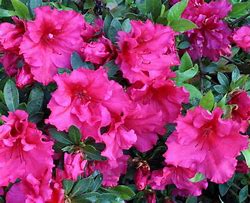
Azaleas too can grow beautifully in acidic soil and do prefer a partial shade since they can get burnt. It is important to trim back to existing buds when spent or before the end of July/August, this will create other buds. Azaleas are related to Rhododendrons so they too have a tendency to get leggy from inside. Camellia’s survive in this environment and are appreciated for their double and single blooms. They can be species offering flowers at spring and autumn. The main needs would be space, no competition for moisture and nutrients. Camellia’s like some shelter but also a degree of sun, sometimes can sit in over watered areas if need be. I think once in situ and established though do not tolerate being moved. Some Virburnum will display a yield of berries in autumn. While,  v. japonica will give you the summer white flowers, the deciduous varieiy will give a show autumn to spring like ‘bodnantense’ dawn later on.

Scented

Philadelphus (Mock Orange) has citrus scented white flowers. A spring to summer flowering shrub.  It is versatile and adapts to all aspects, soils, and ph levels but cannot abide sitting in waterlogged soil. Prune after flowering quite low to a bulging bud and it will regenerate twice fold. Daphne odora ‘aurea-marginata’ – a fragrant evergreen producing attractive leaves and pink flowers. It has a compact habit and keeps itself relatively neat with only removal of unwanted growth.  Prune after flowering taking crossing branches providing space for new shoots. Any damaged or diseased too. This cultivar is hardier than some specimens. Syringa (Lilac) – a highly scented shrub/tree. Lilacs like full sun but not all the time. A little shade is welcome and in well drained soil. Choosing the dwarf variety guarantees you get a shrub and a neat, compact habit.  Syringa pubescens ‘Miss Kim’ pale pink to white will give you a compact shrub as will another smaller variety, syringa meyeri ‘palibin’ suited to containers, patios, terraces or borders. These are dwarf but they will thicken out and are chosen for their neat habit.

Foliage

Elaegnus pungens or ebbingei ‘Limelight’ a brightly variegated shrub, it has a non-variegated counterpart. Good in all aspects like full sun, partial, soil type and moisture tolerant. Gives white scented flowers in autumn. Hosts an interesting opaque leaf variegated or green. Euonymous fortuneii is a really versatile border shrub that can sit on its own or in a plant combination. Euonymous has striking variegated specimens – ‘Emerald n Gold, ‘Emerald Gaiety’, ‘Dan’s Delight’ are all cultivars with added interest. A trim to maintain a bushy habit is the only maintenance necessary or if the plant is reverting to its original form and you wish to keep the variegation. Laurus nobilis ‘bay’ – attractive highly aromatic leaves. Often misunderstood as a large shrub, is infact a tree and has the potential to grow to 12m (40ft) if given the chance. It prefers to be in the sun in well drained soil. It is semi hardy but in colder climes good to provide additional shelter from the wind and frost. Photinia x fraseri ‘Red robin’ a free standing shrub or unconventional hedge, pruning will make it more dense. Pieris ‘forest flame’ bell shaped flowers in spring. An evergreen. The colour of the leaves will change from red and mature to green. No pruning necessary – just cut out straggly bits. Prunus lusitanica – Portuguese laurel has attractive foliage in the autumn but bears flowers in spring.

Habitat/Beneficial birds/Insects

Empetrum nigrum (Crowberry) An effective ground cover. They are for human consumption but not generally known as an edible berry. Good in shaded spots and with other acid loving plants. A hardy evergreen providing berries. Pyracantha has a show of white flowers in summer and usually successful in well drained soil free standing, against a wall or trellis. It is great for bees in the summer and birds/wildlife in the winter. It needs little maintenance but for its thorns, when it does it can be a pain. Prunus spinosa (Blackthorn) is a winter hedging plant but provides us with white flowers in spring, foliage as a food source for butterflies and moths, berries for hibernating mammals and birds. Crataegus (Hawthorn) offers food and shelter for birds and wildlife, insects are drawn in the flowering period mid spring. Unfortunately hawthorn is widely used as a hedge and often clipped before the heavily scented flowers bloom to their maximum.

Ground Cover For Cracks

Instead of pointing the cracks of a path or wall, extraordinary results can be achieved by filling the void with flowering ground cover plants. A carpet of colour can substitute the most boring of bricks or paving.

In one pot sits a number of plants, only a small amount of piece of fiborous root is needed to be tucked under the surface. Under the right conditions it will root itself and the rest is done. A small amount of soil is needed perhaps within the cracks but only as a root zone. Some species may even be able to cope with a gritty composite of almost no humus rich matter. It will live off the minerals of rocks nearby.

White flowers include – Thymus serpyllum ‘Snowdrift’ – a creeping thyme. Iberis sempervirens – good as foliage and flowers in spring and summer. Cerastium tomentosum – fantastic grey foliage and white flowers – a spreading habit throughout spring into summer. Saxifraga sancta – a true alpine that draws its goodness from the stones around it. Erigeron karvinskianus – providing pink and white ground cover for months.

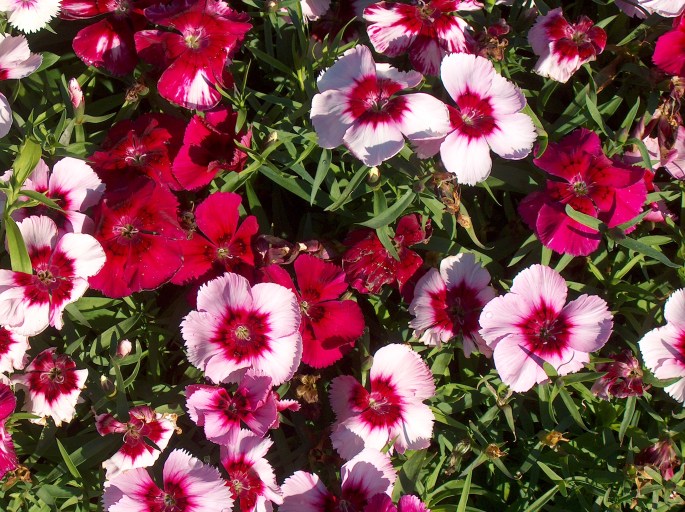
Pink flowers – Chamomile ‘Treneague’ – effective in sun and shade, gives off an aroma when bruised. Dianthus deltoides ‘maiden pink’ – highly scented, late spring to summer of white, red or pink. Thymus praecox ‘Coccineus’ – pink to red flowers, mat forming and highly scented.

Red flowers – Dianthus deltoids ‘Flashing lights’ providing a striking show from late summer to autumn. Portulaca (moss rose) too provides an assortment of colours including red, orange, white although can be a bit particular about their environment. Must be in full sun and in sandy, free draining soil but at the same time cannot withstand really dry periods, because of their size and habit care must be taken when watering as the flowers can easily be damaged.

Blue Flowers – Aubretia – ‘Blue carpet’ – from spring to summer provides a carpet of blue to violet flowers, deadhead to thicken growth. Cornflower ‘Trailing Blue Carpet’- to prepare for following year indoors or sow in spring outside, mat forming and trailing annual. Geranium ‘Rozanne’ – repeats of blooms throughout summer, but may need a substantial root zone in humus rich soil. It has a relative ‘Johnson’s blue’ but the blooms are not as striking and its habit needs more attention to control. Veronica x ‘Blue reflection’ – a spring flowering ground cover plant crossed with parenting plants for it’s resilience and flowering habit.

Purple flower – Vinca minor – a carpet forming late summer to autumn flower. Vinca major, a relative has the same showy flower but larger and more invasive. Good for shaded neglected spots. Verbena Tapien ‘Purple Passion’ and ‘Blue Violet’ provide flowers throughout spring and summer forming a dense cover to any bare spot. The hybrid ‘blue violet’ requires no deadheading and is extremely low maintenance. Primula tyrolensis – a dwarf flowering primrose. This flowers through winter and often in poor soil but doesn’t like being wet and prefers some shelter in well drained soil. Campanula poscharskyana ‘Blue Waterfall’ flowers from late spring to summer proving to be popular with beneficial insects and requires no maintenance.

Multiply By Division

In the colder months there may look like there is no activity at ground level or if you have recently inherited a garden it might not be apparent what is under foot. We can overlook the tired bed at the bottom of the garden and forget it hosts bulbs that haven’t seen the light of day or a clump forming perennial that has outgrown its original home.

It can be a good exercise to sometimes see what the garden already has and to give an exhausted specimen a new lease of life.  Plants benefit from being reduced in size, it can improve their vigour and flowering ability. There are so many methods of this from cuttings, hard and soft to leaf, and seed but one of the most straightforward and most rewarding is division.

In the main division is an option when the plant lives off a storage organ, but you can divide some shrubs from the root ball as long as there are fiborous growth. A storage organ is a Bulb, Corm, Rhizomes or Tuber similar looking to a onion, piece of ginger or potato. The important factor in dividing is not the category since they follow the same principle.  it is to identify where you separate.

Bulbs are the most common. Usually only large specimens can be spliced or those that have two sprouts of growth. Snowdrops, Crocuses, Daffodills Narcissi and Grape Hyacinths are the typical choices but Hermerocallis (Day Lillies) and Convillaria (Lilly of the valley) are more unusual. The best of this is you can control where the flowering period will be, have varying cycles thereby ensuring colour all year round. They are as you usually expect under the ground, how deep will depend on what they are.

Corms that are very similar in appearance to bulbs and are usually found in clusters. They do require regular divisions since they procreate themselves and the cluster will grow if left undisturbed. Often they are at the surface just protruding from the ground. Crocosmia and Mobretia, Irises, although  Rhizomes have a similar growth habit. The Allium family generally are suitable for this method of propagation ornamental and culinary. Agapanthus will also benefit from division.

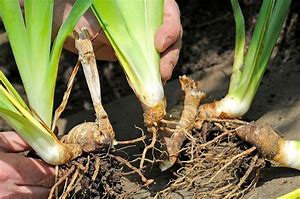
Rhizomes are likely to be a long fleshy organ protruding on the surface. There will be small little off shoots along it. These are capable of becoming separate plants. Bergenia (Elephants Ears) or Irises possess these characteristics. Canna Lillies, Humulus (Hops), Zigiber officianale (Ginger).

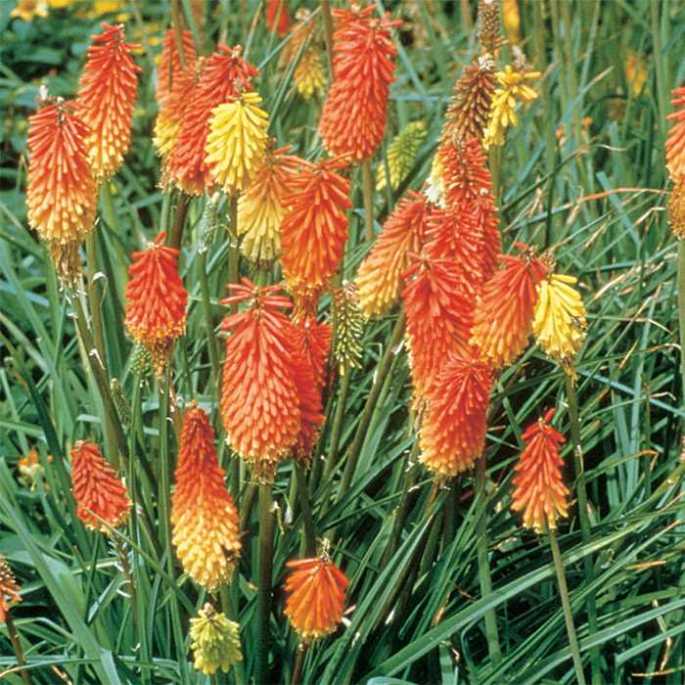
Kniphofia (Red hot pokers) are tubers often after flowering can look tired. It is worth removing the dead leaves from around the crown. The tuber can be divided quite severely and will come back in numbers. The flowering improved. After flowering all these organs  sit dormant with the dead growth coveting the surface. Time needs to be given for the goodness to return to the storage organ which is why the debris needs to be left on the plant. If the bulbs are naturalised in the grass for instance Daffodils/Narcissi, the leaves need to tied back rather than cut off.