Low Risk Perennials

Good housekeeping of plants/sufficient air circulation can cut the risk of disease and fungal infections but some plants are naturally resilient. Perennials with this trait can be incorporated in the open space and have an impact on neighbouring varieties. While these are not free from problems, under the right conditions very easy to keep.

Phlox can be scented and provide you with summer flowers, the varieties mostly through to autumn. Pinks, purples and whites. Some mat forming and some upright. The perennial is good in most aspects although they need a certain degree of sun. P. ‘David’ is resistant to powdery mildew.

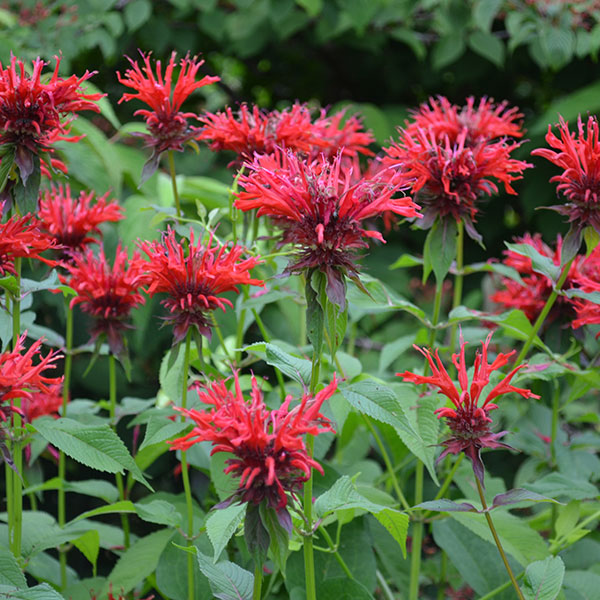
Monarda (Bergamot) a perennial in mid summer to late. Aromatic flowers with a clump forming habit. It is suitable in most aspects, the only condition is the plant is not keen being wet so well drained soil. In certain conditions it can be susceptible to powdery mildew but only if the air circulation is poor and this is easily avoidable. Varieties are more resistant than others. These include ‘Petite Delight’, ‘Colrain Red’.

Paeonia – garden and tree. The soil is important, they tend not to like acidic soil so balanced conditions. Peonies don’t like sitting in moisture so well drained too. Hybrids can often be more resilient and cutting down stems each season will help keep pests at bay. The most important point to remember about Peonys. They don’t like to be moved. P. ‘Scarlet O’Hara’ gives a show late spring to summer.

Sedums are perennials but also succulents due to their fleshy leaves. So these plants are often good in dry conditions and drought tolerant. They provide attractive foliage and flowers, they like full or partial sun at the very least. These plants are low maintenance but very effective. They attract beneficial insects too.

Geraniums are very good at the front of borders, the smaller varieties anyway. These generally are hardy and need minimal maintenance save cutting back spent growth. G. ‘Rozanne’ will provide flowers throughout summer. A condition is that the soil is well drained and they get sun. G. Macrorrhizum will give you aromatic foliage early to mid summer and are white rather than purple.

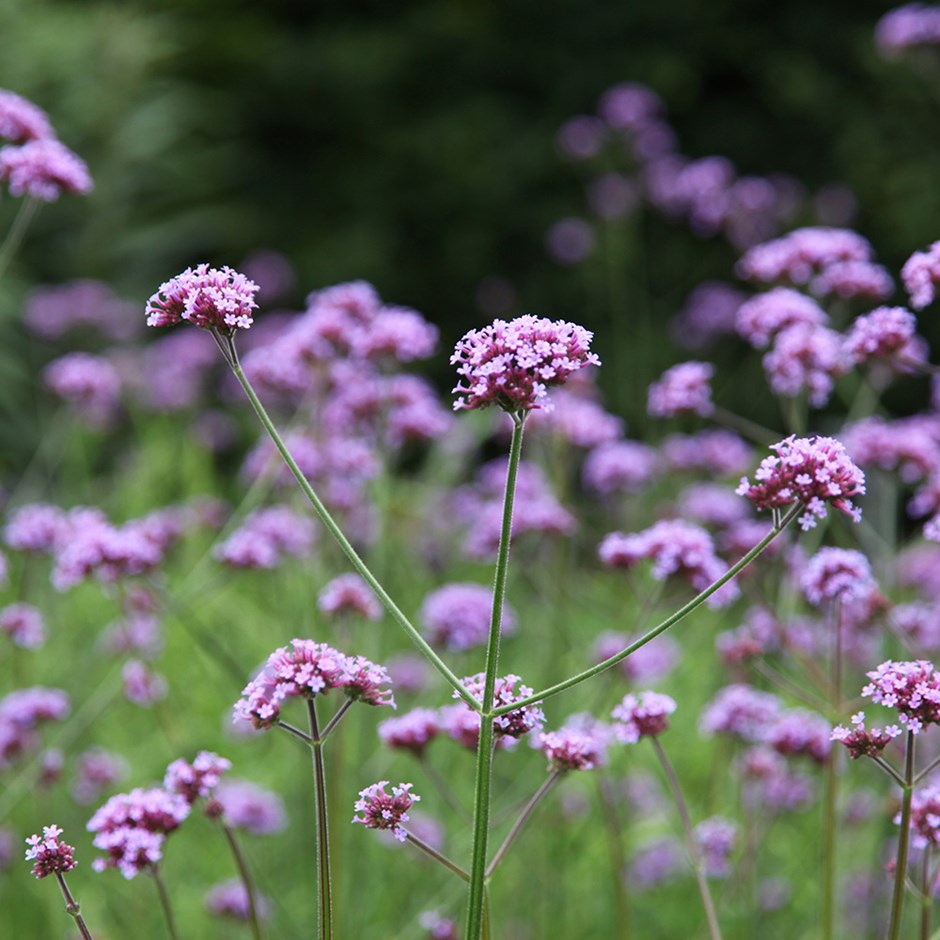
Verbena offers attractive lilac flowers in late summer. It encourages beneficial insects too. It needs some shelter but the stems are relatively tough. V. bonariensis is quick to establish and can be put almost any position because of it’s habit. It will not block out other plants. It is probably best to cut back when new growth appears in spring. Again, for this plant powdery mildew is usually what thwarts it and with good housekeeping this can be avoided. In warm, dry weather the spores are likely to be more active.

Interesting Hedging.

Hedging has often been used as a method to mark a boundary. Seemingly uninteresting and purely fit for purpose. In recent times, a more unorthodox approach has been taken to offer colour, foliage interest and if encouraging wildlife at the same time even better.

Crataegus (Hawthorn), often found in the countryside, is fairly common as is Ligustrum (Privet). These can be taken back quite harshly. Both flower if not pruned but provide generous habit for birds and animals in the winter months. The foliage tends to become denser the more it is pruned. Although the flowers aren’t particularly the feature of the plant, Hawthorn is highly scented.

Another common choice is Conifer, although the growth habit differs hugely. A major problem can be when the hedge becomes too thick. The growth doesn’t regenerate in the same way. A conifer needs to be shaved periodically so it never becomes overgrown. To take this back too quickly will kill the hedge. This is why you see brown conifer hedges. They look very trim but aren’t very green. The level of cut has been on a par with a privet and unlikely to fully recover.

The term Conifer is used generically at times (wrongly or rightly) and linked to relations in the larger group from Junipers to Cypress, Cedars, Pine, and Larch. Some more suitable than others and some species are low growing and more popular as a free standing shrub. This is in particular to Junipers, P. mugo – dwarf pines, both available in a number of greens including a blue. Standard pines can certainly die from below if suffering from a fungal infection, leaving them unsightly and not providing any habitat in the colder months.

Taxus baccata (Yew) another choice that becomes denser the more it is pruned. It is largely used in estates, I’ve most often seen it around the era of the Arts and Craft movement. It’s used in topiary as is Buxus sempervirens (Common Box). Common box is often used as a specimen plant and also as a parterre. Aphids can often be a culprit for these not performing.

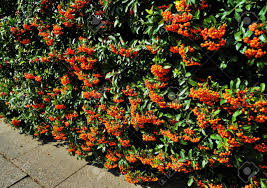
Berberis (Barberry bush) is an evergreen and can come in green and purple varieties. They’re very hardy and grow in the most adverse of conditions. They provide foliage, flowers and berries and are almost trouble free. The berries usually orange/yellow. They have spiky stems and so good as a security feature. Pyracantha (Firethorn) too has the same characteristics although these berries are orange/red with white flowers.

Cotoneaster is an certainty for a successful hedge. These shrubs are incredibly resilient and offer berries and habitat whether it’s the shrub variety C. mycrophyllus or the ground cover C. horizontalis. So tough, it could live in a skip figuratively speaking.

An unconventional choice now becoming more popular are mixed hedges, these often can include Photinia and Elagaenus. These both offer interesting foliage. They are easy to keep trim and if necessary will take a bit of hack. Photinia will provide a fantastic array of colour all year round. Photinia coupled with Pittosperum variegatum will make the most striking of spring displays.

Roses – Part 2

The efforts to remove diseased debris from the ground will help reduce pests as well as contain disease. Good housekeeping is an effective way of controlling pests and diseases using ethical methods. The biodiversity of an open space – it’s important to sustain as many eco-systems as possible.

Caterpillars will eat both the flowers and foliage but cause minimal damage to a particular specimen. Since they are beneficial to the food chain and are pollinators themselves a little thought should be taken to sustaining them.

There are a number of stem borers that eat into the cane rendering it weaker and progessively destroying the plant. Cut this stem off until new healthy growth is visible and block the void.

Thrips can often attack and result in buds unopened, leaves damaged often opaque with black dots. The zeal of the leaf will be lost too. There are forms of biological control but it is good practice to find the most ethical method. A lot of beneficial insects eat thrips. Lacewings, predatory worms and mites. Nematodes can be incorporated in the garden for the particular culprit.

Aphids/Greenfly are a common pest to attack in the summer months. They too suck the goodness out of the plant. They leave a residual film which harbours future disease thus crippling the plant more. An organic control is soapy water which simply means they slip off. There are more serious biological means but of course it won’t differentiate from beneficial life. There are lacewings, hoverflies and some beetles equipped to do this job. Blackfly follows the same path of destruction but can be controlled by natural means too – ladybirds, hoverflies coupled with plants that the species are attracted to. Marigolds, Sea Holly and small flowered varieties will suffice.

Greenhouse Spider mite can affect many fruits and vegetables but can have a life threatening effect on Roses. Good housekeeping will minimise the risk and gravity of the infestation. A good indication is the unexpected loss of leaves and those still intact will be mottled or discoloured. This too is a sap sucking nemesis.

The risk of infection either by pest or disease cannot be eliminated but curbed. They are avoidable rather like Root Rot. The cause of death is a fungal disease but it’s strongly linked to the conditions and care of a Rose. It is avoidable but genes can’t be guaranteed. Often it is the result of over watering. (“Killing with kindness”). Like most plants Roses prefer well drained, moist but not saturated soil. Planting is equally important. The crown or collar of the Rose should protrude from the surface and should be exposed. If the soil is not suitable, containerise and in the colder months other protection can be sought.

Pruning as with most shrubs is primarily about taking out dead or diseased growth out. This can only benefit the Rose. With all types of Rose, the purpose is to prolong flowering and improve the performance next year. Whether it be Shrub, Tea, Climbing, Rambling or Patio. The main healthy stems should be kept and spent offshoots discarded. Climbing roses will give you more than one show, Rambling Roses can be pruned much harder in comparison. Patio Roses largely need a light prune but they all follow the same principle save Tea which give successive blooms. These can be dead headed universally several times.

Roses – Part 1

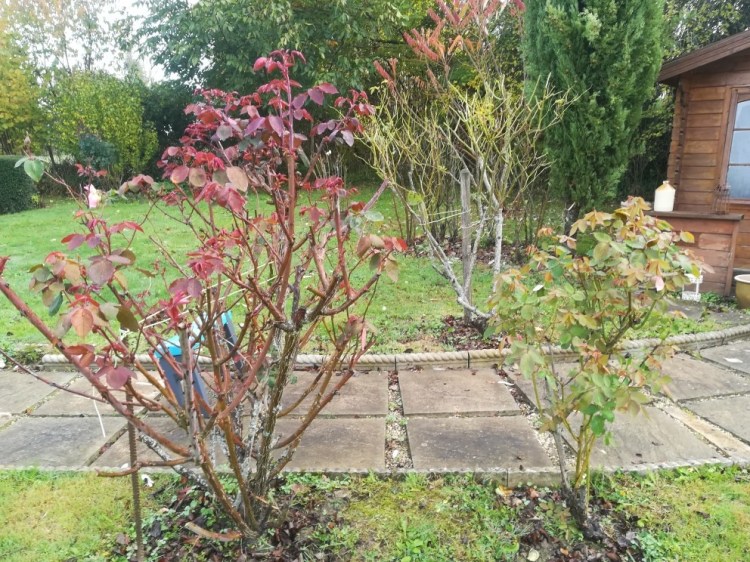
A time to start cutting these down. It will be to remove dead, damaged and diseased wood. In high winds, it ensures minimal damage to branches if it can move through the Rose. It will improve next years flowering – if there are no pointless branches the energy can move through to where it is needed most. Some leave until spring to do only once. You can return to them in spring if uneven growth starts to bolt. This job should really be done from september in preparation for winter, if not then do leave till spring. It will acclimistise for winter but hard pruning in “baltic” conditions will weaken it.

There is some disparity in the the care of Roses. Some say time-intensive, some argue too much method. Roses are relatively straightforward if you follow a few steps, if anything disease is more likely to thwart it than you.

Prune to a leaf node/bud to avoid dieback. This is an improper cut to the stem which simply goes brown and remains inert. It stores no energy so remove. Dieback however, can be a result of infected soil from previous planting harbouring grey mould and canker. Cutting back in a correct manner highly reduces this risk.

Remove any crossing branches to ensure full circulation and stems do not touch. This is general practice to avoid diseases spreading, cross contaminations. It is also reshaping the Rose so it retains its desired habit.

Cut back spent growth, straggly or unwanted. Look for central stem and 3/4 outward stems (dependent on how big), cut back shoots to 3/4 leaf nodes from the bottom. This should be maybe a third of its height. You can use your discretion for aesthetics. It depends how brave but it will be absolutely fine.

Roses seem susceptible to a number of diseases and pests although some varieties more than others. Varieties are crossed for resistance but as the cross species adapts to fight off the disease, the disease also adapts to survive.

Rust is a fungal disease, it affects the leaves – they will fall before they should. The plants overall performance is affected, in extreme cases can kill a Rose.

Powdery Mildew is a debilitating condition for a Rose. It is easily avoidable. It is usually to high conditions of humidity and lack of air circulation. Spores will infect the plant and impede its performance. Grey mould is pretty much the same thing.

Black spot, a fungal infection that blackens the leaves. Varieties are created to overcome infection but as discoveries are made, Black spot adapts to survive. Older varieties seem to be safer for some reason. Cut out the infected area and remove diseased leaves in autumn.