Effective Climbers

Climbers can take different forms. The growth is largely the same – they climb. How they develop, however, differs. Some need a training tool while other twine themselves by tendrils or root on the surface they will host. Ivy and Virginia Creeper both spread without any aid. Vines usually require support and weave through arbours, pergolas, a trellis or rails. Wisteria is a woody climber and has self supporting branches off which foliage and flowers fall.

Virginia Creeper – A close relative of Ivy. It’s certainly a more attractive one but no less invasive. It also has poisonous sap which is an irritant. Creepers are used effectively on gable ends and unadopted walls. As long as the rendering or brickwork is sound it offers no problem. It does offer fantastic foliage/colour but will inevitably suck the moisture out of the mortar or rendering as plants like this do. Whichever is the less of two evils. You decide.

Honeysuckle – other than keeping the size down, pruning is arbitrary. It can prevent the climber getting woody and does improves vigour but not essential. It will not seriously impede the performance until some time after. After the flowers are spent cut off straggly growth to a visible bud/leaf node. In flowering season it may even give you another show.

Passiflora – A self clinging climber that can cope without a training tool. The plant is relatively hardy as long as in a sheltered spot, although it can be thwarted by a heavy frost. Some additional protection may be in order. A south facing position or the warmest spot is suggested. Each year it is a good idea to cut close to the main frame of the climber leaving the central stem of growth with some side shoots of 3/4 bud nodes on each. There’s flexibility, obviously as long as there is some growth left, it will be fine. This is done after extreme frosts though.

Clematis – there are 3 different methods of pruning and this usually defined by when it flowers. The easiest way to categorise is simply look at the card. It will tell you 1,2,3 or what steps you need to take. With Clematis some you prune, some you don’t! For example:

C.armandii – vigourous climber. An evergreen with White flowers in Spring. So the flowers are produced on last years growth. No pruning necessary.

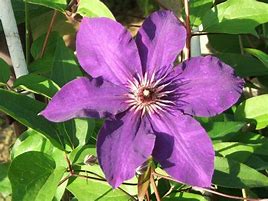
C. ‘Princess Diana’ – it flowers in Summer on new growth. So prune in late Winter to Spring.

Wisteria is another commonly used climber with its self clinging branches bearing highly scented flowers. The stems will twine together providing support for other weaker growth. A good practice for Wisteria is to concentrate on fewer more productive stems known as lateral shoots. In Summer or after flowering cut back to main central stems and a number of off shoot branches. Leave a number of bud nodes on this. Repeat a little after and a bit lower down the stem. It will prepare it for the following year.

There are Hydrangeas that can be trained offering attractive foliage and being tolerant of little sunlight. There are trailing and climbing Roses that offer fragrance, foliage and flowers. Jasmines too. Many of these are scented so will offer a food source to bees and other beneficial insects. Vines equally once established offer foliage and bear fruit. Very few need more than a “head start” before they are self sufficient and can fend for themselves.

Laying Turf

If a lawn needs to be instant, laying turf is not that complicated. There are steps to follow and rules to be observed, but generally the time-intensive work is in the preparation.

The area needs to be measured and ideally converted to sqm. This will be approximately how many rolls of turf you’ll need. Always take into account a 10% wastage for imperfect or irregular rolls.

A good idea is to have some additional soil when laying to take into account the cutting machine may have cut a roll with an uneven thickness. This can be addressed as you are working backwards.

The ground must have been dug over, rotavated or worked over using a Spade/Fork. Debris will need to be removed from the area as its disturbed. Using a garden rake, work the soil until the particles have been broken down. This is achieved as you are removing debris. At this point, you will have decided if you need to treat the soil or if additional top soil is required. 10 sqm meters to a tonne is approximately how much you would gauge.

The ground will need a 2 inch root zone of filtered, pure, fine soil and this is the ideal base to start laying.

  1. Move backwards so when the turf is unrolled the area then remains undisturbed.
  2. Use large pieces for the perimeter, never put two small pieces together. Always use off cuts in the middle. Use a sharp gardening knife to cut the turf cleanly.
  3. Tamper down the joints where two pieces meet with the tines of a rake.
  4. Using a wooden plank as you move across so as to avoid standing on the newly laid turf .
  5. Secure the joints by gently pressing the plank down on the laid turf. This is a final levelling tool. This area must be left now.
  6. Remember the grass will “shrink and sink” so leave a lip above the desired level since it will drop considerably once the air has dissipated.

There a few more pointers to consider but generally follow these steps and you lawn will take without problems. The area must not be walked on for 2 weeks or so. The area should be kept moist throughout the settling period. When it looks like its root system is in place and you notice it growing – the first cut should be very high and conditions dry.

Another important factor is to prepare the site before you have the turf delivered. There is generally a 3 day rule for turf. The turf should be laid before this period runs out. Ideally the 1st and 2nd day it should be finished. The turf should be to order and the cut made that day or the evening before. Using old turf is a false economy and often the light deprivation has an impact on its vigour.

Turf v Sow

The decision of whether to turf or sow mainly lies with time and cost. The method of turfing will achieve a lawn instantly whereas sowing your seed may take considerably longer, the time of year will need to be considered but will cost a lot less.

Either method is relatively straightforward as long as a number of steps are followed. A rough UK guide to offer a comparative would be £2.00 (2.58$/2.38 e) or under per roll. Each roll being a square metre. A bag of amenity lawn seed costs £15 in the UK (19$ or 17e) per 2.5 kg bag and covers 100 sqm. It’s how much time/money you want to spend on the project.

The time of year may be a factor. The only time of year not suitable for turf laying is high Summer. The grass while it’s knitting together will need to be irrigated, this must be adhered to. The grass as it’s fusing will shrink and sink so watering will help reduce this. The sowing of grass seed ideally should be done in a period where it will not be disturbed. Ideally, beginning of Autumn and before Spring so that in the dormant period it can be developing its root system without any interference.

The preparation time of the site is similar. The ground will need to be broken up and air needs to be circulating throughout the area. All stones will need to be removed. This will allow you to work the soil and achieve a suitable base for the lawn. The soil particles must be as small as you can make them. The laying of turf or sowing of seed will be a lot easier and the finish better. If the ground is compact, the roots will find it difficult to penetrate through the soil and establish themselves. The area is likely to get waterlogged too in wet conditions.

The soil needs to be free draining, so if it is heavy or clay-based this needs to be mixed with some thinning agent. An idea might be to add sand or new top soil with at least a 2 inch root zone. If it is too sandy, it’s likely to scorch in dry periods and so the reverse would be to mix humus matter to the soil and make it more water retaining. This surface needs to be as level as possible and the particles of soil to a “fine tilth”. All this preparation will ensure success of either your turf or seed and generally the whole operation will be smoother.

The type of seed becomes relevant at this point. With the type of turf you’ll find this is usually fixed. If it’s from an amenity area cultivated for sport, it’s likely to include Bents and Fescues – these are often described as “fine grasses”. The lower grade grasses for normal/utility lawns tend to include Ryegrasses and Meadow (Bluegrass) varieties. This area is so complex now, it warrants its own blog. There are pro’s and cons to both these not just on the purpose of the lawn but weed/disease resistance, general resilience, the level of cut it can withstand.

Winter Colour 2

There are plants that are principally known for their Winter show and largely non descript at other times. The plant can often be decidious and the flowers or berries borne on bare stems. These plants may have foliage throughout the year but this is not what they’re recognised for.

Hamamelis mollis ‘Pallida’ (Chinese Witch Hazel) bears fragrant Yellow flowers early in the year. It loses its leaves and the flowers are borne on bare stems. This is a very low maintenance plant, pruning would purely be to shape.

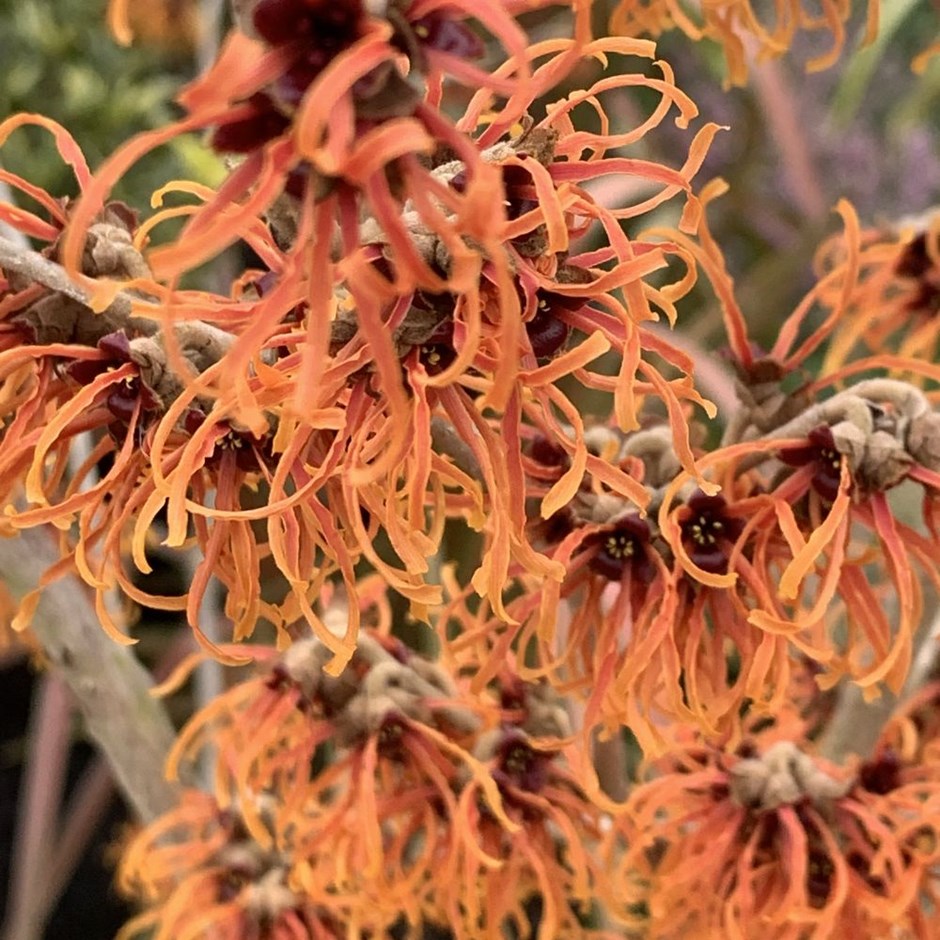
Hamamelis x Intermedia is a similiar Witch Hazel but a hybrid often offering Orange or Red flowers in the Wintertime. ‘Diane’ (Red) and Orange ‘Orange beauty’ or ‘Gingerbread’. The size of these shrubs often determines where they are planted. The back of a border is ideal. The shrub is slow growing and doesn’t require any maintenance. Hamamellis can cope in full sun or dappled shade.

Chimonathus praecox (Wintersweet) can offer highly scented flowers in late Winter into the new year. This plant is decidious and there is no foliage in the flowering period. It needs some protection and can not tolerate being in an exposed area. It likes full sun and well drained soil. No real maintenance other than removing dead, diseased and damaged stems.

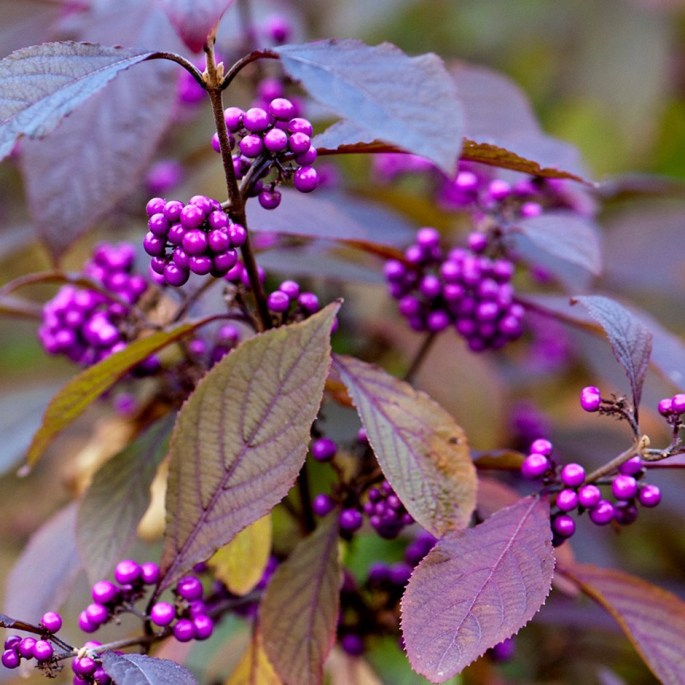
Callicarpa bodinieri flowers in midsummer but has an amazing show of purple berries in Autumn. Borne on bare stems, the berries continue long after the leaves are lost. It is quite robust despite having delicate characteristics and can cope in an exposed environment. This plant can tolerate most soils and is straightfoward to maintain. A superficial prune in Spring is all.

The (flowering quince) Chanomeles speciosa might not be an obvious choice but provides, fruit, foliage and flowers throughout the year. The flowers can range from a deep pink to a white. The plant is hardy and very easy to maintain. The only drawback is that the flowers are so shortlived. Little pruning is needed other structural shaping in the dormant period.

Daphne Odora ‘Aureomarginata’ while not Winter flowering, this decidious or evergreen shrub has attractive leaves and flowers in early Spring. The plant is flexible on the level of sun it needs but does need to be in a sheltered position.

Ornamental Grasses

These Ornamental plants are incredibly easy to look after. Most are almost self sufficient. Once in situ they offer texture, shape, colour and structure.

An example would be Cortaderia selloana (Pampas Grass). In the 1970’s, there was a popular trend in planting Pampas in a small frontage, then to find it 20 years on dominating the entire space. Each year the width increases so the plant should be cut 6 or so inches off the ground. The dead growth pulled out. This invigorates the plant, encourages fresh growth and curbs the size too. These plants are not nice to maintain, the sheaths of foliage are very sharp and must be handled with gloves. Division in the early years will manage the health and size too.

Miscanthus (Maiden Grass) is wonderful as it whistles in the wind and comes in different coloured foliage. M. ‘Zebrinus’ commonly known as Zebra Grass is a stripey variety. They add sound autumn colour and only need cutting back close in Spring encouraging new growth. ‘Graziella’ offers a Pink finish then turning silver. ‘Marlepartus’ provides Purple plumes and Silver in Winter. Most varieties are quite self contained and neat clump forming. Smaller varieties M . sinensis ‘Adagio’, ‘Gnome’ do usually have a smaller clump habit and would be planted in drifts. These both have quite dense foliage.

Hakonechloa Aureola ‘macra’ (Japanese grass) is a bright variegated grass. It has an arched habit, striking colour in its peak. It does provide an autumn brown effect when spent but then it does lose its leaves unlike some grasses. A striking red grass would be Imperata cylindrica (Japanese blood grass) again decidious. In early spring, the dead growth would be cut back to the base, other than this no maintenance. A softer choice would be Stipa tennuissima which is clump forming offering very fine foliage with delicate silver green flowerheads. Little to be done except the removal of dead growth and a “chop” in Spring.

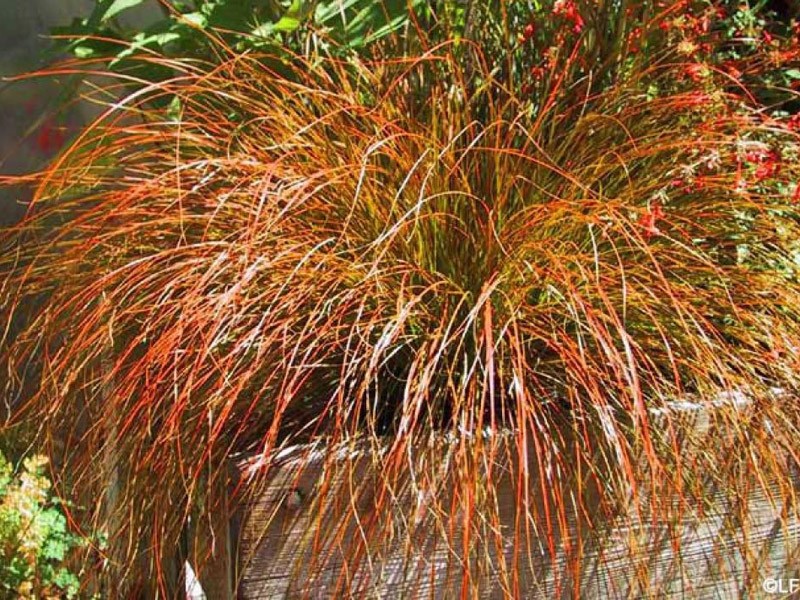
Arthropodium candidum ‘purpureum’ is an unusual addition that offers a contrasting effect to Browns or Greens. The plant has a show of Purple bronzed leaves and forms tiny white flowers as an extra element in midsummer. Carex (Sedge) buchananii (Brown) glauca (Blue/Green), Fescua glauca (Blue) all offer quite vivid colours. These too are effective as contrast plants. Carex dipsacea ‘coppertop’ can provide a bronze/rusty effect with specks of Orange appearing at tips. Similarly, Carex testacea ‘Indian Summer’ has a rusty, Orange glow at its peak. On the darker side, Ophiopogon nigrescens (Black Mondo) once in situ doesn’t need anything more than cutting rough ends off and can be left to their own devices. Drifts of them can be quite dramatic. The plant is quite small and so a large number is necessary for any impact.